Matching Paint Colors Perfectly
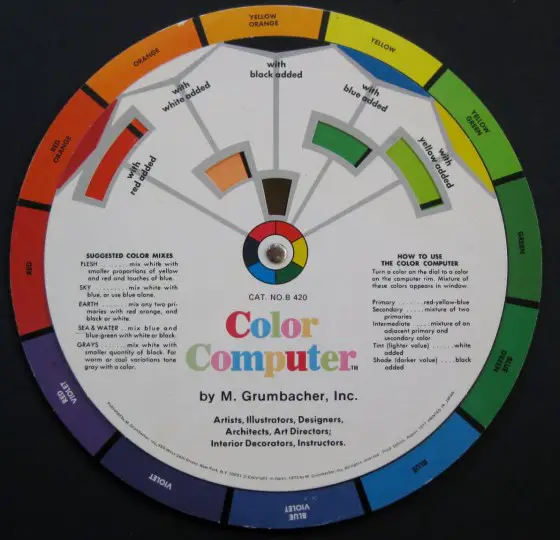
Color match paint is possible using a Color Wheel or Color Computer. You can also use a handy hand scanner and phone app. (See Below) If you want to use this older color wheel, you dial up the color you need and it shows you the colors you need to combine to get you there. CLICK THIS IMAGE NOW TO BUY THIS INEXPENSIVE TOOL to create basic colors.
"If you decide to attempt to color match paint yourself, the process requires patience, excellent lighting, soap and water, and lots of luck. You can do it."
Color Match Paint Tips
- try using a color match paint app first
- take a color chip sample from wall to paint store
- last resort is to try blending paint at your home to get the match
DEAR TIM: I need to color match paint in my living room. I recently modified my curtains. This required patching numerous small holes. It's now time to match the flat wall paint adjacent to these patched areas.
I've never had luck in getting an exact color match from the paint store. The shades are close but you can always see the painted area.
Is there a way to match the color so I don't have to paint the entire room? Have you ever had success in matching colors in a situation like this? Vivian S., Cincinnati, OH
DEAR VIVIAN: Paint matching has driven many people close to the edge of insanity. I recently met a frustrated woman in a paint store who said that she had over fifty small cans of paint in her basement. These cans represented failed attempts at trying to perfectly match a wall color.
Free & Fast Bids
CLICK HERE to get FREE & FAST BIDS from local painters who can match paint perfectly.
How Do Paint Matching Machines Work?
A paint matching machine scans an actual paint sample and reverse engineers the amounts of pigment it would take to create the color it sees.
Matching existing paint colors can be done. If you expect a paint store to do it for you, you need to bring in a clean sample of the paint color.
Paint stores have amazing optical scanners that can compute the needed pigments to match the sample you provide. Usually, the sample needs to be about 1.5-inch square.
Related Links
Are There Color Match Paint Apps?
Yes, there are color match paint apps for your smartphone! The last time I checked, there were over five of them.
Sherwin Williams also makes a small hand-held scanner that you press against a painted surface and it gives you the best color match for one of their paints. It's called the Color Muse.
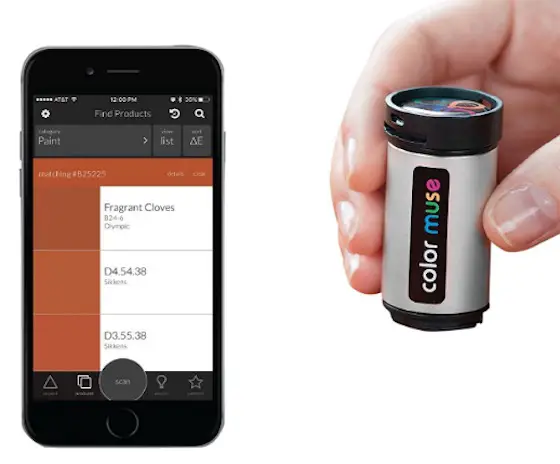
This is the Sherwin Williams ColorSnap Match tool and phone app. CLICK THE PHOTO now to have it delivered to your home.
Watch this video to see how it works.
How Long Does it Take to Match Paint?
A paint store with this equipment can give you a very close match within minutes. Often they'll mix a small quantity of paint, open the can, put a small amount of the new paint on your sample and use a blow dryer to see how well it matches.
How Do You Match the Paint Gloss?
The same color formula will render different shades of a color depending upon the sheen or gloss of the final paint. Keep that in mind!
How Do you do DIY Paint Matching?
If you decide to color match paint yourself, the process requires patience, excellent lighting, soap and water, and lots of luck. You can do it.
I've had great success in the past. Recently I successfully matched a nine-year-old light beige color in a client's living room.
I did this by getting a slightly darker shade of beige than what was on the wall and I started to mix different small amounts of the paint with pure white paint until I got a perfect match. I was very lucky.
IMPORTANT TIP: The color or hue of an object is actually generated by the light that's illuminating the object.
Sunlight produces all of the wavelengths or color possibilities that we can see with our naked eye. If you live in a place with low humidity, it's a cloud-free day and the sun is high in the sky, the colors you see of things outdoors are pretty much the true color of that object.
What are The Golden Hours?
The golden hours are referred to that time of day just after the sun rises and just before it sets. Reds, oranges, and yellows are more vibrant at this time of day.
Let's say you're standing outside at noon on a cloud-free day at the Grand Canyon. You're blown away by the rocks and sky.
But you fall asleep and take a nap waking up just as the sun is about to set. All of a sudden the reds and oranges in the rock formations are far more vivid.
You're in what's known as the golden hour.
What's happening is the sun's light is now passing through lots of the atmosphere at such a low angle in the sky and the blue and green light rays of natural light are getting absorbed by the atmosphere. Only the reds, oranges and yellows of the color spectrum are making it through all the air and they enhance anything that's red, orange or yellow!
The same phenomenon happens at sunrise for about an hour.
Can Artificial Light Mimic Sunlight?
Artificial light created by any type of light bulb has a hard time mimicking all the wavelengths in sunlight. It's really hard to mimic Mother Nature.
Most light bulbs only put out part of the entire visible light spectrum.
As a result, an object viewed in natural sunlight outdoors at noon as we talked above can look very different when observed under artificial light (paint store fluorescent lights, living room lamps, etc.).
CLICK HERE to get FREE & FAST BIDS from local painters who can match paint perfectly.
Do Sodium-Vapor Lights Ruin Color?
Yes, sodium-vapor lights ruin many colors.
Parking-lot lights are good examples. Have you ever noticed how your car sometimes appears a very different color at night under harsh sodium vapor lights?
Many parking lot lights are sodium vapor or halogen. The trend now is to LED bulbs. All of these tend to create a very narrow band of color they produce.
Is Flat Paint the Easiest to Color Match?
Yes, flat paint tends to be the easiest paint to color match.
The sheen or gloss of paint also makes it very difficult to match colors. It's much easier to match flat colors than those with gloss.
High-gloss paints are very unforgiving. It's almost impossible to touch up a defect using the same high gloss paint just days after a new paint job!
Should I Wash Surfaces Before Color Matching?
Yes, you first need to wash surfaces with soap and water before trying to color match them. This process is necessary even if you decide to repaint the entire room. Paint should always be applied to a clean, dry surface.
The washing will remove accumulated dirt, grease, and smoke particles. It is virtually impossible to get an exact match on a dirty wall surface.
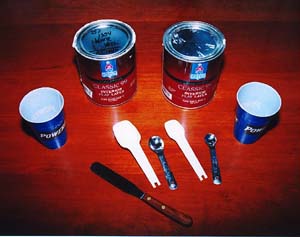
Grab the paints that get you close, some disposable cups and measuring spoons and you can start to blend paints until you develop your own custom formula.
Get A Close Match First
Once the walls are clean, proceed to your local paint store and ask for numerous color chip samples that are close or match your wall color. Take these back and hold them against the walls in different spots on a sunny day.
Attempt to select a color on a wall that receives indirect sunlight. Never hold a chip on a wall illuminated by a sunbeam. If you're lucky, a color on one of the chips will match closely.
How Much Paint Should I Buy?
Proceed to the paint store and purchase the smallest quantity of flat paint that can be custom tinted to the color chip you feel is the closest match. Some paint stores or hardware stores can do this with very small amounts of paint saving you money.
Should I Start With A Darker Color?
Yes, when doing DIY color matching, start with a slightly darker color.
I've had the best luck matching colors when I select a color that is slightly darker than the color I am trying to match.
Purchase an additional pint or quart of plain white paint at the same time. You'll need this to adjust the color back at your house.
Does Paint Dry Darker?
Yes, paint has a tendency to dry darker than when first applied.
Apply a small amount of the pre-mixed paint to your wall. It may look like a perfect match when you first apply it. Many flat paint colors deepen as they dry.
The paint tends to dry darker because as the water in the paint evaporates the color pigments concentrate causing this phenomenon. If the paint dries darker, that's fine.
You'll now start to make micro-batches of paint on your own using your plastic measuring spoons and paper cups.
Measure Accurately
Take a teaspoon of the tinted paint and a teaspoon of the pure white paint and mix them together in a paper cup. Always rinse and dry the measuring spoon completely before you scoop paint from a different can.
Apply this to the wall and allow it to dry for twenty minutes. The use of a hair blow dryer will accelerate the drying time.
Different Recipes
Adjust the proportions of white paint and colored paint if you don't get a perfect match. Keep track of the test paint areas and the proportions of paint that you mix with one another. With a little luck and lots of patience, you'll probably get an exact match.
CLICK HERE to get FREE & FAST BIDS from local painters who can match paint perfectly.
Related Articles: Color Wheel, Paint Colors - Tips & Tricks, Paint Colors - Mix to Match
Column 208

Tim built custom homes and did ultra-custom remodeling for 20+ years before launching his Ask the Builder media presence. He was selected as one of the Big 50 by Remodeling magazine in 1993. This award gave birth to Ask the Builder in October 1993. Tim also operates https://DrawPlumbingPlans.com. His @askthebuilder YouTube channel was the first home improvement channel on YouTube.

I purchase an exterior paint colour dried bark for my house outside,i need to know which colour do I mix it with for the pillors?
The procedure to match paint in the above article may work eventually, but I would suggest finding an independent dealer. Independent dealers know that the only way to beat the big box stores is thru customer service. An independent dealer is much more likely to invest in a spectrophotometor. Our store for example has the ability to exactly match colors AND sheens by only requiring a quarter sized piece of peeled from the sheetrock. We have a motto, if it doesn't match, you don't pay for it. I do complete most matches in under 10 minutes...
Need to match a wall color but you don't have a sample to take to the store? Simply cut a hole in the drywall at the height and size of an outlet in an out of the way place on the wall. Cover the hole with a blank cover plate. I find most houses these days have all kinds of blank plates from old cable and phone outlets and one more is not noticeable.