Home Alone – Winterizing Your Home
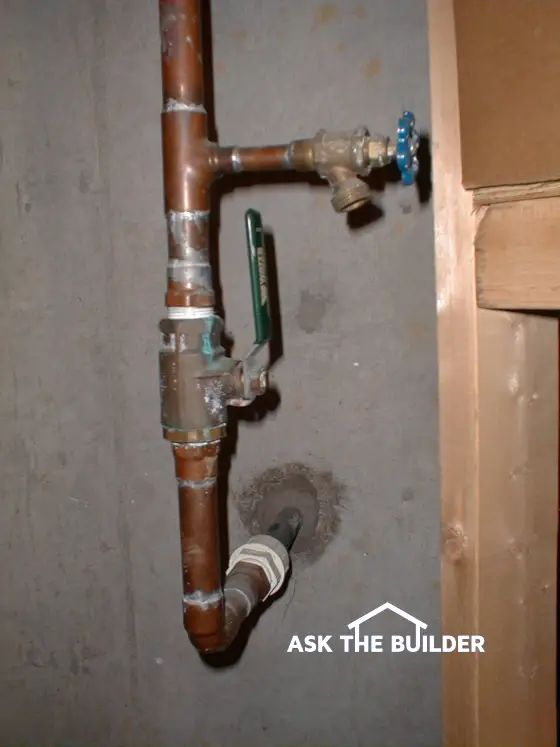
Here is my main water shutoff valve. It is the lowest valve in the photo. Above it is a tee fitting with a boiler drain. I can attach a garden hose to this valve and all of the water in my house supply lines can be emptied into a nearby floor drain.
DEAR TIM: I own two homes and live about six months per year in each one. One house is up north where the winter winds howl and the other house is in the sunny south. What is the best way to close up these houses when I leave? With the rising utility costs is it possible to completely shut off all heat in my northern home? Can I close up my southern home and turn the air conditioning off? Dyke S., Peoria, IL
DEAR DYKE: Any number of people own two or more homes and do exactly what you do. Many more people like me don't own two houses but may leave their own home for an extended amount of time. Leaving a home alone can become an expensive proposition if things go wrong in your absence. And more often than not, things do go wrong. You can turn off your furnace and air conditioner to save money but certain things need to be done to protect your home and the interior furnishings. Your home down south requires the least amount of attention.
Water, both in the liquid and vapor state, is your biggest enemy. The water in regular household plumbing supply lines is under significant pressure. If a pipe or washing machine supply hose bursts, thousands of gallons of water can begin to flood the home. Imagine the nightmare if you happen to live in a condominium and the water lines above your unit burst? It has happened and the damage loss is unbelievable. You must turn off your main water shutoff valve whenever you leave either home.
The water that is in your northern home's water lines needs to be drained. Water that freezes in supply lines or traps in drainage lines can cause them to crack. Go to the lowest fixture in the house that has hot and cold water. Open those valves. Go to every plumbing fixture in the home and open all valves and flush all toilets. This will allow gravity to pull the water down through the system. Closed valves create vacuums that prevent water from draining.
Open all outdoor hose bibs as well. Lift up any flexible spray hoses in sinks and showers and allow the trapped water in these hoses to drain. Keep all valves at all fixtures partially open. Drain the hot water tank and water softener. Pour non-toxic antifreeze into all toilet bowls, sinks, tubs, showers, washing machine drains, and floor drains. This antifreeze can often be purchased at recreational vehicle or marine supply houses. A plumber should be called in to shut off the water outside you home. It is entirely possible for the plumbing line on the street side of your main shut off to freeze and burst if it gets cold enough inside the home during your absence. The water does not need to be drained from anything in your southern home.
If your northern home is a modern one that is fairly air tight, the water vapor in the air inside your home may cause all sorts of problems. Once you leave the temperature of interior surfaces begins to drop and the water vapor in the air can and will condense on many surfaces. Because millions of mold and mildew spores are on all of the surfaces and furniture, the condensed water provides them with the necessary water they need to begin to grow.
Open windows slightly to allow air to readily circulate through your home. Have a trusted friend or neighbor enter the house to check for signs of condensation. Within several weeks the indoor and outdoor humidity should have equalized. At that point the windows can be closed and locked for the remainder of the winter.
It is a wise idea to turn off all non-essential electrical circuit breakers. Only leave on those circuits that control security lighting. Electrical fires can and do happen even though an appliance or fixture is in the off position. Empty all perishable food from your refrigerator. Turn off your natural gas or propane supply valve outside your home if at all possible. Contact your local utility company or fuel supplier for help with this job.
Notify your local police and fire department before you leave. There is a very good chance they will provide you with a list of helpful tips that will prevent your home from becoming a statistic in your absence. Be sure they know how to get in touch with you. Consider storing valuable or sentimental items in a separate secure storage facility or take them with you.
Column 386

Tim built custom homes and did ultra-custom remodeling for 20+ years before launching his Ask the Builder media presence. He was selected as one of the Big 50 by Remodeling magazine in 1993. This award gave birth to Ask the Builder in October 1993. Tim also operates https://DrawPlumbingPlans.com. His @askthebuilder YouTube channel was the first home improvement channel on YouTube.