Hanging Gutters Requires Skill
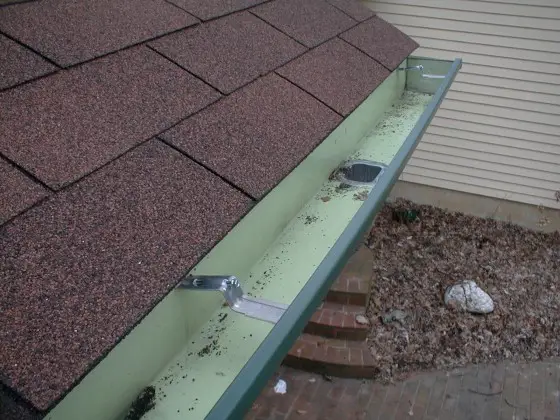
DEAR TIM: I have decided to add aluminum gutters to my home. The lack of them caused cascading rainwater to damage the lower portions of my exterior walls. There is a drip flashing in place that goes under the roofing shingles and extends downward on the face of the fascia board. Does this flashing go behind the gutter or does it drop into the gutter? What is the best way to attach the gutters to the fascia board? Where should the rainwater go? Bob B., New Smyrna Beach, FL
DEAR BOB: You are doing yourself and your home one huge favor. Most people don't have a clue how much water flows off the average house roof in a given year. It is not uncommon for many parts of the United States to have 36 inches or more of rainfall in a year. If your roof area has a footprint of 2,800 square feet and you get 36 inches of rain in a year, the runoff amounts to 62,832 gallons of water. That is enough to fill a gasoline tanker truck nearly nine times!
In need of gutters? Pick out the right ones with my Gutter & Downspout Installation / Repair Checklist. I offer a 100% Money Back Guarantee.
Uncollected rainwater erodes soil and causes excess water to splash up on the side walls of houses. This water can cause painted exterior surfaces to peel, wood framing and siding to rot, masonry walls to effloresce and foundations to settle. Common sense should tell you that the water falling from even a low roof has an enormous amount of energy that allows the water to wreak havoc over a period of time.
Gutters and down spouts collect water and divert it away from the base of the house. Rain water can be used for drinking, cooking and bathing as well as to irrigate gardens and landscaping. People who live in the country routinely use cisterns to capture rainwater for future use. As the population grows in different parts of the nation and puts a stress fresh water supplies, I believe we might see a resurgence of cisterns. At the very least, new homeowners can use rainwater for lawn watering and landscape irrigation.
The flashing that is in place needs to drop down inside the gutter. The bottom edge of this flashing should have a bend in it that directs water towards the center of the gutter. If the flashing does not have this slight bend, capillary attraction can draw water up between the flashing and the back wall of the gutter. This water might actually run down the back of the gutter and rot out the gutter or fascia board.
Traditional long spikes and hollow tube ferrules are old technology. You can purchase very nice aluminum gutters that come with special internal hidden hangers that have long screws that pass through the gutter or fascia board and bite into the ends of the roof truss or rafter tails. Be sure the screws hit solid framing material behind the fascia board if you want the gutters to stay on your home. Gutters can fill to the brim with water because of debris that clogs outlet holes. The weight of the water-filled gutters is in the hundreds of pounds. Keep in mind that the average gutter length may only have three or four fasteners and all of this weight is carried solely by them.
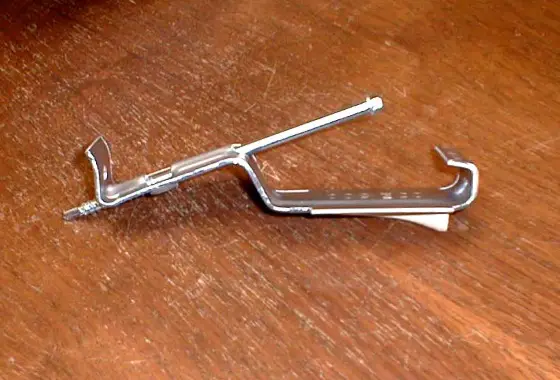
The drip edge flashing often needs to be trimmed around the hidden screw hangers. You can make two vertical cuts on either side of the hanger and simply bend the flashing tab up and over the top of the gutter hanger.
When hanging your gutters, slant them slightly towards each drain outlet hole. You can't use the plumbing rule of thumb of 1/8th inch of fall for each foot of horizontal run. If you do this, the bottom of the gutter can fall beneath the fascia board on long runs. As long as the gutter is level or has a slight pitch, Mother Nature will direct the water to the outlet hole in the gutter.
If you do not pipe your rain water to a cistern, check with your local building officials with respect to this runoff. Many cities have strict codes that address where this water must be piped. It is almost always against the law to pipe this storm water into sanitary sewers. Storm water that is mixed with sanitary sewage can send too much water to the sewage plant and cause flooding inside houses. Many cities and towns have separate storm water systems and often request that you connect roof drains to these systems.
Column 402

Tim built custom homes and did ultra-custom remodeling for 20+ years before launching his Ask the Builder media presence. He was selected as one of the Big 50 by Remodeling magazine in 1993. This award gave birth to Ask the Builder in October 1993. Tim also operates https://DrawPlumbingPlans.com. His @askthebuilder YouTube channel was the first home improvement channel on YouTube.
We just had gutters installed and noticed a gap between the gutter and fascia board when looking up I can see the sky. Will this be a problem? I am assuming there should be no gap and if this is the case what needs to be done to correct this problem.