Tim, I tried to reply to your last post in the other attic fan article but
it wouldn't work.
You said to read ALL you attic ventilation articles which I did and it
sounds like the conclusion is that while turbines and solar fans are nice,
they probably won't be effective enough to keep my attic in the winter from
heating up relative to the outside unless I had a LOT of them installed.
It sounds like you might have been inferring a gable fan might be the way
to go - especially since I do have good openings in the attic for air
intake as well as a reasonably air tight floor. Is this what you wanted me
to take away from all the reading? Thanks.
Greg D
18 Dec 2007, 19:12
I am putting on a new roof that will have ridge venting and soffit
ventilation. Would it also make sense to install some sort of new power
vent or an other type of vent?
Any and all advice is appreciated.
Greg
AsktheBuilder
18 Dec 2007, 19:21
Greg,
Reread this column and ALL of my Ventilation columns to get your head
around this confusing topic.
Steve M
18 Dec 2007, 19:25
Tim, could you please clarify your position as your answers have left me
confused how I should proceed with getting better attic ventilation. Thank
you.
AsktheBuilder
18 Dec 2007, 19:30
Steve,
Air........ LOTS of air......... You can't have too much air.
Steve M
18 Dec 2007, 19:38
So a powered gable fan is my best choice in this case?
Garry
22 Dec 2007, 07:11
How do you lubricate a squeaky turbine? What is the best lubricant to use?
Donna L
02 Jan 2008, 14:29
Tim,
I'm not able to install more vents of any kind. What would be the down side
to installing an "intake" fan on the N.E. gable end to draw outside air in
and a "output" fan on the S.W. gable end to move the hot attic air out?
(with both on the same stat.)
AsktheBuilder
02 Jan 2008, 15:01
Donna,
That sounds like an interesting solution. I love lots of air movement and
you will surely have that!
MikeVB
08 Jan 2008, 08:35
I had a similar idea to Donna's, but wonder which is better for my house.
My idea was to place a powered gable fan blowing out on both ends of my
fairly long ranch.
I have continuous soffit along the eaves, so I figured that would provide
enough air intake that the fans would not be canceling each other out.
Need help in SW Georgia, please.
AsktheBuilder
08 Jan 2008, 08:59
Mike,
Try it. Be sure you read and understand my past columns about Powered Attic
Ventilators.
If I go with an electric-powered attic ventilator on my hip roof should I
still have ridge venting. My thinking is that the ventilator will simply
suck the outside air through the ridge venting and not through the soffits.
Input appreciated.
AsktheBuilder
19 Jan 2008, 05:29
Jon,
Smart you are..... as Yoda would say.
Jerry R
29 Jan 2008, 00:41
Don't use any type of passive exhaust with an electric or solar fan.(no
ridge vent, turbines or box vents). The fan will suck air through them.
You want the fan to suck air from the soffits or in other words intake air
from the bottom of the attic and exhaust it at the top.
I actually prefer the old style gable vents (as long as they're large
enough) with a strong gable fan. Sears use to make the gable fans. They
hung on nails and could be wired to a switch. Any strong box fan will
work.
The trick is to wire it to a switch in the living area. Flip the fan on
EARLY in the morning. Don't wait for the attic to get a 125 degrees.
Leave it on all day. They're very cheap to operate.
Perhaps a fan could be wired to a thermostat but it's not necessary. It's
a matter of getting into the habit of switching it on each morning in the
summer.
margo perry
03 Feb 2008, 15:30
should i cover roof whirlybird vents in the winter? if i do, does it cause
a moisture problem?
AsktheBuilder
03 Feb 2008, 15:37
Margo,
NO!!!! If you do cover them, you will have a moisture issue. Read the other
comments to see.
kmy
05 Feb 2008, 13:02
With a ridge vent, would you use soffit vents, gable vents, or both?
AsktheBuilder
05 Feb 2008, 13:21
Kmy,
Great question! To get up to speed on this and the dynamics of attic
ventilation, you need to read just about every column in my Ventilation
category. You will discover many secrets to keeping your attic cool and
dry!
Billy W
18 Feb 2008, 19:17
Can you tell me where I can purchase good wind turbines for my home and in
a fairly large quantity as I am doing other family members and friends as
well? Also what is the difference in sq. footage that each will cover
between the 12" and 14"? Do you prefer the 14" if possible?
Thanks,
Neil Hansen
26 Feb 2008, 12:20
I plan on building a storage space in my attic complete with pull down
stairs. The space will be insulated as you would expect. As the attic
itself gets hot in the summer and cold in the winter I would like to
eliminate the extreme temperature ranges. After reading about your comments
regarding PAV that doesn't appear the way to go. Do you have any
suggestions on the best way to approach this?
Andrew
27 Feb 2008, 17:32
Ventilation of the home attic is important for two reasons. During the
summer, excess heat that builds up in the attic during the day results in
high energy costs for cooling.
The maximum ventilation rate is required to remove heat during the summer
cooling months.
Also, moisture produced within the home may move into the attic if ceiling
vapor barriers are not used. If this moisture is not exhausted from the
attic it can condense and cause insulation and construction materials to
deteriorate.
Winter attic ventilation must be sufficient to remove moisture vapor moving
from the living space to the attic. In general, ventilation adequate for
summer cooling is more than adequate for winter ventilation. Winter rates
need not be more than about a tenth of the summer rate.
Here are some questions and please, say where I am wrong:
Q: In the winter when air is too cold and water become show and ice and
precipitate from the air. Why we use humidifiers in the winter? Is it
working furnace cause the low indoor humidity? Or, the low outdoor air
humidity balance with indoors every time we open an entrance door (and I am
not talking about doors and windows leaking - no house is a submarine)? So,
what vapor are we talking about? from overdried house?
When it is raining outside in the winter or in the summer, the humidity is
high outside and under the roof. Then rain stops and ground drys with the
wind but under the roof it stays wet longer with no ventilation. This is
when you need ventilation. It is nice to have open/close controlled roof
vents and meteostation that can provide humidity reading outside and under
the roof. Basecally, if it is ice cold, snow and no water, it is the time
to close those vents to save the heat.
Q: Is it a bad idea to have furnace in the attic? All these heat producing
system is placed in the direct contact with outside air. I see here the
maximum heat escape. Is it any good reason to warm up the attic? I would
prefer to warm up my basement as side effect of heat escape from the
furnace. And if the heat escape on the way to second floor, it would stay
somewhere in the walls of the first floor anyway. Regarding carbon
monoxide, I believe it is heavier than air and stay low on the floor of the
basement, where number of CO alarms can be install with emergency
ventilation pump. Why do they put second furnace on the roof?
AsktheBuilder
02 Mar 2008, 10:11
Neil,
Read all of my Ventilation columns.
Hilly
10 Mar 2008, 09:22
Hi!
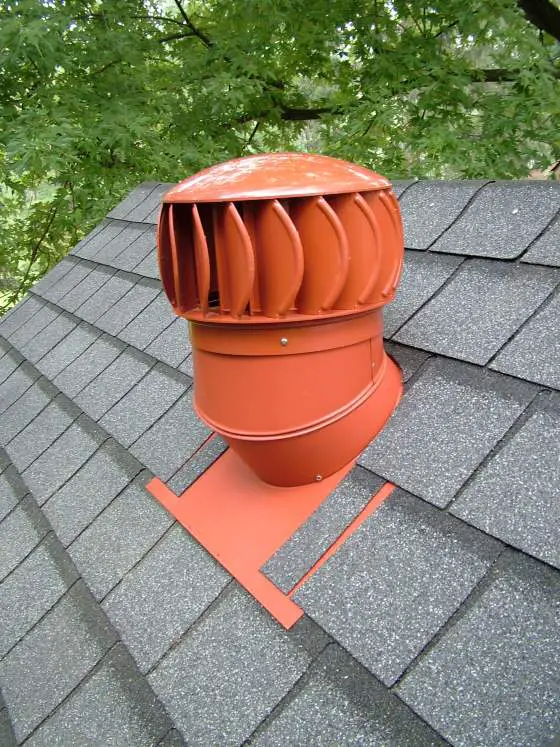
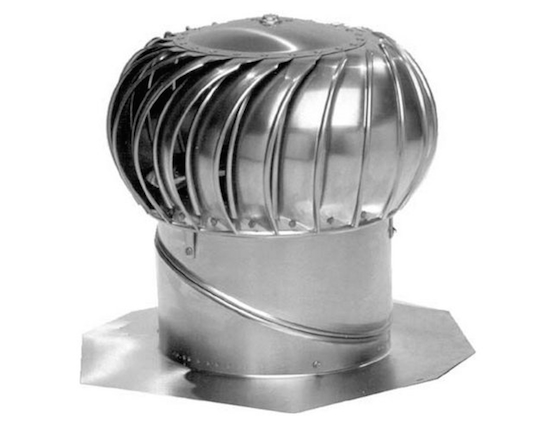
I live in an older house with a turbine vent, the same as in the picture
above. Do they still sell these? When the wind blows a certain direction,
my fan is very loud. It sounds like somebody is doing construction on the
roof! It does spin, but is loud. The property manager is telling me there
is nothing they can do for me. I am assuming it will cost a lot to
repair...??? Thank you for any help you can give me.
AsktheBuilder
13 Mar 2008, 06:17
Hilly,
You bet you can still buy turbine vents. Get the most expensive one you can
find.
Andrew Margrave
17 Mar 2008, 12:28
Would you recommend ridge vents or passive turtle vents? Is one better at
keeping the attic cooler than another?
AsktheBuilder
19 Mar 2008, 10:06
Andrew,
Neither. You should read all of my Ventilation columns, especially the one
about the Hot Garage and all the ones about Turbine Vents.
S J Stacks
26 Mar 2008, 18:38
We have just had a new roof installed with 6 dome shaped vents (not
powered). Our roofer recommened we install much more eave ventilation which
we are going to do ourself. Our calculation shows we have 864 net free vent
area (nfva) exhaust through our vents. To balance this, our plan is to cut
a 3" ban in our soffit around the perimeter our our house and install the
continuous vented vinyl eave cover over this. This will give us much
greater ventilation than the 50/50 ratio recommended for nfva--like a 25/75
ratio. can you have a severe imbalance from too much air intake? Or do you
recommend reducing the perimeter venting to be more inline the 50/50?
AsktheBuilder
28 Mar 2008, 15:42
SJ,
You can't have too much ventilation in the soffit or the roof. You should
have installed turbines instead of the static vents.
Troy Forgie
02 Apr 2008, 10:33
Hi,, I'm attempting to turn my attic into extra living space. My home was
built in 1903 and has older ventilation,, Will I encounter problems if I
insulate and drywall over the rafters covering the vents??,, There is no
soffitt on the home. Do I need to create a new vent system?
Thanks!
Troy
AsktheBuilder
05 Apr 2008, 09:10
Troy,
I cover this in many past columns about Attic Ventilation. I urge you to
read them. You need an air space between the insulation and the roof
sheathing. I talk all about this in other columns. Spend some time reading
them. I promise you will not be disappointed.
Sarah
23 Apr 2008, 19:16
We live in a story and a half home. At the top of the stairs to the second
story is a pull-down stair to a small attic space. This stairwell is so hot
in the summer. If we install a gable fan in the attic and crack the attic
stairs to pull heat out of the space, will this work? Our downstairs
remains relatively cool all year. The upstairs is only about 300 ft2 out of
a 2400 ft2 home.
Dan H
05 May 2008, 18:39
Tim,
Where can I get new bearings for an externally braced turbine vent (about
25 years old). there are two on the house and 1 has a worn out top bearing.
Aaron
10 May 2008, 16:12
I have one powered vent fan and 2 other static vents. I am thinking about
installing another fan. I have good soffet ventialtion. My question: Do I
need to seal the static vents? It seems like the air would be drawn from
the other vents rather than the soffet. Thanks.
Vitaliy
26 May 2008, 12:36
Hi Steve M. I'm currently having almost the same problem as you. I was
wondering what you ended up doing? Did you install a gable fan, rooftop
fan, or just added more ventilation? Did it seem to do the job?
Thanks so much
Vitaliy
26 May 2008, 20:22
Steve M,
I'm kind of in the same situation that you are at, my attic is so hot and
it's baking my house, it's 89 degrees upstairs right now. I was wondering
if you were able to figure it out. Did you end up installing an attic gable
fan? Or a rooftop fan? Or did you just add more vents? Did it help much?
Any advise would be much appreciated.
Thank you
Lori
30 May 2008, 20:11
Tim,
We have no attic ventilation in our river side cottage. It gets very hot
and humid. We were considering a solar powered fan, now I am not so sure.
Also our soffits are not at all ventilated. Based on all I've read here, I
think that I need to have vented soffits before I install any type of attic
fan. Correct? We also need more insulation. HELP!!!
Lori
MattG
09 Jun 2008, 19:51
I read all the replies and I have a powered attic fan and central AC. The
problem I am having is when my attic exhaust fan is running it is drawing
the exhaust fumes from my hot water tank in the basement, 3 floors below in
my cape. Any suggestions? I am leaving the fan off for safety right now
I live in a vertical-trailer (aka., townhouse) just outside Balitmore MD.
Not much in the way of soffit vents for air movement, but like many others,
lots of heat and high upper room temps. Also, most of my soffits run up the
gabelled roofline. So, they may not provide adeguate cool are - as a bonus,
that side of the house faces due west - very hot in the summer
months...help!!!
Matt A.
24 Jun 2008, 11:50
I have a Bi-level with a standard roof, The problem I have is that there is
NO ventilation what so ever to the roof. I am all about energy
conservation, And need to know if this is something I can take care of with
out hiring a roofer, And if so what would be the best ways to take care of
this? Is there any how to books you could recommend?
Al Murphy
11 Jul 2008, 15:04
Tim: I am adding a turbine roof vent(s) to my two-story, 20 year old home.
It's the age old story about not enough cool air on the second level on hot
days. I do have central air. Nothing wrong with temperature in the lowers
levels. The contractor tells me that he may have to seal the current
'passive' or 'flat roof vents' to prevent the turbine vent from drawing air
through them rather than the soffit vents. Can you please comment on
this.
Many thanks.
Al Murphy
Fergus, ON
Canada
Georgia
03 Aug 2008, 07:57
Tim, How well do turbine vents hold up through a hurricane? Do they take on
water? Thanks
Ned
12 Aug 2008, 16:36
Is duralube a suitable lubricant for winter turbine vent squeaking? or what
is best?
HELEN
11 Sep 2008, 08:40
Hello, I have read over the articles about the turbines, I did not see what
to do if it will not turn. The wind can be blowing, and it still will not
spin. It is only about 5 years old, should I replace it?
Thank you!!
Chris
04 Oct 2008, 09:38
What temp. should a attic fan be set at?
Rob
30 Oct 2008, 07:20
I have an electric Attic Fan, Ridge Venting and an Open Gable vent. The
cold weather is coming. Should I consider closing the Gable Vent for the
winter??
Lee
09 Nov 2008, 06:41
Our attic fan seems to be running all the time lately and the temperature
is in the 40's and 50's. Is it running because of the humidity? We're in
the Philadelphia area.
Mark J
20 Jan 2009, 14:02
I have a Brand New 50 Year Metal Roof. There is no Ridge Vent. Just Sofit
Ventilation. I do not want to put holes through the Roof. But I need more
Ventilation in my attic and house. What do you recommend???
Cynthia
27 Jan 2009, 01:12
Tim, Our (Ohio) house was built in 1997, with static vents on the roof,
some of which were not actually cut through (clever, huh?). The house
overlooks a nature preserve with the world's biggest swamp. Now the attic
insulation has lots of water droplets and the ceilings are developing water
stripes. There's also a skylight which may be causing ice dams (we're on
the side of a cliff, so I can't get up there to look).
The house is U-shaped -- a main house with one dormer for the garage and
one for the bedrooms. In the "main house," the living room has a cathedral
ceiling, making the ventilation space above it quite snug. So it will be
challenging to provide adequate attic ventilation with such (1) very thick
swampy air and (2) a winding path through the U-shaped attic.
I'm concerned that a roof-mounted power fan, added now, would simply draw
air from those static fans instead of from the intakes in the eaves.
Would it be smarter to (a) simply close off the static vents? and (b)
install not one but two roof-mounted power vents, one over the garage and
one over those bedrooms? Would those things be really noisy? I'm just
afraid that installing a power vent over the "main" portion of the house
would leave those two dormers with dead air.
Thank you.
Ed
30 Jan 2009, 09:38
Hello Tim,
I have a newer home that has a heating/cooling( hydronic air) unit in the
attic space that supplies the second floor. I do have full ridge vents and
soffit vents, but still get ice dams every winter, especially bad here in
the northeast this year. Would a power vent help to pull the heat generated
by the air handler out to reduct the ice damming,or is it hopeless without
removing that air handler?
Ok I have read all of the articles,I have a two year old home with soffett
and ridge vents and want to install a roof fan (elect.) if I get too close
to the ridge vent it will suck air from there so do I mount it part way
down the roof or go to the peak for mounting and block the ridge vent,its
in costal N.C it gets hot in the summer,also I have cked all places it
could suck A/C and sealed them !! Thanks in advance Larry G
jdporter
11 May 2009, 17:18
Tim, I'm one of those unlucky homeowners who have no soffits. I only have
the two gable end vents, and a low-pitched roof.
My goal is not to achieve lower attic air temp. When it comes right down to
it, is having hot air in the attic really a big problem? Relative to other
concerns, the flow of heat from the attic into the living space (or vice
versa, in the winter) may be minor. No?
Now, my problem was that I got mold in the attic, mostly right above the
door. In the winter, warm moist air was rising into the attic and
condensing. This is my #1 concern. I believe the most important thing to do
is to make sure the attic door has a really good seal on it. Which of
course they are not designed for. Do you have any recommendations on how to
achieve this? I do have a fan on one of the end vents, but based on your
cautions I think I'll be turning it off, at least until I can get more open
ventilation for air intake, and a good seal on the attic door.
In response to Donna's idea of having a fan blowing INTO the attic - that
could be a problem too, as hot attic air will no doubt get forced into the
living space. All of the dynamics are reversed from the usual situation.
I'd be wary of doing this, unless you're careful to achieve a perfect net
zero air pressure differential.
Thank you so much!
Jorge
19 May 2009, 01:56
Like an earlier post by Donna I decided to use electric fans on both ends
of the attic using the existing 14x14 gables, but I did not want to waist
any more electricity than what I already use. So, After reading this and
several post and aritcles on-line, I decided to add 3 naturally powered
turbines to the roof as an exhaust, so easy I did it. Next I needed to add
more air flow, because those 14x14 gables barely let any air in, so I added
2 14x24 gables on each side of the existing ones. the airflow has improved
to where I can actually feel the airflow, and when I walk up there its not
100 degrees anymore. Thanks a bunch.
Jorge form sunny California.
kevin hussey
23 May 2009, 13:11
I have an older home,it has soffett on it but the siding people put it on
right over the wood underneat,hence no air circulation,I am in the process
of putting installation in the attic I really don't want to take all the
soffett down and cut out the wood and put it back up,what do yu suggest I
do,I was thinking about when i install a heat exchanger to also vent the
attic where i will have air coming in and out
Dan Soltys
28 May 2009, 15:50
Tim,
I read your response to Joel T. on Attic Ventilation and I am wondering if
additional ventilation is really necessary. My attic gets very hot as well
but I didn't think that heat transfers into any of the rooms below. Our
home inspector (when we bought the house) told me that the insulation in
the attic provided a "thermal blanket" that prevented the heat from
entering into the rooms below. We don't use the attic for storage (or
anything else) so I don't believe cooling the attic would produce any
benefits for my circumstances. Am I missing anything? Is there any reason
to further ventilate an attic if it is unused?
Thanks,
Dan
Dave V
22 Jun 2009, 15:40
Tim, I have a large attic that I have installed an exhaust fan on 1 side
and I have the issue with the air being sucked out of my house. I can
actually smell the soot from the fireplace chimneys. Question is I need to
cross ventilate the attic, how concerned should I be about pulling in damp
moist air if its raining/humid out? Attic is very dry now and I don't want
to intruduce any mold problems? Any suggestions?
Dave
02 Aug 2009, 19:17
My house is a basic bungalow. It has gable vents, common roof vents but no
soffit venting. The way the overhang is constructed there is no path from
the soffit to the attic. Is there an option in this case to allow more air
flow? Thanks.
Davew R
09 Nov 2009, 15:45
I just came across an item in the CMHC website - Canada Mortgage and
Housing which recommends NO attic ventialtion. Do they have a point? I live
in Toronto, Canada.
Here is the page...
i could use a little help on trying to fix a strange problem i am having in
my attic.we are using our attic as an office type area and i noticed that
some of the bays where i havent finished and some of insulation fell down
alot of the roofing nails were sweating with little beads of water hanging
off the nails.i know there is no leaks from rain and the roof is only 5yrs
old. there is a small heating source i use and im wondering how i can fix
problem. i set up a dehumidifier and noticed that is already working good.i
dont have a atttic fan cause its a very small space but could use help! i
live in ny and never have this problem in summertime.only when its cold
outside.
thank u for any help
tim m.
Bonnie
17 Dec 2009, 13:47
I have ridge vents on my house and this past summer, my husband installed
soffit vents. Since the weather has turned colder, we have noticed mildew
on the ceiling inside the house almost directly where the soffit vents were
placed on the outside. What do I need to do to prevent this?
Eric
08 Jan 2010, 11:21
This is what I have taken from your article.
Good ventillation = soffit vents + turbine vents or ridge vents
Better = soffit vents + turbine vents or ridge vents + motorized fan
Conclusion: There is never too much air being circulated into and out of
an attic space.
My question is this: Is it logical to believe that an air condition will
run considerably lower if an attic is ventillated using more than just
passive vents?
Chad
14 Jan 2010, 17:52
My walls sweat in my basement when it gets very cold. cold this be because
of poor atic ventilation?
Joe
14 Feb 2010, 12:22
Well I have 80%-90% humidity in my attic and 35 degrees. Tested with a
sensor. My house is 2 years old, very well insulated, and a black roof in
the mid west. So static venting is not working. My gable wall is soaked
with moisture and dripping down to my bathroom window on down to my guest
room window. So how would I dry out the moisture? I am planning on a
powered venting due to heat as well as the humidity.
Thanks for any help
Joe
Deborah
22 Apr 2010, 19:16
With good soffit ventilation I'm thinking a solar
fan might be enough to keep my attic reasonably cool during the day. But
what about heat build up during the day? Don't I still need
an electric operated fan at night?
Ray
21 May 2010, 13:03
I have ridge vent, soffit vents and i closed the gable end of the attic
when i resided. I have radiant barier 18 inches of insulation, baffles
above the soffit vents and an insolation blanket around the attic entry
pull down stairway. brand new doubble pane windows all around.. still have
high energy bills. A/C and heater is only 3 years old and sized correctly.
the upstairs bed rooms are very warm. should i put on a coupple of solar
powered vent fans?
Mike
08 Jun 2010, 20:56
I just inspected a newly constructed home that had no attic ventilation
what so ever. The home is supposed to be a certified "Green Built" home.
What is your input on this?
DougM
18 Jun 2010, 13:10
Thanks for the great site. It has been a great help.
I live in sunny and humid SW Florida. My home is a hip roof design and has
a continuous soffit about 2.5" wide and plywood running along the wall
about 18 inches wide around the entire house. I was working on the soffit
area and removed the plywood so it was easier to replace my broken soffit.
I could feel the heat coming out of the area and thought to myself, maybe I
could use something like lattice with a layer of metal screen behind it in
order to keep air flowing through the attic. Now, I often open the attic
access in the garage to introduce more new air into the attic and have
noticed the house is a bit cooler, especially in the evenings.
I would not do it all the way around the house, just in certain areas where
wind is often coming from (W-WSW). During an approaching hurricane or
tropical storm, I would put in place small covers to prevent unnecessary
amounts of moisture from entering the attic.
Would this be okay or would there be any drawbacks to this approach?
Sorry for rambling, but I wanted to explain it the best I could.
Thank you in advance,
Doug
ihab
06 Aug 2010, 04:27
i need to use roof van for dehumid for swimmming pool size 5m*10 m
what u can recommend for me
thanx
ihab
Jeff
09 Aug 2010, 17:55
I had my roof replaced about 2- 3 years ago.The roofing company advised me
to remove the electric vents that were already in place, and have the ridge
vents installed while my shingles were being replaced.the ceiling in the
den are vaulted starting at @ 12' high and go up to @ 20' high.the other
ceilings are 10'.all of the rooms stay pretty cool except the den,it stays
10 degrees warmer.what would you recommend to bring the den temp. down
Jerry D
13 Sep 2010, 19:20
I had an addition put on my house, and due to having a flat roof on an old
addition and attached garage, the contractor put a knee wall up and made it
a gable roof and left the old roof with the mineral paper on it. There is a
soffit on the back and front. He never vented the soffits. If I vent them
do I need to get up under the new gable roof and tear the roofing out? I am
having trouble with ice dams in the winter.
steve
07 Feb 2011, 21:38
I have quite the opposite problem Tim. I have a heating system now
installed in my attic and the heat generated from the unit and all the duct
work in the attic has heat building up and melting all the snow off my roof
and causing some severe "Ice Damming" over my gutters. I installed a gable
fan and still need more air in my attic.
My soffit vents are spaced out every eight foot or so. would a continuous
soffit vent in every cavity stop this issue we are having?
Attic Ventilation
To add a comment visit the Article Page.
Comments
17 Dec 2007, 08:58
You said to read ALL you attic ventilation articles which I did and it sounds like the conclusion is that while turbines and solar fans are nice, they probably won't be effective enough to keep my attic in the winter from heating up relative to the outside unless I had a LOT of them installed. It sounds like you might have been inferring a gable fan might be the way to go - especially since I do have good openings in the attic for air intake as well as a reasonably air tight floor. Is this what you wanted me to take away from all the reading? Thanks.
18 Dec 2007, 19:12
Any and all advice is appreciated.
Greg
18 Dec 2007, 19:21
Reread this column and ALL of my Ventilation columns to get your head around this confusing topic.
18 Dec 2007, 19:25
18 Dec 2007, 19:30
Air........ LOTS of air......... You can't have too much air.
18 Dec 2007, 19:38
22 Dec 2007, 07:11
02 Jan 2008, 14:29
I'm not able to install more vents of any kind. What would be the down side to installing an "intake" fan on the N.E. gable end to draw outside air in and a "output" fan on the S.W. gable end to move the hot attic air out? (with both on the same stat.)
02 Jan 2008, 15:01
That sounds like an interesting solution. I love lots of air movement and you will surely have that!
08 Jan 2008, 08:35
My idea was to place a powered gable fan blowing out on both ends of my fairly long ranch.
I have continuous soffit along the eaves, so I figured that would provide enough air intake that the fans would not be canceling each other out.
Need help in SW Georgia, please.
08 Jan 2008, 08:59
Try it. Be sure you read and understand my past columns about Powered Attic Ventilators.
18 Jan 2008, 20:17
19 Jan 2008, 05:29
Smart you are..... as Yoda would say.
29 Jan 2008, 00:41
I actually prefer the old style gable vents (as long as they're large enough) with a strong gable fan. Sears use to make the gable fans. They hung on nails and could be wired to a switch. Any strong box fan will work.
The trick is to wire it to a switch in the living area. Flip the fan on EARLY in the morning. Don't wait for the attic to get a 125 degrees. Leave it on all day. They're very cheap to operate.
Perhaps a fan could be wired to a thermostat but it's not necessary. It's a matter of getting into the habit of switching it on each morning in the summer.
03 Feb 2008, 15:30
03 Feb 2008, 15:37
NO!!!! If you do cover them, you will have a moisture issue. Read the other comments to see.
05 Feb 2008, 13:02
05 Feb 2008, 13:21
Great question! To get up to speed on this and the dynamics of attic ventilation, you need to read just about every column in my Ventilation category. You will discover many secrets to keeping your attic cool and dry!
18 Feb 2008, 19:17
Can you tell me where I can purchase good wind turbines for my home and in a fairly large quantity as I am doing other family members and friends as well? Also what is the difference in sq. footage that each will cover between the 12" and 14"? Do you prefer the 14" if possible?
Thanks,
26 Feb 2008, 12:20
27 Feb 2008, 17:32
The maximum ventilation rate is required to remove heat during the summer cooling months.
Also, moisture produced within the home may move into the attic if ceiling vapor barriers are not used. If this moisture is not exhausted from the attic it can condense and cause insulation and construction materials to deteriorate.
Winter attic ventilation must be sufficient to remove moisture vapor moving from the living space to the attic. In general, ventilation adequate for summer cooling is more than adequate for winter ventilation. Winter rates need not be more than about a tenth of the summer rate.
http://www.factsfacts.com/MyHomeRepair/ventilation.htm
Here are some questions and please, say where I am wrong:
Q: In the winter when air is too cold and water become show and ice and precipitate from the air. Why we use humidifiers in the winter? Is it working furnace cause the low indoor humidity? Or, the low outdoor air humidity balance with indoors every time we open an entrance door (and I am not talking about doors and windows leaking - no house is a submarine)? So, what vapor are we talking about? from overdried house?
When it is raining outside in the winter or in the summer, the humidity is high outside and under the roof. Then rain stops and ground drys with the wind but under the roof it stays wet longer with no ventilation. This is when you need ventilation. It is nice to have open/close controlled roof vents and meteostation that can provide humidity reading outside and under the roof. Basecally, if it is ice cold, snow and no water, it is the time to close those vents to save the heat.
Q: Is it a bad idea to have furnace in the attic? All these heat producing system is placed in the direct contact with outside air. I see here the maximum heat escape. Is it any good reason to warm up the attic? I would prefer to warm up my basement as side effect of heat escape from the furnace. And if the heat escape on the way to second floor, it would stay somewhere in the walls of the first floor anyway. Regarding carbon monoxide, I believe it is heavier than air and stay low on the floor of the basement, where number of CO alarms can be install with emergency ventilation pump. Why do they put second furnace on the roof?
02 Mar 2008, 10:11
Read all of my Ventilation columns.
10 Mar 2008, 09:22
I live in an older house with a turbine vent, the same as in the picture above. Do they still sell these? When the wind blows a certain direction, my fan is very loud. It sounds like somebody is doing construction on the roof! It does spin, but is loud. The property manager is telling me there is nothing they can do for me. I am assuming it will cost a lot to repair...??? Thank you for any help you can give me.
13 Mar 2008, 06:17
You bet you can still buy turbine vents. Get the most expensive one you can find.
17 Mar 2008, 12:28
19 Mar 2008, 10:06
Neither. You should read all of my Ventilation columns, especially the one about the Hot Garage and all the ones about Turbine Vents.
26 Mar 2008, 18:38
28 Mar 2008, 15:42
You can't have too much ventilation in the soffit or the roof. You should have installed turbines instead of the static vents.
02 Apr 2008, 10:33
Thanks!
Troy
05 Apr 2008, 09:10
I cover this in many past columns about Attic Ventilation. I urge you to read them. You need an air space between the insulation and the roof sheathing. I talk all about this in other columns. Spend some time reading them. I promise you will not be disappointed.
23 Apr 2008, 19:16
05 May 2008, 18:39
Where can I get new bearings for an externally braced turbine vent (about 25 years old). there are two on the house and 1 has a worn out top bearing.
10 May 2008, 16:12
26 May 2008, 12:36
Thanks so much
26 May 2008, 20:22
I'm kind of in the same situation that you are at, my attic is so hot and it's baking my house, it's 89 degrees upstairs right now. I was wondering if you were able to figure it out. Did you end up installing an attic gable fan? Or a rooftop fan? Or did you just add more vents? Did it help much? Any advise would be much appreciated.
Thank you
30 May 2008, 20:11
We have no attic ventilation in our river side cottage. It gets very hot and humid. We were considering a solar powered fan, now I am not so sure. Also our soffits are not at all ventilated. Based on all I've read here, I think that I need to have vented soffits before I install any type of attic fan. Correct? We also need more insulation. HELP!!!
Lori
09 Jun 2008, 19:51
23 Jun 2008, 09:58
24 Jun 2008, 11:50
11 Jul 2008, 15:04
Many thanks.
Al Murphy
Fergus, ON
Canada
03 Aug 2008, 07:57
12 Aug 2008, 16:36
11 Sep 2008, 08:40
Thank you!!
04 Oct 2008, 09:38
30 Oct 2008, 07:20
09 Nov 2008, 06:41
20 Jan 2009, 14:02
27 Jan 2009, 01:12
The house is U-shaped -- a main house with one dormer for the garage and one for the bedrooms. In the "main house," the living room has a cathedral ceiling, making the ventilation space above it quite snug. So it will be challenging to provide adequate attic ventilation with such (1) very thick swampy air and (2) a winding path through the U-shaped attic.
I'm concerned that a roof-mounted power fan, added now, would simply draw air from those static fans instead of from the intakes in the eaves.
Would it be smarter to (a) simply close off the static vents? and (b) install not one but two roof-mounted power vents, one over the garage and one over those bedrooms? Would those things be really noisy? I'm just afraid that installing a power vent over the "main" portion of the house would leave those two dormers with dead air.
Thank you.
30 Jan 2009, 09:38
I have a newer home that has a heating/cooling( hydronic air) unit in the attic space that supplies the second floor. I do have full ridge vents and soffit vents, but still get ice dams every winter, especially bad here in the northeast this year. Would a power vent help to pull the heat generated by the air handler out to reduct the ice damming,or is it hopeless without removing that air handler?
Thanks!
17 Feb 2009, 08:43
11 May 2009, 17:18
My goal is not to achieve lower attic air temp. When it comes right down to it, is having hot air in the attic really a big problem? Relative to other concerns, the flow of heat from the attic into the living space (or vice versa, in the winter) may be minor. No?
Now, my problem was that I got mold in the attic, mostly right above the door. In the winter, warm moist air was rising into the attic and condensing. This is my #1 concern. I believe the most important thing to do is to make sure the attic door has a really good seal on it. Which of course they are not designed for. Do you have any recommendations on how to achieve this? I do have a fan on one of the end vents, but based on your cautions I think I'll be turning it off, at least until I can get more open ventilation for air intake, and a good seal on the attic door.
In response to Donna's idea of having a fan blowing INTO the attic - that could be a problem too, as hot attic air will no doubt get forced into the living space. All of the dynamics are reversed from the usual situation. I'd be wary of doing this, unless you're careful to achieve a perfect net zero air pressure differential.
Thank you so much!
19 May 2009, 01:56
Jorge form sunny California.
23 May 2009, 13:11
28 May 2009, 15:50
I read your response to Joel T. on Attic Ventilation and I am wondering if additional ventilation is really necessary. My attic gets very hot as well but I didn't think that heat transfers into any of the rooms below. Our home inspector (when we bought the house) told me that the insulation in the attic provided a "thermal blanket" that prevented the heat from entering into the rooms below. We don't use the attic for storage (or anything else) so I don't believe cooling the attic would produce any benefits for my circumstances. Am I missing anything? Is there any reason to further ventilate an attic if it is unused?
Thanks,
Dan
22 Jun 2009, 15:40
02 Aug 2009, 19:17
09 Nov 2009, 15:45
Here is the page...
http://www.cmhc-schl.gc.ca/en/co/maho/gemare/gemare_001.cfm
07 Dec 2009, 21:03
thank u for any help
tim m.
17 Dec 2009, 13:47
08 Jan 2010, 11:21
Good ventillation = soffit vents + turbine vents or ridge vents
Better = soffit vents + turbine vents or ridge vents + motorized fan
Conclusion: There is never too much air being circulated into and out of an attic space.
My question is this: Is it logical to believe that an air condition will run considerably lower if an attic is ventillated using more than just passive vents?
14 Jan 2010, 17:52
14 Feb 2010, 12:22
Thanks for any help
Joe
22 Apr 2010, 19:16
fan might be enough to keep my attic reasonably cool during the day. But what about heat build up during the day? Don't I still need
an electric operated fan at night?
21 May 2010, 13:03
08 Jun 2010, 20:56
18 Jun 2010, 13:10
I live in sunny and humid SW Florida. My home is a hip roof design and has a continuous soffit about 2.5" wide and plywood running along the wall about 18 inches wide around the entire house. I was working on the soffit area and removed the plywood so it was easier to replace my broken soffit. I could feel the heat coming out of the area and thought to myself, maybe I could use something like lattice with a layer of metal screen behind it in order to keep air flowing through the attic. Now, I often open the attic access in the garage to introduce more new air into the attic and have noticed the house is a bit cooler, especially in the evenings.
I would not do it all the way around the house, just in certain areas where wind is often coming from (W-WSW). During an approaching hurricane or tropical storm, I would put in place small covers to prevent unnecessary amounts of moisture from entering the attic.
Would this be okay or would there be any drawbacks to this approach?
Sorry for rambling, but I wanted to explain it the best I could.
Thank you in advance,
Doug
06 Aug 2010, 04:27
what u can recommend for me
thanx
ihab
09 Aug 2010, 17:55
13 Sep 2010, 19:20
07 Feb 2011, 21:38
My soffit vents are spaced out every eight foot or so. would a continuous soffit vent in every cavity stop this issue we are having?
To add a comment visit the Article Page.