Good write up. One more thing that would make this article even better
would be to talk about how much electricity it would take to cool the attic
and if that would still save money because the AC won't have to run so
much.
Randy
08 Jul 2008, 08:48
Do they make replacement motors for the electric powered attic fans? Mine
went out and I can't say that I'm overjoyed with the prospect of changing
out the entire unit.
Harry Joyner
08 Jul 2008, 10:15
Tim. I had a new roof put on last year and had the wind turbine type attic
fans removed - I had ridge vents placed in lieu of the turbines. Do the
ridge vents do any good. Oh yes, I live in Texas. Thanks.
nitto
08 Jul 2008, 11:07
Tim
Good article on attic fans. Your caution regarding the extended use of AC
because of attic fans is very important to remember.
And like Ralph who writes above, i to find the
moving boxes very annoying. please stop that.
thank you
nitto
Ed
08 Jul 2008, 11:19
Roof mounted fans seems to be the subject of this topic, but I wonder about
the effectiveness of gable mounted fans. Are they more or less efficient
than roof mounts?
Mary Beets
10 Jul 2008, 16:34
My attic fan just stopped working after thirteen years of thermostatically
controlled ventilation, and after calling numerous electricians for a
replacement, I was informed by one that replacing the attic fan when my
roof has soffit under the edges of the front and back edges of the roof,
side, trianglular gable ventilation, and a ridge vent that runs the length
of the roof is of no cooling/energy value. I read your entire article and
comments, but I am still confused as to whether I should just check the
insulation depth and not replace the attic fan as natural air flow is the
best or replace the attic fan for some help in energy savings. I do have a
centrally air conditioned two story with basement home in the Washington,
DC area(Fairfax VA).
keith
15 Jul 2008, 12:09
i live near the ocean in Miami. i was considering the powered roof
ventilators for a 1500 SF house to lessen the heat load on my central AC
system. there is a product that moves 1050 CFM but i'm concerned about the
200 watt 1/10th HP motor(2.8 amps) constantly running. do you feel it would
be cost efficient and help cooling inside? has sucking to much outside air
through the attic ever been a problem? (moisture)? thanks,
Keith
Terry
15 Jul 2008, 16:36
Thanks Tim for this article. It has caused me to rethink the use of my
household elestic powered attic fan.I live on the Canadian praries where we
have very hot days but tend to have cool nightime temperatures. After
reading your comment regarding the amount of air required to handle the
daytime heat load I have decided to turn the fan off in the daytime and put
it on auto in the evening.
I have just had the motor replaced after 15 years of use. It was running
fine but I have heard stories of roof fires being caused by overheated roof
fan motors.
Terry
Richard
22 Jul 2008, 13:48
We purchased a 2 story house containing approx. 4,200 sq feet with a 3 car
garage. The house had two (2) attic exhaust ventilator fans on the top
rear roof but neither worked. I asked a contractor to replace the
thermostats and he did. He said that he first bypassed the thermostats to
see if the motors ran and they reportedly did. After installing the new
thermostats and setting them to kick on at 100 degrees F, they haven't come
on.
another contractor later put on new and stronger AMP thermostats and the
fan motors still won't come on.
any suggestions as to what I should do?
Phil
27 Jul 2008, 13:19
Thermostatic controlled attic fans can make a big difference in your
monthly A/C bill. I have two (2) in my attic. Here in Texas with 100 plus
degree days, they are worth the price. Important however is you must have
vents under the eves of the house all the way around for the fans to pull
in outside air. Minimum three vents per side. Attic ventilation is very
important no matter where you live. Those vents need to be flushed out
several times a year with a water hose to wash out the dirt that will clog
the screens. The motors are easy to replace. You can find them on-line and
at Lowes and some hardware stores. They run about $50.00. In answer to
Richards problem with the fans not coming on after having the thermostats
replaced; the guy who did it wired them wrong. It's not that difficult. The
incoming hot wire is connected to one side of the thermostat. The hot wire
from the motor is connected to the other side of the thermostat. The
neutral wires are connected together. Thats it. Also, set at 100 degrees is
to high. Set them at 80. You want a good jump on the heat of the day. Hope
this helps everyone.
ray mcdonald
30 Jul 2008, 21:05
What about the formula for air intake vents square inches versus exhaust
volume?
If there is inadequate soffit and gable air intake can exhaust fans and
vents work effectively?
Matthew
31 Jul 2008, 10:18
An excellent and well-written column. My only question is that, throughout
the whole column, you never specify whether you are examining these various
attic fans as replacements for natural attic ventilation or as
augmentations to natural ventilation. I gather, reading between the lines,
that you are describing attics without ridge vents - is this accurate? I
am building a 2000K sqft 1-story house in upstate SC. I have read that
continuous soffit-to-ridge vents running the whole perimeter of your eaves
and the whole length of your ridge can supercede the need for mechanical
ventilation, whether solar or electric or windpowered. Would you agree, or
do you feel that, even with such vents in place, the cost of additional fan
installation is worth it?
Rob
02 Aug 2008, 15:33
I have a 1980's home, one-story w. crawlspace, and an attic fan with gable
vents. The fan died a few years ago, but I can't say that it made any
noticeable difference in the power bills, thus probably not much difference
in temp reduction. So, given the cost of replacement I have decided to just
wait until an upcoming roof replacement and just remove the fan and
seal/roof over the hole. With just two gable vents, I am debating the
merits of going with a ridge vent (need to install soffit vents) or trying
a reflective insulation system to keep the heat out of the attic rather
than try to remove it once it's in. Any thoughts about pitfalls?
Judy
02 Aug 2008, 23:47
I live in the deep south and just had wind turbines installed on my roof
and have seen a big difference in the inside temps. The slightest breeze
will have them twirling like crazy. And my AC no longer runs constantly
during the day.
Phil
I had two (2) different contractors install two different new thermostats
on my attic exhaust ventilator fans and neither was able to get them
running. The last or second contractor concluded that a surge must have
burned out both motors.
Since we recently had a new roof put on after a complete tear off of the
old, I don't want that new roof disturbed by ripping out the entire attic
exhaust fans and replacing them with new units. Instead I would rather see
new motors installed (assuming that can be done from the inside of the
attic).
What a pity the roofing contractor told me that he didn't think the old
fans needed replacement at the time he put on a new roof because he said
they looked fairly new or recent ones.
Thanks for your advice. Much appreciated.
KKaren
07 Aug 2008, 15:31
Seems like just too big a task for my area where the past 12 days it has
been around 104 to 107 outside. Must be 108 in the attic. I have soffit
vents every 6 feet and I open the attic door in the garage and the garage
door with the wind out of the south blasting in and that seems to help
some. I don't know I may be biting off my nose to spite my face!
KKaren
07 Aug 2008, 15:35
Above is suppose to be 180 not 108!!!
Jeff
05 Sep 2008, 21:02
I live in San Diego, California. It sounds like electric attic fans are
the way to go. Can you recommend the best brand of fan to use in this part
of the country?
Anne
08 Sep 2008, 21:45
My husband has "jury rigged" a large box fan on it's side wedged into the
square entry (closet ceiling)to the small attic space in our townhouse
condominium. He draws in the "hot" air up into the attic. Hmmm. Is it a
bad thing to do? And can there be a fire from this? And will it trap dirt
and catch fire, etc.
Thanks so much.
Hi, the article is very good. Now I understand why we have these things.
Last night one of our electric attic vents started this whining noise. It
sounds like the fan may need to be greased. Is this a common problem and
how do I do this?
Thanks!
Marlys Kosel
03 Dec 2008, 09:41
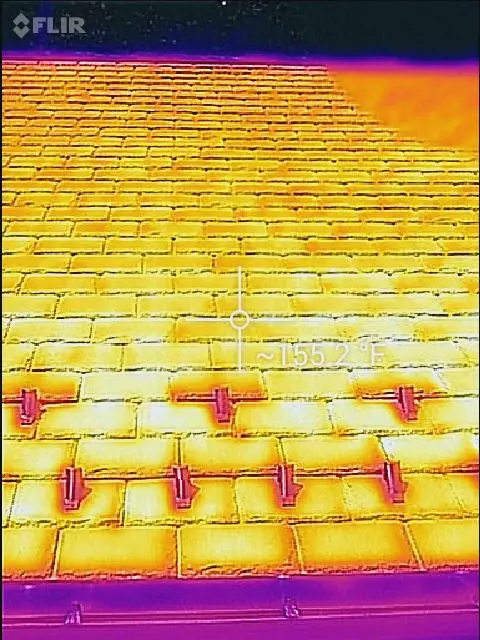
I have a new question. Shingles do get
very hot especially in Texas in the summer. Why use a product to roof a
house that will transmit so much heat?
Is there a roofing product that is cool and reflecting neat instead of
producing more heat?
I enjoy your comments very much.
Thank you, Marlys Kosel
Robert Webb
21 Dec 2008, 18:30
We live in northern Michigan, and it is nothing to get 2'-3' of snow on our
roof. Here's our problem: we live in a manufactured home with cathedral
ceilings and a 3-12 pitch so there is virtually no attic space. But we do
have 12" of pink insulation. In the winter months we get severe ice
damming, which causes water to leak into the house. The roof is only 5
years old, and we had one row of rubber ice guard installed at that time.
We have a ridge vent with soffits all around the house. What can we do to
get some proper venting into our attic? And, prevent ice damming. I just
hate getting up on the roof and shoveling it each time it snows, not to
mention the fact that I'm 66 years old!
Bill Whitaker
27 Jan 2009, 07:08
I found this site to be very helpful when choosing my solar attic fan. The
correct amount of free inlet area is just as important as fan size,
remember to pay attention to that!
http://www.solar-attic-fan-info.com/
Mike
15 Mar 2009, 19:53
I have a relatively new house, with an attached and insulated 2 car garage,
and an attic exhaust fan in a gable end over the main part of the house.
There is an area where the interior plywood sheathing on the roof was cut
to provide access from the storage area over the garage to the area over
the main part of the house. Closing that off with some 1/4" plywood, just
tacked down, would effectively cut off the cubic area over the garage from
the rest of the attic, and IMHO, reduce the area the attic fan is
attempting to cool, thereby increasing its effectiveness..there are plenty
of soffit vents and other gable vents all around as well. Do you think my
plan has any merit?
Kathryn
18 Mar 2009, 20:34
My husband has "jury rigged" a large box fan in our unfinished attic
Hmmm. Is it a bad thing to do? And can there be a fire from this? And will
it trap dirt and catch fire, etc.
Thanks so much.
HAL2009
04 Jun 2009, 17:58
I'm all for energy efficiency as much as anybody but if I put a solar
powered fan in my attic, why not have it continue to work at night or when
it's cloudy if the air is hot in the attic? So, besides the thermostat, I
would add an AC operated power supply that would automatically kick in when
the solar panel output dropped below a useful value.
John gillespie
05 Jun 2009, 16:32
Tim,
I need to vent my attic. I want to install a power vent but my house has
no eaves. The roof line ends at the exterior walls, with a gutter attached
to the soffit. I was figuring on sizing an opeing and installing a grill
in my ceiling to provide the intake air in the attic. I have no a/c. Any
thoughts or suggestions.
Thanks
Jav
19 Jun 2009, 21:32
My two cents...Was here searching for help on how to test to see thermostat
was working or my motor was bad. I saw the post on bypassing the thermostat
which is what I will try...had not occur to me. Anyway, as a homeowner that
has experienced roof without and with I must say the power ventilator does
help especially because at evening time the roof is not as hot as if it was
only ventilated with turbine fans....allowing the a/c to cool my second
story faster than without it.
Interesting article! Question for you Sir: In a 2-story townhouse here in
Las Vegas, NV, would it be advisable to try and create an "attic draft" by
installing an attic fan behind one of the roof gables, and then allowing
the rising hot air to exit the upstairs of the house through the fan/gable?
If I remember my high-school physics, the hot air should rise and then be
able to exit via the gable fan. I appreciate any advice you could give!
Jim
20 Jul 2009, 14:12
Just like any other ventilation fan, sizing is one very important key to
satisfactory results. The average home attic is about 1,600 sq. ft. and it
sometimes takes two solar powered fans to do the job OR one that moves
about 1,600 cfm. Also, a good solar powered fan with a large solar
collector will pick up the suns rays very early in the morning BEFORE the
attic gets hot and will therefore be able to keep the temperature down by
moving air all day long as long as the sun is shining. SO, keep in mind to
chose a solar fan that has as large a collector as possible, and is rated
as close to the proper size.
Pat
20 Jul 2009, 15:12
While this doesn't directly relate to attic fans, I wonder why people don't
line the underside of their roof rafters with aluminum-coated plastic
sheeting to reflect the radiant heat back outdoors BEFORE in get into the
atttic and is retained by the insulation in the attic. One thing has
prevented me from doing this - potential condensation from the water vapor
that emanates from the interior of the house.
Any comments on this approach?
Jim
20 Jul 2009, 16:40
Phil makes some great points. Let me comment from Eastern New Mexico.
1. Our 40 year old house had 165+ degrees by summer's noon -- and many
leaks in a 6 yeaer old shingle roof in good repair. We now have 10-12
degrees above the outside temp -- at the hotter 3 pm hour. Here is how.
2. We discarded the idea of end gable fans and ridge vents, because they do
not move enough air or do not move it in the right areas. (Ridge vents with
power turbines can pull air-with-rain in the wrong direction.)
3. For soffits, the best choice is continuous venting along the soffit. The
second best is an enlongated vent added every other truss -- to equalize
air flow throughout the roof.
4. In areas with a lot of wind, a combination of wind turbine and power
turbine is often best. For an 85 by 40 house we have three 14 inch wind and
two large power turbines. Even on windy days this is barely adequate.
5. Find the formula (on the web) for the correct vent sq footage to match
your total turbine needs -- and follow or exceed it religiously. If after a
year, the insulation near your soffit vents is pulled away from the walls,
it may indicate you need to add more soffit venting. That will prolong the
life of your power vents. (Try using insulaation bats near soffits.)
6. You want to do more than cut the air temperature. You want to cut the
temperature on the underside of your shingles, trusses, etc. This generally
takes more air movement than the formulas mentioned in # 5. Doing this
significantly can lengthen the life of your shingles by 5-10 years -- and
cut down on water leaks, saving the associated expenses! This factor alone
goes a long way to pay for your vents and the power to run them.
You can get the motor rewound. I have done this in the past with an
appliance that I wanted to keep.
Greg
21 Jul 2009, 07:37
What about open cell foam insulation sprayed on the underside of the roof
between the rafters. It seems to be common practice now in the gulf coast
area of the USA to completely seal the attic space (no vents, none at all).
I've been in an attic with this foam insulation on a hot summer day in
Louisiana and it was about 90 deg F. (about 5 degrees cooler than the
outside temp, the A/C was on inside the house)
Wayne
21 Jul 2009, 23:19
Tim,
Excellent article, thank you. I have a question on attic fans and moisture
build-up in the winter months.
I live in Canada, and I get ice build up inside the attic. If I install a
fan with a humidistat and increase my insulation depth, will that help
eliminate the conditions that create the ice?
Elmer Galbraith
25 Jul 2009, 17:03
Tim - This refers to a question in this list. I had a new roof installed
last year due to hail damage. The attic fan was removed and ridge vents
were installed. Can an attic fan be reinstalled and work with ridge vents?
Gene Werden
31 Jul 2009, 20:21
All well and good. If interested, one can refer to a roofing material
manufacturers installation handbook. It has formulas for calculating the
amount of inlet and exhaust air square inches you need for a specific
square footage of attic space. It includes the net effective square inches
of a soffit vent, rather than just multiplying width times length.
It will also tell you how many cubic feet per minute is ideal to move the
attic air via a fan. And no, more is not necessarily better. If you don't
balance the inlet air and the outlet air, you are doing yourself a
disservice. Thanks for reading this.
walter carl cantwell
02 Aug 2009, 12:55
how many vents
Greg
13 Aug 2009, 05:47
What about the opposite approach - Spray foam insulation between the roof
rafters. In the south this is becoming popular. With spray foam your attic
is sealed tight and becomes like a big ice chest.
Tom Butler
18 Aug 2009, 10:27
I have a 1926 farmstead home and just had turtle vents installed to reduce
the temperature in the attic. I have a 3.5 tonne heatpump. My question is,
with a small 1 foot by 1 foot static vent at the end of the attic, no
soffit vents, no eave vents and no other airflow vents, will this be
effective in reducing my internal cooling costs? I live in West Texas.
Paul
21 Aug 2009, 16:51
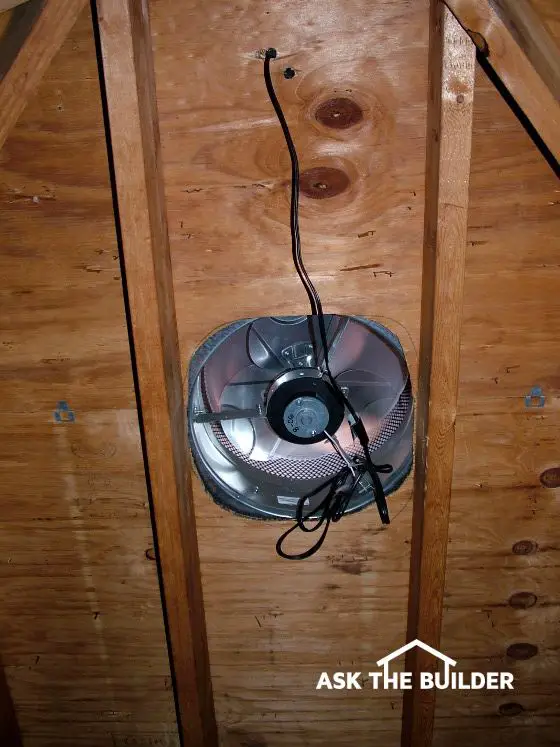
I wonder at Tim's experiment with the solar fans. If the fan pictured is
the one he is talking about then it may be too far down from the peak and
if the thermostat is up high (a good place for one) then the fans might be
leaving a hot bubble at the peak of the roof and sucking out the hot below.
Otherwise it is hard to explain how swapping out 130 degree air and pulling
in say 90 degree air is not helping even a tiny bit.
The roof warranties I have read (yup - read some) have as a condition
sufficient ventilation. And sufficient is a lot by their lights and I'll
bet money very few inspectors on warranty claims think _any_ amount is
sufficient to pay on.
I live in a climate with lots of sun but mild weather so I vent for the hot
days and for the life of the roof materials. The roof that lasts an extra 5
years past the 40 of the planned shingle life is like getting discounted by
12%... and the comfort boost makes it worth the bother.
Attic Fan
To add a comment visit the Article Page.
Comments
08 Jul 2008, 08:47
08 Jul 2008, 08:48
08 Jul 2008, 10:15
08 Jul 2008, 11:07
Good article on attic fans. Your caution regarding the extended use of AC because of attic fans is very important to remember.
And like Ralph who writes above, i to find the
moving boxes very annoying. please stop that.
thank you
nitto
08 Jul 2008, 11:19
10 Jul 2008, 16:34
15 Jul 2008, 12:09
Keith
15 Jul 2008, 16:36
I have just had the motor replaced after 15 years of use. It was running fine but I have heard stories of roof fires being caused by overheated roof fan motors.
Terry
22 Jul 2008, 13:48
another contractor later put on new and stronger AMP thermostats and the fan motors still won't come on.
any suggestions as to what I should do?
27 Jul 2008, 13:19
30 Jul 2008, 21:05
If there is inadequate soffit and gable air intake can exhaust fans and vents work effectively?
31 Jul 2008, 10:18
02 Aug 2008, 15:33
02 Aug 2008, 23:47
03 Aug 2008, 10:37
I had two (2) different contractors install two different new thermostats on my attic exhaust ventilator fans and neither was able to get them running. The last or second contractor concluded that a surge must have burned out both motors.
Since we recently had a new roof put on after a complete tear off of the old, I don't want that new roof disturbed by ripping out the entire attic exhaust fans and replacing them with new units. Instead I would rather see new motors installed (assuming that can be done from the inside of the attic).
What a pity the roofing contractor told me that he didn't think the old fans needed replacement at the time he put on a new roof because he said they looked fairly new or recent ones.
Thanks for your advice. Much appreciated.
07 Aug 2008, 15:31
07 Aug 2008, 15:35
05 Sep 2008, 21:02
08 Sep 2008, 21:45
Thanks so much.
08 Nov 2008, 16:58
Thanks!
03 Dec 2008, 09:41
very hot especially in Texas in the summer. Why use a product to roof a house that will transmit so much heat?
Is there a roofing product that is cool and reflecting neat instead of producing more heat?
I enjoy your comments very much.
Thank you, Marlys Kosel
21 Dec 2008, 18:30
27 Jan 2009, 07:08
http://www.solar-attic-fan-info.com/
15 Mar 2009, 19:53
18 Mar 2009, 20:34
Thanks so much.
04 Jun 2009, 17:58
05 Jun 2009, 16:32
I need to vent my attic. I want to install a power vent but my house has no eaves. The roof line ends at the exterior walls, with a gutter attached to the soffit. I was figuring on sizing an opeing and installing a grill in my ceiling to provide the intake air in the attic. I have no a/c. Any thoughts or suggestions.
Thanks
19 Jun 2009, 21:32
21 Jun 2009, 14:50
20 Jul 2009, 14:12
20 Jul 2009, 15:12
Any comments on this approach?
20 Jul 2009, 16:40
1. Our 40 year old house had 165+ degrees by summer's noon -- and many leaks in a 6 yeaer old shingle roof in good repair. We now have 10-12 degrees above the outside temp -- at the hotter 3 pm hour. Here is how.
2. We discarded the idea of end gable fans and ridge vents, because they do not move enough air or do not move it in the right areas. (Ridge vents with power turbines can pull air-with-rain in the wrong direction.)
3. For soffits, the best choice is continuous venting along the soffit. The second best is an enlongated vent added every other truss -- to equalize air flow throughout the roof.
4. In areas with a lot of wind, a combination of wind turbine and power turbine is often best. For an 85 by 40 house we have three 14 inch wind and two large power turbines. Even on windy days this is barely adequate.
5. Find the formula (on the web) for the correct vent sq footage to match your total turbine needs -- and follow or exceed it religiously. If after a year, the insulation near your soffit vents is pulled away from the walls, it may indicate you need to add more soffit venting. That will prolong the life of your power vents. (Try using insulaation bats near soffits.)
6. You want to do more than cut the air temperature. You want to cut the temperature on the underside of your shingles, trusses, etc. This generally takes more air movement than the formulas mentioned in # 5. Doing this significantly can lengthen the life of your shingles by 5-10 years -- and cut down on water leaks, saving the associated expenses! This factor alone goes a long way to pay for your vents and the power to run them.
Want to vent? It's a great idea!
20 Jul 2009, 18:05
You can get the motor rewound. I have done this in the past with an appliance that I wanted to keep.
21 Jul 2009, 07:37
21 Jul 2009, 23:19
Excellent article, thank you. I have a question on attic fans and moisture build-up in the winter months.
I live in Canada, and I get ice build up inside the attic. If I install a fan with a humidistat and increase my insulation depth, will that help eliminate the conditions that create the ice?
25 Jul 2009, 17:03
31 Jul 2009, 20:21
It will also tell you how many cubic feet per minute is ideal to move the attic air via a fan. And no, more is not necessarily better. If you don't balance the inlet air and the outlet air, you are doing yourself a disservice. Thanks for reading this.
02 Aug 2009, 12:55
13 Aug 2009, 05:47
18 Aug 2009, 10:27
21 Aug 2009, 16:51
The roof warranties I have read (yup - read some) have as a condition sufficient ventilation. And sufficient is a lot by their lights and I'll bet money very few inspectors on warranty claims think _any_ amount is sufficient to pay on.
I live in a climate with lots of sun but mild weather so I vent for the hot days and for the life of the roof materials. The roof that lasts an extra 5 years past the 40 of the planned shingle life is like getting discounted by 12%... and the comfort boost makes it worth the bother.
To add a comment visit the Article Page.