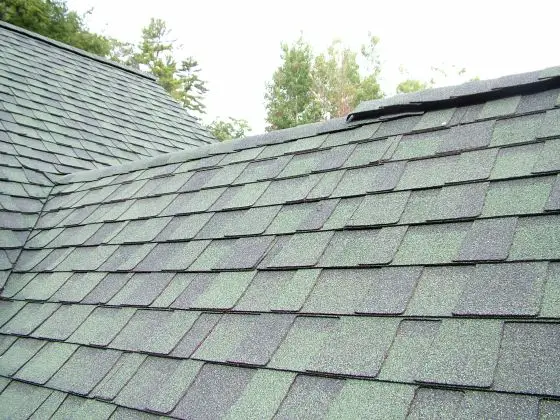
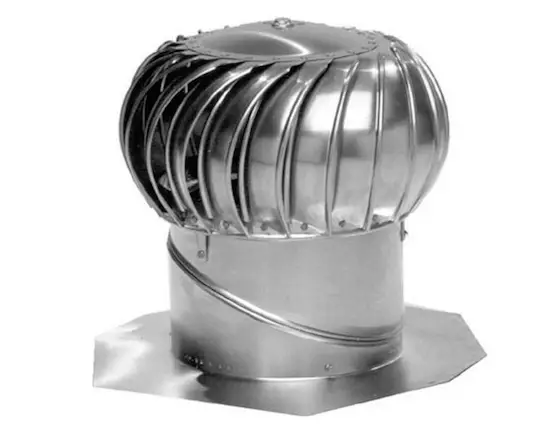
Roof Vent
To add a comment visit the Article Page.
Comments
Jun Liu
30 Sep 2008, 15:05
30 Sep 2008, 15:05
I found this very confusing. I have read numerous places that if you have
roof ridge vent, you should not install other types of ventilation devices,
such as roof fans, because they would disrupt the natural air flow that is
critical for the ridge vent to work properly. Even some honest websites
that sell roof fans would tell you this. However, if ridge vent is not
working the way as they should, then it becomes a moot point. But if it is
really as bad as you claim, I wonder why almost every new house I have seen
uses ridge vent? I am totally confused.
Jacko
30 Sep 2008, 18:34
30 Sep 2008, 18:34
I just paid to have ridge vent installed on a 3400 sq ft roof - did I waste
my money and did any ridge vent vendors try to contact you to dispute your
assertion?
Erin
04 Oct 2008, 08:28
04 Oct 2008, 08:28
I have read that the ridge vent <i>combined</i> with soffit
vents is what creates the efficient movement of air. This is considered by
many builders to be the most effective type of venting so I am surprised at
the results of Tim's test. Perhaps there is a ridge vent but no soffit
vents at Tim's location? I need to do some further research because I was
planning to do the ridge/soffit vent combination when I have my new roof
installed but this news is a little unnerving.
Art
04 Oct 2008, 10:27
04 Oct 2008, 10:27
I like Erin have soffit vents and a
gable or end lover. Attic is hot but not suffacateing. Ceiling of bed rooms below are normal, like sides.
Tom
04 Oct 2008, 11:03
04 Oct 2008, 11:03
As the volume of hot air accumulates in the ridge vent it naturally pushes
out through the vents. Additionally, any air movement over the top of the
ridge will create a suction on the down-wind side of the vent that will
pull the hot air out of the attic. With little to no air movement you will
not notice much hot air leaving the vent, but the slightest breeze should
pull the hot air our instead of it cascading back into the attic space.
jacko
04 Oct 2008, 11:25
04 Oct 2008, 11:25
I should have mentioned that I followed the roofer's suggestion and added
additional soffit vents according to a formula that allows enough air
intake to allow ventilation at the ridge. I'm just concerned that I did a
lot of work for not much return.
Glenn
04 Oct 2008, 18:07
04 Oct 2008, 18:07
The easy way to think about how the attic vent works is "upside down".
"Lighter than air" (hot air) rises. "Heavier than air" (water) falls.
Imagine the roof upside down and filled with water. The water would drain
out through the ridge vent until the only water left was below the opening
(in the upside down peak).
The attic contains hot air that wants to rise and the soffit vents provide cooler air that wants to take it's place. The ridge vent angles down a few inches, but hot air from many feet below it is pushing to rise. The action is the same as the water in the example flowing out even though the opening in the upside down roof angles back up.
You could also think of a filled balloon with a flexible straw connected to its hole. You could point the straw up and bend the end back down so escaping air would have to reverse direction. That wouldn't stop the balloon from deflating. The roof contains air that would be under pressure if it were sealed (the expanding hot air would be like the air in a pressure cooker). The air would try to escape any opening. The roof has openings at the top (the ridge vent) and at the bottom (the soffit vents). The outside air at the bottom is denser than the air at the top (it doesn't have to be denser by much). This makes it easier for the air to escape through the ridge vent. Once the pressure inside the roof is less than the difference in outside pressure between the top of the roof and the soffit, outside air pressure will push air into the soffit vents. The new cooler air gets heated in the attic and keeps the cycle going, creating a draft.
You don't need a wind, like a fan, to cool the attic; just enough air flow so that the air in the attic isn't trapped and heated to a much higher temperature than the surrounding air.
Bottom line, if you have a ridge vent and soffit vents that were properly installed, it really does work and you didn't waste your money.
The attic contains hot air that wants to rise and the soffit vents provide cooler air that wants to take it's place. The ridge vent angles down a few inches, but hot air from many feet below it is pushing to rise. The action is the same as the water in the example flowing out even though the opening in the upside down roof angles back up.
You could also think of a filled balloon with a flexible straw connected to its hole. You could point the straw up and bend the end back down so escaping air would have to reverse direction. That wouldn't stop the balloon from deflating. The roof contains air that would be under pressure if it were sealed (the expanding hot air would be like the air in a pressure cooker). The air would try to escape any opening. The roof has openings at the top (the ridge vent) and at the bottom (the soffit vents). The outside air at the bottom is denser than the air at the top (it doesn't have to be denser by much). This makes it easier for the air to escape through the ridge vent. Once the pressure inside the roof is less than the difference in outside pressure between the top of the roof and the soffit, outside air pressure will push air into the soffit vents. The new cooler air gets heated in the attic and keeps the cycle going, creating a draft.
You don't need a wind, like a fan, to cool the attic; just enough air flow so that the air in the attic isn't trapped and heated to a much higher temperature than the surrounding air.
Bottom line, if you have a ridge vent and soffit vents that were properly installed, it really does work and you didn't waste your money.
Jack DeHaan
05 Oct 2008, 05:50
05 Oct 2008, 05:50
I'm preparing to install a new roof on our home next spring and have
ventilation issues. Our home is post and beam construction,roof rafters are
notched into a seven inch square beam allowing no air flow from the soffit
vents into the attic space. what other options do we have. Vented drip edge
isn't an option neither.
thanks in advance-
thanks in advance-
Elisabeth James
05 Oct 2008, 23:57
05 Oct 2008, 23:57
I hope you are enjoying New Hampshire. I know some nearby areas very well.
Although we live in Toledo, Ohio now.
My problem is that we have no overhang and hence no area for soffit vents. This is some gable-end vent and some ridge vent but there is not enough attic ventilation. The roofer who re-did the roof also did not cut the openings on the two ridge vents (you can't see day light through the attic). The foot print of the hosue is 3000 square foot and there are two runs of ridge vent (8' each) and a nd four small, slit style, gable ends vents. What do you recommend I have installed? Maybe an intake fan and outflow fan on opposite sides of the attic?
Ralph Newberry
06 Oct 2008, 16:47
06 Oct 2008, 16:47
I just finished building my own house (I built it myself) and installed 4
passive vents in the roof on one side but on the older side I have an elec
power roof vent. My house is kind of like an off set "T". People told me
that the elec. vent would not last and they are no good but I have to say
that the side of house with the power vent is much cooler than the passive
vent side and it now going on 6 years for that roof.
jacko
06 Oct 2008, 20:08
06 Oct 2008, 20:08
Ralph,
I was told by the people that sold me the ridge vent and by the folks that I wanted to buy a roof fan from that the roof fan would interfere with the air circulation that made the ridge vent work. So while your power ventilated side is cooler, could it be that you have sabotaged the side?
Diane
07 Oct 2008, 07:02
07 Oct 2008, 07:02
What do you reccommend for a house that we are building out of polystrene
and cement...the product is called Apex Block...it is very cool inside but
thought of using solar fans for the roof....others say not to use it...we
will be using galvelum roofing up above.
Howard Moseley
07 Oct 2008, 07:18
07 Oct 2008, 07:18
I have seen this information given with using a very scientific study. The
ridge vents provide very poor circulation. The study showed two homes of
similar size, etc and the one with ridge vents was 42 degrees hotter in the
summer than the one using passive venting.
Why do people install them? Just for looks... Why do builders install them? Because it makes their job easier. Why does everyone say they work better? Because they repeat what they hear without any data to prove the claims.
larry haubrich
07 Oct 2008, 07:26
07 Oct 2008, 07:26
I have a cistern that leaks at the outpult pipe which is under water when
cistern is full. how do I seal the concrete area around the metal pipe. so
far patching has not worked
Chris S
07 Oct 2008, 07:58
07 Oct 2008, 07:58
One thing neglected is an additional benefit of proper attic venting. When
in a highly humid area such as the Gulf Coast, venting helps rid the attic
of moisture condensation. This helps avoid those lovely mold conditions,
extend the life of blow in insulation, etc. Now without proper soffit
venting at the bottom to pull in cooler air, a ridge and or gable vent can
actually pull air from the interior of the home. The attic needs to suck in
somewhere and without soffits it can be heat in the winter or cold in the
summer coming through ceiling light fixtures, bad hvac ducting or
similar.
Daniel F. Cullen
07 Oct 2008, 09:46
07 Oct 2008, 09:46
It seems as though Tim and the other commentators are keying in on the
buoyancy of heated air in this discussion.
There is another important force at work that is being neglected. When the wind hits the side of a structure it's force is increased and it is forced into the continuous ridge vents under pressure.
When a breeze passes over a well designed and installed ridge vent it creates a negative pressure on the leeward side and pulls air out of the attic by the venture principle. Or Bernoulli's Law or something scientific like that!
Anyway, if we want a 'well washed' attic space that doesn't require energy input then a well designed and installed soffit/ridge combination can work very well. The net free vent area of the soffit and ridge openings should be balanced in a roughly 50/50 ratio.
Over time dust and poorly applied paint can clog the soffit vents and ridge vents; this should be guarded against.
Certainteed has a great interactive online course (free) that details correct attic venting. It contains information from the Small Homes Council of the Univ. of Illinois.
There is another important force at work that is being neglected. When the wind hits the side of a structure it's force is increased and it is forced into the continuous ridge vents under pressure.
When a breeze passes over a well designed and installed ridge vent it creates a negative pressure on the leeward side and pulls air out of the attic by the venture principle. Or Bernoulli's Law or something scientific like that!
Anyway, if we want a 'well washed' attic space that doesn't require energy input then a well designed and installed soffit/ridge combination can work very well. The net free vent area of the soffit and ridge openings should be balanced in a roughly 50/50 ratio.
Over time dust and poorly applied paint can clog the soffit vents and ridge vents; this should be guarded against.
Certainteed has a great interactive online course (free) that details correct attic venting. It contains information from the Small Homes Council of the Univ. of Illinois.
Bill
07 Oct 2008, 10:33
07 Oct 2008, 10:33
I will be very interested in your findings regarding lowering the temp in
the attic from 140 to 105. I live in South Carolina and have ridge vents.
In my previous house I was only able to cool down the second floor by
putting in an attic/roof fan.
This is my first year in this new house and I may have to install a powered roof vent here also.
Daniel F. Cullen
07 Oct 2008, 11:01
07 Oct 2008, 11:01
Elizabeth in Toledo:
You can add ventilated overhanging drip edge for low intake air. This is a relatively new product designed for homes without an overhanging eave. If you use it you will have to be very careful about keeping your gutters cleaned and repaired since an overflow from the gutters could flow into the ventilated drip edge.
http://www.airvent.com/professional/products/intake-theedge-faqs.shtml
http://www.dciproducts.com/html/smartvent.htm
Follow the links to two products that will provide low intake air for homes without soffits.
You can also install fastback static vents in a row along the lower edge of your roof to provide the air necessary to 'wash' the attic space.
If your roof has a low slope (4 in 12 or less) and if you live in a climate with significant snow fall, you will also have to consider the danger of ice-damming. The issues are a bit complex but easily understood if studied.
Certainteed has a great free course on proper attic ventilation.
http://216.83.181.215/elearning/certainteed/resources/index.jsp
Good Luck!
Dan Cullen
Domicile Consulting
You can add ventilated overhanging drip edge for low intake air. This is a relatively new product designed for homes without an overhanging eave. If you use it you will have to be very careful about keeping your gutters cleaned and repaired since an overflow from the gutters could flow into the ventilated drip edge.
http://www.airvent.com/professional/products/intake-theedge-faqs.shtml
http://www.dciproducts.com/html/smartvent.htm
Follow the links to two products that will provide low intake air for homes without soffits.
You can also install fastback static vents in a row along the lower edge of your roof to provide the air necessary to 'wash' the attic space.
If your roof has a low slope (4 in 12 or less) and if you live in a climate with significant snow fall, you will also have to consider the danger of ice-damming. The issues are a bit complex but easily understood if studied.
Certainteed has a great free course on proper attic ventilation.
http://216.83.181.215/elearning/certainteed/resources/index.jsp
Good Luck!
Dan Cullen
Domicile Consulting
Mickey McRoberts
07 Oct 2008, 12:51
07 Oct 2008, 12:51
I read all of the Comments on roof vents. I am in the building business
but do not profess to be an expert in attic ventilation. However, as a
grad student at U. of Florida in 1976, an architectural student and
neighbor struck up an interesting conversation about a lecture on
ventilation he had attended that day. Apparently, the professor had at one
time owned the intellectual property [patent(s)] to the TURBINE type roof
vents. He informed the audience-and demonstrated-that turbine vents
actually do not "suck" air from an attic, rather they simply allow a
weather resistant method of natural convection. Manually spinning the
turbine itself with your hand will create a suction (for a salesman doing a
demo!) where the installed turbine spinning in the wind will not. A
"canceling" high pressure/low pressure effect occurs [look up the Bernoulli
Principle for proof]. It saddens me to think of all those ugly turbines in
plain view could have been mushroom vents, ridge vents, or some more
effective, obscure powered unit.
DM
07 Oct 2008, 13:28
07 Oct 2008, 13:28
Our old house had a center powered fan (in conjunction with soffit vents).
It lasted 30 years. I simply replaced the electic motor. It had a
thermostat you could set the on and off tempurature. Worked great in the
summer. I suspect the condensation we had in the winter was due to the fan
not running. I considered putting a timer to run it 15 minutes every hour
or two, but we moved before I got to it.
Derek Patterson
07 Oct 2008, 17:57
07 Oct 2008, 17:57
Tim
I did my own roof in 1985 and installed thermostatickaly controlled fans. These motor do no last a lifetime and I had to replace them. I happened to be on the roof recently to measure for a new roof and saw smoke coming from the motor. It was ot enought to burn my fingers and I believe may have started a fire had I not been on the roof. I now have ball bearing turbine roof vents with my new roof
Derek
I did my own roof in 1985 and installed thermostatickaly controlled fans. These motor do no last a lifetime and I had to replace them. I happened to be on the roof recently to measure for a new roof and saw smoke coming from the motor. It was ot enought to burn my fingers and I believe may have started a fire had I not been on the roof. I now have ball bearing turbine roof vents with my new roof
Derek
Troy
08 Oct 2008, 04:31
08 Oct 2008, 04:31
Glenn's explanation of hot air as a fluid is correct. There are still old
houses in the south that use an open passive steeple looking vent for
cooling the house. The secret of a ridge vent is the size of the opening.
A mere 2" opening down a 60' ridge provides a 10 square feet opening.
Ralph, my power vent has operated for 30 years and it runs a lot. Many nights it turns off at midnight here in central Arkansas. New ones may not be as reliable.
Attic ventilation reduces the temperature difference between the attic and the living space and reduces the temperature of the roofing shingles. Some building science engineers now seal and insulate the attic space to reduce the temperature to that of the living space, especially if cooling equipment is installed in the attic. There are various ways to ventilate under the shingles or you can use ventilated metal roofing. Timber frame builders have used this technique for years when there is no attic.
Ralph, my power vent has operated for 30 years and it runs a lot. Many nights it turns off at midnight here in central Arkansas. New ones may not be as reliable.
Attic ventilation reduces the temperature difference between the attic and the living space and reduces the temperature of the roofing shingles. Some building science engineers now seal and insulate the attic space to reduce the temperature to that of the living space, especially if cooling equipment is installed in the attic. There are various ways to ventilate under the shingles or you can use ventilated metal roofing. Timber frame builders have used this technique for years when there is no attic.
Larry Gelner
08 Oct 2008, 07:50
08 Oct 2008, 07:50
You might check out the articles in Journal of Light construction about how
no venting is required in several situations. I dont remember the details,
but there is a strong case to be made for no venting.
Gary Brown
08 Oct 2008, 09:00
08 Oct 2008, 09:00
Tim, it's not often that I disagree with you, but this time we are miles
apart! I agree with Tom and Glenn on this.
I bought my first home in 1972, an 8 year old Colonial in a very nice development in Northern Virginia.
One of the first things I did was to slice a hole the length of the main ridge of the roof and install a ridge vent. I'm sure the neighbors thought I was crazy, up there with a circular saw cutting holes in a perfectly good roof.
Next I cut round holes in the soffitts and put in vents there (if your readers do this, be sure to get the ones with a screen wire inside to deter insects). The last but very important step, which I haven't seen anybody mention here, was to add baffles at the eaves to ensure good air flow. The baffles provide a channel between the roof and attic insulation, and they allow natural air flow. They're made of thin styrofoam sheets or cardboard and are available at a builder's supply or lumberyard - although you can make your own out of large cardboard boxes.
I sold that house in about 1987. All the other homes in the neighborhood either had new roofs or needed them. Mine was still nearly perfect. The buyer hired a Home Inspector (unusual in those days) who couldn't believe that a 20+ year old roof would be in such great condititon.
Given an opportunity to flow, heated air wants to escape. It moves to the highest point, the ridge. IF an adequate supply of relatively cool outside air is available, it will flow in and allow the heated (higher) air to escape. Sometimes, as when Tim used incense, it is imperceptible. But when the attic starts to heat up, or if it's breezy outside, the air flow is noticeable. Don't worry about the last couple of inches in the very peak - the amount of hot air trapped above gable vents or turbines is greater than with a ridge vent.
But in addition, with good air flow, there will be eddy currents at the ridge vent, which will help suck that small amount of trapped, overheated air, to escape. You don't get that with gable vents or turbines.
Don't put in an electric fan. Been there, made that mistake. Natural is best, and it's free.
Today, as a Home Inspector, I know that your roofing material's greatest enemy is heat. I specify "materal" here, because water is actually your roof's worst enemy. But if the roofing material does its job of deflecting moisture, all but the topmost layer of the roof stays dry.
I bought my first home in 1972, an 8 year old Colonial in a very nice development in Northern Virginia.
One of the first things I did was to slice a hole the length of the main ridge of the roof and install a ridge vent. I'm sure the neighbors thought I was crazy, up there with a circular saw cutting holes in a perfectly good roof.
Next I cut round holes in the soffitts and put in vents there (if your readers do this, be sure to get the ones with a screen wire inside to deter insects). The last but very important step, which I haven't seen anybody mention here, was to add baffles at the eaves to ensure good air flow. The baffles provide a channel between the roof and attic insulation, and they allow natural air flow. They're made of thin styrofoam sheets or cardboard and are available at a builder's supply or lumberyard - although you can make your own out of large cardboard boxes.
I sold that house in about 1987. All the other homes in the neighborhood either had new roofs or needed them. Mine was still nearly perfect. The buyer hired a Home Inspector (unusual in those days) who couldn't believe that a 20+ year old roof would be in such great condititon.
Given an opportunity to flow, heated air wants to escape. It moves to the highest point, the ridge. IF an adequate supply of relatively cool outside air is available, it will flow in and allow the heated (higher) air to escape. Sometimes, as when Tim used incense, it is imperceptible. But when the attic starts to heat up, or if it's breezy outside, the air flow is noticeable. Don't worry about the last couple of inches in the very peak - the amount of hot air trapped above gable vents or turbines is greater than with a ridge vent.
But in addition, with good air flow, there will be eddy currents at the ridge vent, which will help suck that small amount of trapped, overheated air, to escape. You don't get that with gable vents or turbines.
Don't put in an electric fan. Been there, made that mistake. Natural is best, and it's free.
Today, as a Home Inspector, I know that your roofing material's greatest enemy is heat. I specify "materal" here, because water is actually your roof's worst enemy. But if the roofing material does its job of deflecting moisture, all but the topmost layer of the roof stays dry.
John F. "Mickey" McRoberts
08 Oct 2008, 15:17
08 Oct 2008, 15:17
I read all of the Comments on roof vents on your website. I am in the
building business but do not profess to be an expert in attic ventilation.
However, as a grad student at U. of Florida in 1976, an architectural
student and neighbor struck up an interesting conversation about a lecture
on ventilation he had attended that day. Apparently, the professor had at
one time owned some or all of the intellectual property [patent(s)] to the
TURBINE type roof vents. He informed the audience-and demonstrated-that
turbine vents actually do not "suck" air from an attic, rather they simply
allow a weather resistant method of natural convection. Manually spinning
the turbine itself with your hand will create a suction (for a salesman
doing a demo with cigarette smoke!) where the installed turbine spinning in
the wind WILL NOT. A "canceling" high pressure/low pressure effect occurs
[look up the Bernoulli Principle for proof]. It saddens me to think of all
those ugly turbines in plain view could have been mushroom vents, ridge
vents, or some more effective, obscure powered unit.
Michael Pelham
08 Oct 2008, 15:42
08 Oct 2008, 15:42
Hope this helps. I have been working to lower my energy bill for months
now. Researched for months online, which ironically was how I found this
site 2 months ago when i was looking for info on radiant barrier (thanks
Tim). I live in Houston (HOT) my 4200 2 story has fairly large attic but
only had 2 passive fans and 2 smaller airhogs. What I learned online lead
me to want to rip out the fans and change over to ridge vents. Here is the
important data. I used a remote thermometor for over a month that told me
the min/max of the day. I recored it every day. My highest was 138. This
was in middle of summer down here. The next day after they finished it was
same cloudless day and 2deg hotter outside but my attic maxed out at 127.
Since then it has never been over 127 and there were many days hotter than
the 138 day. It may not be as effective as powered fans but i definitely
took at least 10 degrees out of my attic. Extra benefit to was my attic
is now within 4 degres of outside temp within about 2 hours of sun going
down. Before ridge vent it wasnt hitting 4 degree difference till about 5
or 6 hours after sun down, consistently. It made a believer out of me.
Hope that help.
George
08 Oct 2008, 21:46
08 Oct 2008, 21:46
Ridge Vents do work if combined with proper soffit venting.
However, in Northern areas in winter, snow can be a problem. If it covers the roof and your ridge vent, there is no more ventilation.
There is a product I have tried which is called a Maxi Vent which combine with a ridge vent manifold gives all the benefits of a ridge vent and static pot vents or turbine vents. Becasue the Maxi Vents stand up over the ridge, they will never cover with snow and therefore with the proper soffit ventilation will work all year. Also they ensure that all the hot air at the top of the ridge has a place to escape that is higher than the ridge, effectively solving the observation that standard ridge vents do not allow all the hot air to escape due to their opening being several inches below the peak.
However, in Northern areas in winter, snow can be a problem. If it covers the roof and your ridge vent, there is no more ventilation.
There is a product I have tried which is called a Maxi Vent which combine with a ridge vent manifold gives all the benefits of a ridge vent and static pot vents or turbine vents. Becasue the Maxi Vents stand up over the ridge, they will never cover with snow and therefore with the proper soffit ventilation will work all year. Also they ensure that all the hot air at the top of the ridge has a place to escape that is higher than the ridge, effectively solving the observation that standard ridge vents do not allow all the hot air to escape due to their opening being several inches below the peak.
Constance Helton
10 Oct 2008, 19:37
10 Oct 2008, 19:37
I found this very helpful and educational. I did not know all of that and I
am building a house and wondered about such things...thanks for the help. I
was wondering if you have to cover up your turbine vent during the
winter,because my husband has been told his whole life that if he didn't do
this that you would loose all the heat in your house. Is this true?
Constance Helton
10 Oct 2008, 19:45
10 Oct 2008, 19:45
Thanks for all that information on vents,that was very helpful and
educational....stuff I really needed to know when it comes time to do my
own house.
I have a question though-My husband has been told his whole life growing up that turbine vents have to be covered up during the winter or you will lose all your heat for the house out the vent and then you will bu using twice as much of whatever heating element you use to heat your house. Is this true?
Dave
11 Oct 2008, 19:20
11 Oct 2008, 19:20
Air can certainly flow down from the top of a ridge vent if there is enough
differential pressure, and that is what this is all about.
Hot air does rise and as it collects at the top of a ridge vent it will build up more pressure than that outside the roof.
Pressure will cause flow to go in any direction necessary to equalize, including down to curl around the ridge vent.
Hot air does rise and as it collects at the top of a ridge vent it will build up more pressure than that outside the roof.
Pressure will cause flow to go in any direction necessary to equalize, including down to curl around the ridge vent.
John
20 Oct 2008, 19:13
20 Oct 2008, 19:13
My father's house was just re-roofed, and on my first visit since then, I
noticed they had added ridge-vents. Un-wisely, I think, since many years
ago, I installed a dormer exhaust fan, which can no-longer pull the hot air
from the roof-peak plenum, but now it quick cycles because it quickly sucks
cool outside air down thru the near-by ridge-vent, to blow it out again,
leaving the rest of the roof & plenum hotter than I think they ever were
before. Baring other sage advice, I plan to tape over/seal the
ridge-vents, to re-enable the forced fan flow.
Al
09 Nov 2008, 02:07
09 Nov 2008, 02:07
Tim,
How can you discuss ridge vents without mentioning soffit vents? This is a "system" of high and low venting to allow convection of air through the attic space. Ridge vents alone are COMPLETELY WRONG!!!
John
17 Nov 2008, 14:47
17 Nov 2008, 14:47
Well I am with Tim on this one. My neighbour had his roof rehingled, and as
part of the job, all the original vents were plugged leaving only new ridge
vents. He has major ice dam issues that he never had before. You figure it
out!
John
19 Nov 2008, 13:05
19 Nov 2008, 13:05
Anyone who is being advised, by a roofing or insulation contractor, to have
ridge vents installed should ask the following question: "Will you also
check to be sure that my soffit vents are clear and working?"
Quite honestly, you should make the contractor guarantee you that your soffit vents are clear of insulation material, properly sized for your attic and working properly. Put that in the contract, even if it costs a few dollars more, or you are wasting your money.
John
19 Nov 2008, 15:18
19 Nov 2008, 15:18
I installed a vent-fan with a thermostat & humidistat control at both ends
of the ridge, about 17 years ago, and it is still working fine. This
summer, I had the shingles replaced, and the roofer 'threw-in' a full
ridge-vent for free. It was immediately obvious that the convection was
not as effective as the forced air circulation, since the fan would stay on
for hours at a time, showing the normal temp or RH limit was exceeded. I
hooked up a data logger to the sensors (replacing a humidistats that had
failed). I closed the vent-fans & left them off for a couple of weeks, and
then I sealed the ridge vents, and opened the fans. At first (convection)
although the hot weather RH was better, it was because it was so much
hotter(up to +40F). With the forced-air, the temp (set at 95F) stayed
within 20F of ambient, and the RH (set at +15%) within 15%.
It has recently gotten cold, and the humidistats (mounted asymmetrically) show up to 25% (5% more humidity, farther from the fans) before they turn on (I suspect due to passive convection thru the fans). I intend to open some of the ridge-vent, to see if there might be some cold wx advantage to them by blocking off the section of the roof with one pair of sensors, under the opened ridge-vent.
The trade-off so far, seems to be conservation of electricity in the summer (more fan is cheaper than more A/C), because a full ridge vent is not as effective as the vent fans.
I suspect the conservation of heat in the winter (the full ridge vent might blow off a lot more heated air than necessary), will also favor the control available in the fans. I'll let you know in a few weeks.
It has recently gotten cold, and the humidistats (mounted asymmetrically) show up to 25% (5% more humidity, farther from the fans) before they turn on (I suspect due to passive convection thru the fans). I intend to open some of the ridge-vent, to see if there might be some cold wx advantage to them by blocking off the section of the roof with one pair of sensors, under the opened ridge-vent.
The trade-off so far, seems to be conservation of electricity in the summer (more fan is cheaper than more A/C), because a full ridge vent is not as effective as the vent fans.
I suspect the conservation of heat in the winter (the full ridge vent might blow off a lot more heated air than necessary), will also favor the control available in the fans. I'll let you know in a few weeks.
Rick
10 Dec 2008, 09:23
10 Dec 2008, 09:23
Roofs has to have 1 square foot of ventilation per every 150 square foot of
attic floor space (upper living space ceiling area). There also has to be
at least the same amount of soffitt ventilation or more is recommended.
The cooler air is drawn through the soffitt vents by the hotter air in the attic which pushes the hotter air to the ridge of the roof.
I am a certified building inspector and I do many investigative inspections and proper roof installations. I have inspected many roofs with ridge vents and over 75% do not vent properly. It usually comes back to the roof sheathing is not cut properly or not at all at the ridge cap or not enough soffitt ventilation. I don't recommend ridge ventilation because the installers don't seem to install the systems correctly and too many homeowners complain about hotter living spaces on the upper levels after installation.
You also have to look at the attic framing and sheathing installation, because sometimes you will need additional ventilation because of the attic configuation.
I hope this helps.
Rick
The cooler air is drawn through the soffitt vents by the hotter air in the attic which pushes the hotter air to the ridge of the roof.
I am a certified building inspector and I do many investigative inspections and proper roof installations. I have inspected many roofs with ridge vents and over 75% do not vent properly. It usually comes back to the roof sheathing is not cut properly or not at all at the ridge cap or not enough soffitt ventilation. I don't recommend ridge ventilation because the installers don't seem to install the systems correctly and too many homeowners complain about hotter living spaces on the upper levels after installation.
You also have to look at the attic framing and sheathing installation, because sometimes you will need additional ventilation because of the attic configuation.
I hope this helps.
Rick
John
11 Dec 2008, 11:17
11 Dec 2008, 11:17
It is nonsensical to say you can't have too much ventilation. You need to
balance heat and humidity build-up against the cost of heating, cooling,
and moving the air in the house. I have had a fan and damper system for
nearly 20 years, and had to replace one of the 4 sensors last year. It is
also reasonable (even better) to have an uncontrolled ridge vent only for
the roof ventilation, with completely separate house HVAC, controlled by
temperature and humidity sensors. That way you use fuel (gas, electric or
other) only as necessary to keep the humidity down in the winter and the
temperature down in the summer.
For Leo, It's a bit hyperbolic to say "absolutely doesn't want to go down", when it is easy to see that although a couple of inches of residual hot air could be trapped under the ridge cap, all the rest of the heated air in the house is free to escape, just as most of the water in a bottomless cup on a dish can escape by flowing over the dish edge until the level inside is the same as outside.
John T
11 Dec 2008, 14:05
11 Dec 2008, 14:05
Proper ventilation takes care of both heat and humidity build up. Managing
both is important. Can you have too much ventilation? Yes I suppose that's
possible if you don't have enough insulation. But I would much rather err
on the side of too much rather than not enough ventilation.
Tom
19 Dec 2008, 08:52
19 Dec 2008, 08:52
I would like to know the best way to clean continuous ridge roof vents.
Many of the homes in my area, including my own, have these and they are all
rusty. I would like to repair mine without having to replace them
completely. Your help and consideration in this matter would be
appreciated. Have a great day and a better tomorrow.
To add a comment visit the Article Page.