Cable TV Options
DEAR TIM: I want to rearrange our furniture in our family room. This requires us to relocate our television set that gets its signal from our cable TV provider. What are my cable TV options with respect to getting the television to work? My husband says it will be very difficult to extend a new cable line behind the walls. The cable company just wants to staple a new line to either the interior wall or our exterior wall. I don’t like that one bit. What’s the best cable TV solution you can come up with in my situation? Valerie H., Salem, MA
DEAR VALERIE: I can tell you that I surely feel your pain. Believe it or not I’m in the same position as you are. My wife just moved into our home in New Hampshire and she wants our family room television on the other side of the room from where the current cable TV outlet is. I’ll be completing my research this morning to see what my cable TV offers with respect to equipment and services to get my flat screen TV to power up.
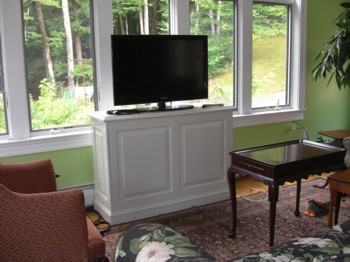
This digital television will remain black until a new cable is run to it or it’s setup in minutes to receive a wireless digital cable tv signal. PHOTO CREDIT: Tim Carter
If you have digital cable service now that’s coming into your home, you want to maintain that so you can view high-definition programming. For years this meant that you had to use a traditional cable wire to feed that signal to your television set or multiple sets throughout your home.
Your husband is probably correct. If you have a finished basement or a home on a slab, it can be problematic to extend a cable wire to another part of a room much less some other part of the house. I’m with you in that I don’t want exposed cables defacing either an interior or exterior wall of my home. I love the sleek look of a standard wall outlet that has a cable TV coaxial termination point. Better yet, I’d like to get the cable TV signal wirelessly.
If your family room has wall-to-wall carpeting, you may be able to hide the cable under the carpet along the edges of the wall. A good carpet installer can pull the carpet back off the tackless strips, hide the cable safely near the walls and then re-stretch the carpet. The installer just needs to make sure his tools don’t hurt the cable wire. Just place a piece of furniture along the wall where the cable enters into the carpet and where it exits.
If you don’t have wall-to-wall carpeting, you can accomplish the same thing but with more work. It’s possible to hide a cable wire behind a wooden toe strip molding that’s typically nailed to the bottom of a baseboard. You’d need some fancy woodworking tools or a table saw to create the channel where the cable will nest.
You’ll also need to be very careful when you secure the toe strip to the baseboard so you don’t penetrate the cable with a nail. There are tiny pin nailers that shoot very small fasteners that will attach the toe strip to the baseboard above the cable line.
Fortunately you have at least one other option. You can go wireless. It’s possible to purchase a wireless setup that allows you to place your television anywhere you want in that room. In the future or even now, it may be possible to broadcast the wireless digital signal to other rooms of your home to different TV sets that are equipped to accept the signal.
Cable TV and Internet are starting to merge. It’s been happening for a few years, but now the movement is gaining traction. Just as you have easy wireless connection to the Internet in your home and public places, you’ll be able to enjoy wireless digital television signals with relative ease.
Remember, the television signal is being broadcast from its source wirelessly in a digital format. The cable TV companies get the wireless signal and then put it into the cables you see attached to the miles of utility poles near your home. It only makes sense that you can reconvert the digital signal to a wireless one within the walls of your home once you have the right equipment and setup.
If you’re doing remodeling work or building a new home, it takes very little extra work to extend traditional cables to the various walls in a home that might eventually have a TV on or near them. In my own family room, I know for a fact that there are just three or four locations where the TV can go. It would have taken an electrician just 30 minutes or less to run a separate cable to the extra spots in the room.
Be sure to include into your budget the money needed to extend these cables. If you can’t do that, at least try to install blank conduits to these locations so you can run the cable wire without ruining the finished wall. But before you do that, cost it out. You’ll probably discover you can run the actual cable wire for the same cost and time investment of you installing blank conduit!
Column 845

Tim built custom homes and did ultra-custom remodeling for 20+ years before launching his Ask the Builder media presence. He was selected as one of the Big 50 by Remodeling magazine in 1993. This award gave birth to Ask the Builder in October 1993. Tim also operates https://DrawPlumbingPlans.com. His @askthebuilder YouTube channel was the first home improvement channel on YouTube.