Wallpaper Basics and Tips
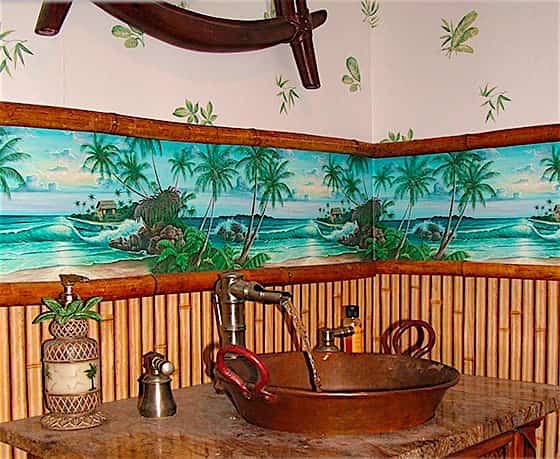
Wallpaper installation requires some pre-planning if you intend to use three different wallpapers in one small room like this! Copyright 2018 Tim Carter
"It's important to realize, that I had no training whatsoever in hanging wallpaper. I just tried it. Believe it or not, I lucked out. There were few problems."
Wallpaper Installation - Requires Skill & Attention to Detail
Back in the latter 1970s, I was a wallpapering machine. My wife Kathy and I had just moved into our second house, a monster three-story, five-bedroom, frame house. Kathy loves wallpaper.
I must admit, I do like the feel it gives a room or hallway. Anyway, we installed wallpaper in the dining room, kitchen, entrance hall, main stairwell, second-floor hall, and one wall of our bedroom. With Kathy's help, I'll bet I put up 100 or more rolls.
Related Links
Wallpaper on New Drywall - Use Special Sealer!
Repair Damaged Drywall By Wallpaper Removal
Is Wallpaper Installation Soothing?
I found wallpaper installation to be both soothing and very therapeutic. Being a detail-oriented person, I enjoyed cutting around ornate woodwork and working the seams. Kathy was fantastic at getting the paper pasted and precut.
CLICK HERE to get FREE & FAST BIDS from local wallpaper hangers in case you're getting cold feet.
Do You Need Professional Training?
It's important to realize, that I had no training whatsoever in hanging wallpaper. I just tried it. Believe it or not, I lucked out. There were few problems. Little did I realize at the time, failure could have struck at any moment. Paperhanging is both a science and a craft. Left to amateurs, problems can and will arise.
How Important is Wall Preparation?
Wall preparation is very important. Don't skip this step.
When was the last time you really read the label on a paint can? Come on, be honest. Virtually, every set of instructions includes a phrase similar to "...apply to a clean, dry, surface."
Read a little further and you will probably see something to the effect regarding the proper use of primers. Wallpaper is no different. The key to a successful wallpapering job lies in its foundation, the wall surface.
Does Wallpaper Telegraph Wall Defects?
Smooth wallpapers will telegraph every pimple, crack, depression, or defect the next day. Bumps you never realized will be highlighted as soon as the paper dries and stretches itself over every piece of sand or grit. Wallpaper can be very unforgiving.
What Causes Other Wallpaper Problems?
Dust, dirt, grease, water-soluble stains, etc. can cause major problems. Dust will cause the paper to simply fall from the wall. It gets between the primer and/or adhesive and the actual wall.
Grease will produce the same results. The moisture in the adhesive can dissolve colors found in stains and make them bleed right into the paper.
All of these possible failures and problems are lying there waiting for the unsuspecting rookie. Make a mistake and $300 - 400 worth of paper can be trashed in a day!
Is Ammonia the Best Wall Cleaner?
Ammonia is probably one of the best cleaning solutions for wallpaper preparation. Simply mix 1 part of ammonia with one part water.
Avoid soaps that contain phosphates. Even after rinsing, a small amount of phosphate may remain on the wall. This will react negatively with sizing or wall primers causing them to bond poorly to the wall.
Why is Backrolling Wallpaper Important?
Backrolling a roll of paper performs two important functions. It allows you to inspect the paper for printing or color flaws. It also works to get the curl out of the paper. Do it with every roll!
Should All Rolls be the Same Dye Lots?
ALWAYS make sure that each roll is from the same run or dye lot. If not, you will have problems, trust me!
Should I Study the Paper Layout and Wall?
Before you break out the adhesive, you need to figure out how the paper is going to work on the wall. For example, your paper may have a dominant feature in the pattern. You don't want this feature sliced in half by the ceiling or a chair rail.
Is Wallpaper Seam Placement Critical?
Wallpaper seam placement is critical. You don't want a floor to ceiling seam to be alongside a door frame casing.
The casing could be out of plumb. It's best to let the paper go over the casing about 1 inch so the seam is above or on top of the headpiece of the casing.
Should Wallpaper Be Plumb?
If you are fortunate to have level, or nearly level, ceilings, your paper's seams must be plumb. If not, the pattern will climb or fall across the ceiling. When making the plumb line, make the actual line 1/16th of an inch away from where you actually want it to be.
Should the Edge of The Paper Touch the Plumb Line?
Never place a seam on the plumb line. It will show through (especially if the paper background is white)! Avoid using chalk lines. The chalk will, in some cases, bleed through the paper backing!
Do Prepasted Papers Work Well?
Prepasted wallpapers work well when you do certain things. Activate the adhesive with lukewarm water. The paper usually only needs to be immersed for about 10 seconds. The paper must relax just like ordinary paper.
This may take 5 - 10 minutes. This relaxation period allows the paper to fully expand. If you do not allow the paper to expand on the table, it will do so on the walls! The result are long vertical blisters that often cannot be removed.
Have a helper handy. The helper can be cutting your paper and activating the glue while you hang. This way a 'relaxed' piece is ready to go as soon as you are.
This is what my wife Kathy did for me years ago. I just didn't know it was right at the time! Plus, I didn't know all the fancy wallpapering words.
How Does Wallpaper Resist Gravity?
The wallpaper must resist the force of gravity to stay on the wall. However, its grip on the wall mustn't be so strong as to damage the wall in the event you wish to remove the paper at a later date.
This is a tough balance to achieve. Primers, sealers, and sizing are designed to create the necessary base so that adhesives can stick well and that wall coverings can be removed with little damage to the wall surface.
What is Wallpaper Sizing?
Wallpaper sizing is a coating that prevents the rapid setting of the wallpaper adhesive. Sizing allows you plenty of time to move and adjust the paper once it's in contact with the wall.
Wall sizings are compounds that act like sealers. They equalize porosity. That is, they allow the wallpaper adhesive to dry uniformly. Sizings also are supposed to provide extra bite. They also are meant to enhance the adhesive's holding power.
I remember hearing the salespeople say at the wallpaper store that I needed to "size" my walls. I asked what it meant. They just pointed to a box and said it must be put on the wall. No one, at that time, could give me a clear answer as to its purpose.
CLICK HERE to get FREE & FAST BIDS from local wallpaper hangers in case you're getting cold feet.
What Are the Types of Wallpaper Sizing?
There are three basic forms of sizing compounds:
- cornflower and starch
- pine flower and cellulose
- thinned down clay-based adhesives
One characteristic that all sizings share is that they do little or nothing to protect the wall surface below for future removal of the wall covering.
The cornflower and starch sizing compounds should only be used on surfaces that have a very good high-quality latex or oil-based paint surface. Never use this sizing compound beneath a non-breathable wallpaper. Mildew may become a HUGE problem.
Cellulose and pine flower sizing compounds are much more resistant to mildew. They aren't like the starch which is basically the equivalent of "filet mignon" to mildew.
Homemade sizings simply refer to using a thinned down on-site adhesive. You would typically thin down the adhesive to the consistency of thin latex paint. If a clay-based adhesive is being used, the clay will act as an excellent base to absorb the water in the wall covering adhesive. This will speed up the drying process.
The act of sizing a room for wallpaper is a process in and of itself. Once the walls are clean, smooth, and ready to go, you apply the sizing all at once. Begin applying the sizing at the spot you intend to begin wallpapering. That way the sizing maybe will be dry when you are ready to go.
Are There Modern Sizing Paints?
Yes, there are wonderful newer sizing products that look just like paint. The product in the photo below is my favorite - Zinsser Shieldz.
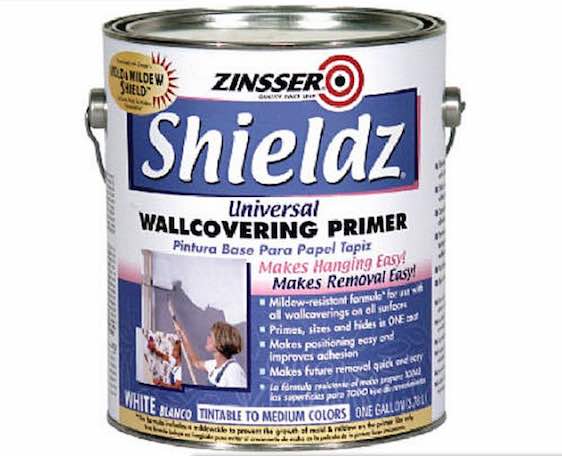
This is a great modern sizing compound product. It's just like paint. I've used it with fantastic success. CLICK the IMAGE to have it delivered to your home.
What Are the Best Wallpaper Tools?
Here's a list of the best wallpaper tools I know of:
- retractable razor knife with snap-off blades
- 4.5 or 6-inch drywall taping knife
- smoothing brush or plastic smoother
- 4-foot level
- grout sponge
- measuring tape
- paint roller & pan
- paintbrush
Click the Image Below to get all, or some, of the tools now:
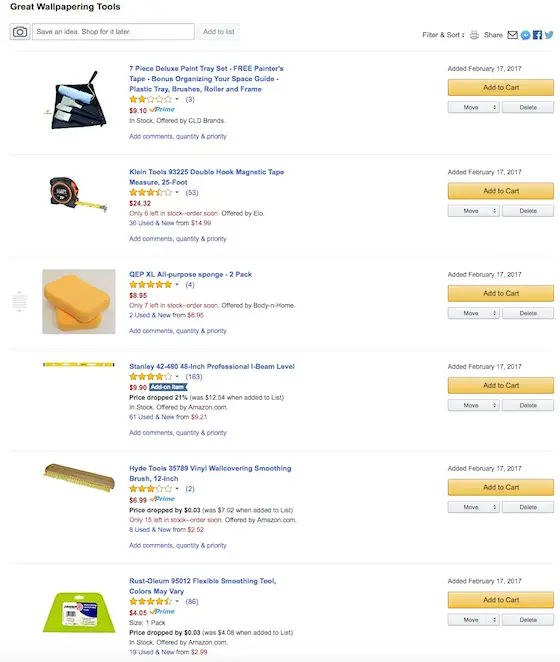
CLICK HERE to get all the tools I recommend in one place. It's easy and fast.
Can You Wallpaper on New Drywall?
Yes, you can wallpaper on new drywall. You need to paint the wall with the Zinsser Shieldz product. It may require two coats.
Let's say you have a new drywall wall you wish to wallpaper. If you do not apply a high-quality primer/sealer, you (or a future homeowner) WILL ruin the drywall when they try to remove the wallpaper.
There are several different types of primers and sealers. You can purchase an acrylic one that has pigment in it. This product can be used on just about any wall surface. They are fantastic, especially if you intend to use a see-through wallcovering (many are!). Usually, they clean up with water.
Clear acrylic sealers can also be purchased. They work great on existing wallpapers and vinyl wall coverings. However, if you use a see-through wallpaper, you may see the old wallpaper after your new paper dries. Be sure to ask if your new paper is semi-transparent.
Oil-based quick & slow dry primer-sealers are also available. They work well. However, it is not advisable to use them over existing wallpapers and vinyls. The oils in the product may dissolve the inks in the previous wallcoverings. Also, some ingredients in these sealers are actually food for mildew.
Marks on walls or wallpaper that were not removed during the cleaning process may cause a problem. The adhesive may dissolve the color in the stain and cause it to bleed through the new paper backing.
Use a standard stain killing paint for this job. After it dries be sure to put the regular primer/sealer over it before you paper. These stain killers are not approved wallpaper primers. They just kill stains.
Are There Other Wallpaper Installation Resources?
If you really want to get the facts on wallpaper, removal techniques, the facts of primers, sealers, sizing, adhesives, and installation you need to obtain the following books. Quite possibly both are available at your local library. If not, you will have to contact the publisher of your local bookstore. They were both written by a second-generation paperhanger. They are invaluable.
- Encyclopedia of Wallpapering
- The Complete Guide to Wallpapering
- Both of these books are written by David M. Groff
- Publisher Wallpapering Instructional Resources
P.O. Box 308 Kinston, NC 28502-0308
With the explosion of new video content on the Internet, you can find free wallpapering videos as well. There are also detailed DVDs that show you all aspects of wallpaper installation. It really pays to hunt around for different sources of information. It also pays to read multiple authors as one may do a much better job of explaining a process.
Also, be aware of the National Guild of Wallpaper Hangers. This is a fantastic professional association of those craftspeople who do really fantastic wallpaper work each and every day. They have all sorts of past newsletters that contain all sorts of wonderful tips.
If you are a rookie or in doubt about how to hang paper, I suggest you start in a small room with inexpensive paper. Go ahead and experiment as I did. You might get lucky!
Can You Paint Over Wallpaper?
Yes, you can paint over wallpaper. Just CLICK or TAP HERE to see how to do it.
CLICK HERE to get FREE & FAST BIDS from local wallpaper hangers in case you're getting cold feet.
Column B121

Tim built custom homes and did ultra-custom remodeling for 20+ years before launching his Ask the Builder media presence. He was selected as one of the Big 50 by Remodeling magazine in 1993. This award gave birth to Ask the Builder in October 1993. Tim also operates https://DrawPlumbingPlans.com. His @askthebuilder YouTube channel was the first home improvement channel on YouTube.

hey there
am applying a pigmented sealant prior to wallpapering, od i need to size the wall too??
cheers
Read all my wallpaper columns. The answer about sizing is there.
I have removed a border in which I did use sizing before putting it up (19 yr ago).
I want to install a new border....I can still see the sizing, should I reapply again or remove that sizing or what. Also my new border is about 4 inches higher, should I size that additional 4 in. of wall. And.. I have about 1 in. of semi gloss paint on the wall where I painted the chair rail, will the glue stick to that.
I just started maintenance at a motel and noticed some of the wallpaper has faint red spots as if something has bled through it. (Something like a wine spill on carpet). Any idea what that would be and how to get rid of it or will i have to replace that portion of wallpaper?
Joe,
Try using my Stain Solver! It's a Certified organic oxygen bleach that removes just about all stains.
Go to: Stain Solver
Hi, I have a large mural that I want to use to cover up some mirror doors but I can't find any info on it can you please advise me, thanking you in advance. By the way we live in Australia.
we had wallpaper hung in our livingroom, dining room and stairwell. We hired an 'expert' to do the work so we could count on no problems. within six months, the seams began to separate - in every room everywhere. When we contacted the installer, he said it was because this happens on outer walls - we responded that it was on all the walls. He then explained it was because the wallpaper was of poor quality. We told him that we had used the same manufacturer and grade of paper we had used in the past - paper hung by my wife throught the rest of the house 30 years ago which is still in fine condition. He replied that no manufacturer can be trusted ot sell a consistent grad of paper. Could you tell us, in your opinion, what heads to this kind of seam separation? Thank you so much.
My Mother did my bed room in post mag.covers she saved