Attic Insulation Batts or Blown In
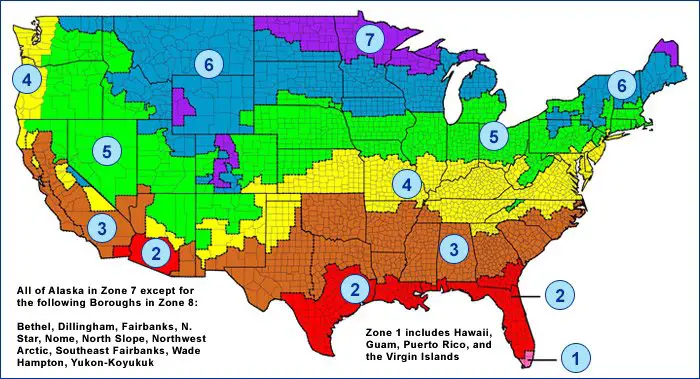
Attic Insulation Batts or Blown In | This is a very good map showing the different insulation zones in the USA. CLICK THE IMAGE to get MORE INFORMATION.
Attic Insulation Batts or Blown In - Both Work Well
- Batts are better
- Blown is cheaper & faster
- Must be fluffed and no gaps
- Requires skill to install
- CLICK HERE to Get Tim's FREE & FUNNY Newsletter
DEAR TIM: I'd like to add additional fiberglass attic insulation in my attic. I can install batt insulation myself. Blown-in fiberglass appears to require professional equipment.
Which type offers better performance? Are there advantages in using one type versus another? Are there any installation tips you can suggest? T.H.
DEAR T. H.: Both systems will deliver excellent results. However, if you intend to do the job with batts, you had better be a detail-oriented, patient individual. The thermal performance of fiberglass insulation is directly related to its ability to trap and maintain very small pockets of air.
Attic insulation batts must be cut tightly and you can't have gaps. Sloppy people aren't suited for this job.
Blown-in fiberglass creates a seamless blanket in your attic. You might spend many hours kneeling in your attic to achieve this same result with fiberglass batts.
CLICK HERE NOW to get FREE & FAST BIDS from local insulation contractors.
Is Basement Foam Board Installation Hard to Do?
No, basement foam board installation is not hard to do. You might consider it instead of batts in your basement.
How Much Insulation Do I Need?
The US Department of Energy has published guidelines for years about how much insulation you should have for where you live. It makes a big difference.
This is a very good map showing the different insulation zones in the USA. CLICK THE IMAGE to get MORE INFORMATION.
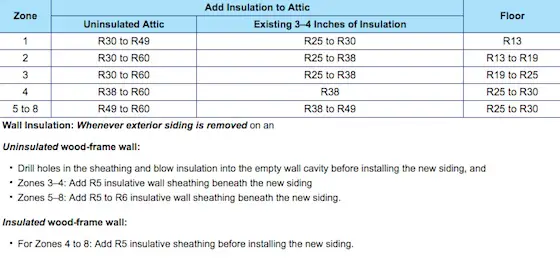
This table explains what you need to do depending upon which zone you live in. Look up at the map. (C) Copyright 2021 Me and every other US Taxpayer
Remember, these are minimum guidelines. You can add more, you just have to do the math to see if you'll get a return on investment for as long as you own the home.
The trouble is, it's not easy to do this analysis. But if you've decided to hire a professional company, they can blow an additional 6 or 8 inches in your attic for just a little bit more money.
Is Insulation Cheap to Install?
Insulation might not be cheap to install if you hire a pro. There are lots of costs the pro has to cover to get the truck, materials, and workers to your home.
The primary cost of the job when a pro comes to your home is:
- Administrative office staff
- Salesman commission
- Drive time to & from your house
- Truck wear & tear
- Workmen labor
If it takes the crew just 30 minutes more to add 8 more inches, then the cost is going to be not that much more.
CLICK or TAP HERE to get FREE BIDS from local contractors who will install blown or batt fiberglass.
Are Fiberglass Batts Better Than Blown?
The thermal performance or resistance to heat flow (R-factor) is not the same when comparing fiberglass batts to blown-in fiberglass. Batts offer a slight advantage. You can usually obtain an R-factor of 3.1 to 4.2 or slightly higher per inch of material with batts. The R-factor of blown-in fiberglass is usually 2.3 to 2.8 per inch of material.
Once installed and expanded to the uniform, manufactured thickness, batts offer a known R-factor. Blown-in insulation thickness can vary in an attic space. This will lead to non-uniform R-values.
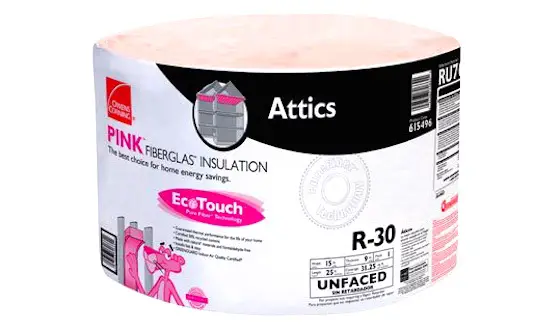
This is name brand unfaced attic fiberglass insulation. It's great stuff. Wear a mask or you'll be coughing for days. CLICK HERE TO ORDER AND HAVE DELIVERED TO YOUR HOME.
Compressed blown-in fiberglass offers a lower R-factor. It needs to be fluffed up but not so much that it doesn't trap air. It's not an easy thing to describe unfortunately!
Should I Do a Simple Cost Analysis?
Before you make your final decision, do a cost analysis. You may be pleasantly surprised.
I recently priced the cost to upgrade a 1,500 square foot attic from R-19 to the new thermal standard of R-49 in my climate zone. The total cost to have the fiberglass blown-in by professionals was $0.60 per square foot or $900. (2017 prices)
I then called the local retail outlet to price batt insulation. The cost of just the material was $0.62 per square foot! (2017 pricing) Clearly it made better sense for me to have the job done by professionals.
CLICK HERE NOW to get FREE & FAST BIDS from local insulation contractors.
If you can find fiberglass batts deeply discounted, you possibly can tackle the job and save some money. Wear a respirator to minimize throat irritation from airborne glass particles. Gloves, long-sleeved shirts, and goggles are also highly recommended.
Be sure to take your time while installing the batts around roof framing members. Carefully cut the batts so they fit tightly around each piece of wood. Oh yes, don't fall through the ceiling to the rooms below.
Fiberglass Insulation Video
Watch this video to give you an idea of what it's like to work with this itchy material!
Should the Batts Be Installed in 90-Degree Layers?
Install your new batts at a 90-degree angle on top of the existing insulation batts. This will help cover any gaps in the original installation.
Do Dark Spots Indicate Air Leaks?
Dark spots in insulation batts and blown-in fiberglass are indicators of air leaks. The fiberglass fibers capture the dirt particles in the air and create the dark spots.
Check your existing insulation for dark spots. These dirty spots may be locations of large air leaks from your finished living space. The existing fiberglass traps dirt from this air as it passes up into the attic. Locate and close these holes before proceeding.
Should Soffit Ventilation Slots Be Blocked?
Do not block soffit ventilation slots. These are the air passageways between your exterior soffits (eaves) and/or vents and the attic with your new insulation. Flow-through attic ventilation is very important.
You can purchase foam or cardboard baffles that fit in between the roof rafters as they pass over exterior walls. These baffles create an unobstructed pathway for air to enter your attic.
Can you Cover Recessed Lights With Insulation?
Never cover any recessed lights with insulation. Some say they're rated for it, but it can be dangerous if someone puts in an oversized light bulb and the heat sensor in the fixture malfunctions.
Don't cover any recessed light fixtures with fiberglass unless you are absolutely positive it is permitted by your local electrical inspectors.
Modern LED recessed lights that use less energy and burn cooler can be retrofitted into older recessed light fixtures. If you do this, you can then cover the recessed light housing and not create a fire hazard.
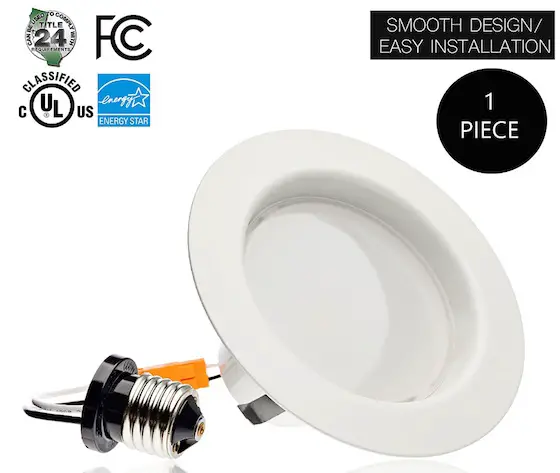
Use this kit to transform your energy-wasting recessed lights. It takes minutes working from inside the room. No repainting, no hassle! CLICK THE IMAGE NOW TO BUY THIS GREAT LIGHT. MULTI-PAKS are available.
Should Insulation Depth Gauges Be Put in the Attic?
Insulation depth gauges should be installed in an attic before blown-in insulation is installed. These work just like flood gauges on a river. You can see easily if the insulation is the correct depth across the entire attic.
If you decide to use blown-in insulation, install scrap lumber depth gauges in the attic. These pieces of wood can be pre-marked with a crayon or spray paint to the desired finished thickness of insulation. Tack them to the ceiling joists in various locations. After the job is completed, you can pop your head up into the attic to see if the pros hit the marks!
CLICK HERE NOW to get FREE & FAST BIDS from local insulation contractors.
Column 165

Tim built custom homes and did ultra-custom remodeling for 20+ years before launching his Ask the Builder media presence. He was selected as one of the Big 50 by Remodeling magazine in 1993. This award gave birth to Ask the Builder in October 1993. Tim also operates https://DrawPlumbingPlans.com. His @askthebuilder YouTube channel was the first home improvement channel on YouTube.
I am surprised to find nothing being mentionied about the difference between faced and unfaced insulation batts or rolls . Blow in insulation is never faced as it doesnt come with kraft paper used as a moisture barrier.. Blow in insulation is primarily used as a add on layer not as an original layer or new replacement for old insulation on the bottom.. all insulation must be faced with kraft paper that is included in faced rolls or batts. If you already have original insulation with face paper , you dont need faced insulation to add on top as unfaced is sufficient. It is important that all surfaced to be insulated be faced with insulation first. If you decide to replace your old dirty insulation with new insulation, you must first lay kraft paper that you can buy in rolls at hardware . Either is brown or red rosin which is probably more durable than the former. I use red rosin then place either batts or blow insulatioin on top. This is an important thing to have in all insulation that is kraft paper .
I have an attic that has blown in insulation. I am considering putting down a lot of plywood to convert the space into useable storage. Should I put the plywood over the blown in or would it be better to replace it with roll or batt insulation?
Depends on what you looking for either will work fine
I live in a home built in 1900. The blown insulation in the attic is dirty and filled with debris from animals (yuck) and dirt. This sifts down through crack in the attic flooring, which is also the ceiling in the second-floor bedrooms and hallways. Needless to say, I'm looking to have someone clean it all out and replace with rolled insulation, even though there are many odd angles. I think the professionals I am hiring can do it. My question is this: can I put a waterproof-type liner under Kraft paper to keep any debris from filtering down to the second floor? what kind of lining do you recommend?
Mary Ann,
I'm not a big fan of putting vapor barriers in attic ceilings for a host of reasons. You can install sheets of air and water barrier that will accomplish your goal. One brand is Tyvek. It stops water but will allow water vapor to pass through. Heres' a link to have it delivered to your home:
http://amzn.to/2r9oxIZ
Tim Carter, You mention you wouldnt put vapor barrier in attic ceilings for host of reasons; 1, what are some of them? and 2. do you put vapor barrier on the room ceiling (attic floor) before insulating with either blow in fiberglass or cellulose in the attic?
A simple trip down memory lane of the day your high school physics teacher talked about vapor pressure is all you should need to know.
The bottom line is a vapor retarder on a ceiling traps the vapor that is constantly trying to get outside as hot air rises. Where the surface of the retarder is touching a cooler surface that's below the dew point of the vapor, you'll get condensation.
That condensation will wreak havoc roof assemblies.
When you allow the water vapor to migrate to the ventilated area of an attic, the air movement in the attic transfers the moisture outdoors where it belongs.
Hi Tim. I have an existing garage with a room above it. I would like to insulate the floor portion so that the garage stays warmer in the winter so I can use the garage as a work shop in winter. I'm in zone 4. I prefer faced button. There is currently no insulation in that space or baffles. Walls in garage are insulated