Maximize Small Home Office Space
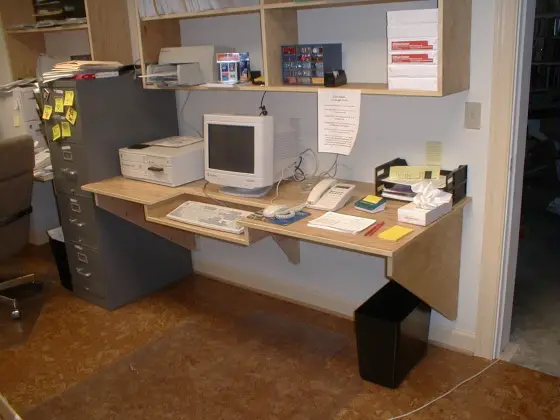 Small Home Office Space
DEAR TIM: I am converting a small room in my home into a home office. The remodeling budget is limited and it is imperative that I maximize the space in this room. How do you suggest that I proceed? My preference is wood tops and shelves but I doubt that these are within my price range. I have moderate skills and many common tools and a table saw that I can borrow. Elise M., Oak Park, IL
DEAR ELISE: I have good news for you! Not only are you going to get what you want, but this new office space is also going to be as sleek as a new sports car. The key to success when dealing with small spaces is to think outside the box. Visit a conventional office and you will see much of the office equipment on desktops and counters. If you design your new office like mine, these things will be in the most unusual places.
Capture wasted space by making the corner of a room the center of the work area. This sounds crazy until you start to think about it. In a traditional office, a corner often ends up as depot for lost papers, folders, and books. In my home office it is command central. Large bulky computer monitors tuck comfortably into these areas. If you have a swivel chair, you can twist slightly to the left or right and have access to comfortable writing spaces on either side of your computer keyboard.
Have you ever seen an old roll top desk? Whoever designed the first one obviously had similar space problems. They had lots of pieces of paper and small supplies but no place to put them. The space just above and behind the desktop surface made an excellent storage place. The items were within reach but they did not get in the way of the primary activity that was happening on the desktop work surface. Do the same thing I have done and make use of the space just in front of your face.
The wall space just above your desktop can be covered with super strong and easy to build shelves that will hold your fax machine, printer, speakers, books, supplies, etc. These are the things that take up space on a traditional desktop. If you start the lower shelf just 20 inches off the surface of the desktop, these items will be within reach as you sit in your chair. This height will also allow a typical computer monitor and mini computer tower to slide back to the wall.
You can fabricate the desktop and shelves using affordable 3/4 inch thick fir plywood. This plywood has gorgeous knot free wood grain on the finished side and a nearly knot free surface on the back side. I recently purchased this material for less than $40 per sheet. Four or five pieces will often be enough to build multiple work surfaces and lots of wall shelves.
The laminated plywood edge can be hidden easily with a small solid wood molding that is 1/4 inch thick and 3/4 inch wide. You simply glue and nail this strip onto all exposed plywood edges to give your work surfaces a professional finished look. Four coats of water based polyurethane can be applied in one day to give the wood a waterproof, smooth and durable coating. You can stain the wood to your tastes or leave it natural as I did.
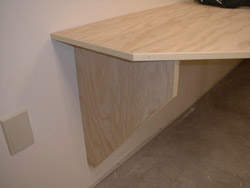
Wall support for the home office desk
Instead of fabricating legs for my work surface I cut triangular shaped brackets from the plywood. These brackets are attached to the wall and the underside of the work surface with blocking and screws. They provide enough support that the work surface will support just about anything you can put on it.
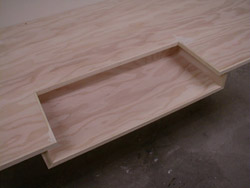
Home office keyboard shelf
I prefer to place the desktop surface at 30 inches above the floor. This is a standard desktop height. Unfortunately, it is uncomfortable to type at this height. This problem is solved by making a simple dropped platform for the computer keyboard that rests 27 inches off the floor. The tools you possess and the access to the table saw will allow you to fabricate all of the fixtures you need in just under 8 hours.
Calm Working Spaces is a wonderful book to explore before you start to build an office space at home. This 176-page book will eliminate stress by offering a wealth of advice on everything from ergonomics and aromatherapy to tax planning and security. Calm Working Spaces is full of beautiful full page color photographs showing working spaces in every possible area of a home. This book covers everything from planning , furnishing, lighting, storage, security and even offers advice on zoning, insurance and tax regulations.
Companion Articles: Home Office Desk Plans, Home Office Shelves, Home Office
Column 341

Tim built custom homes and did ultra-custom remodeling for 20+ years before launching his Ask the Builder media presence. He was selected as one of the Big 50 by Remodeling magazine in 1993. This award gave birth to Ask the Builder in October 1993. Tim also operates https://DrawPlumbingPlans.com. His @askthebuilder YouTube channel was the first home improvement channel on YouTube.