Cleaning Wood Siding – Be Gentle – Pressure Causes DAMAGE
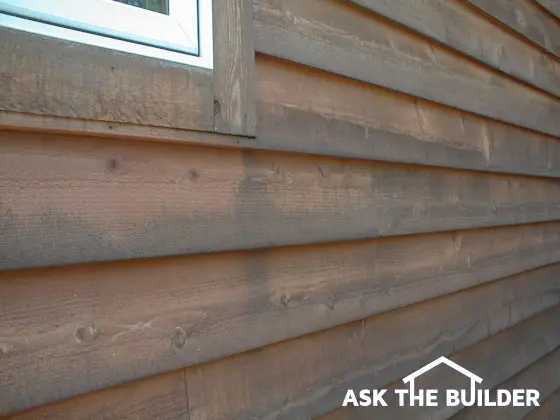
Cleaning Wood Siding This wood siding can be cleaned with certified organic STAIN SOLVER. It's oxygen bleach. Cleaning outdoor wood is not hard to do at all.
Cleaning Wood Siding - Beware Pressure Washers!
DEAR TIM: We live in a shady wooded area. Our house is covered with natural cedar wood siding that constantly develops mildew stains. Every few years we apply an additional coat of oil-based semi-transparent stain to make the house look fresh. What products are best to use to clean the siding and to seal it? How long will a good water repellent last? Do you have cleaning wood siding tips for me? Susan P., Highland Park, IL
DEAR SUSAN: It's no wonder you have mildew problems on the siding. I want to warn you now to never use a pressure washer to clean your siding before you next seal it. Watch this video to see the damage pressure washers cause.
What Causes Mildew on Wood Siding?
Mildew on wood siding is caused by mold spores that float onto the siding. They eat dust and wood sealers and water activates the mold spores creating the mildew
Millions of mold spores are in the air surrounding your house. They land on the siding and once there are delighted to find out that you have provided them with dinner.
Do Oil-Based Stains Contain Natural Oils?
Many oil-based house stains contain natural oils and resins like:
- linseed oil
- vegetable oil
- tung oils
- animal fat
Are Natural Oils Food For Mildew and Mold?
Yes, the natural oils found in many wood sealers and water repellents are food for mildew and mold.
These water repellents happen to be food that mildew thrives on. The shady conditions slow natural evaporation and help to raise the overall humidity around the siding. These conditions are excellent for mildew growth.
Do the Manufacturers Know the Oils Feed Mildew?
Yes, the manufacturers of many exterior stains know this. They add chemical mildewcides and fungicides to the stains. But ultraviolet (UV) rays from sunlight and rainwater break these chemicals down. Some stains contain very little of these products and within a short amount of time, the mildew can start to grow.
What is the Best Wood Sealer?
In my opinion, the best semi-transparent stain to use is one that contains no natural oils. I prefer to use products that are made with synthetic resins.
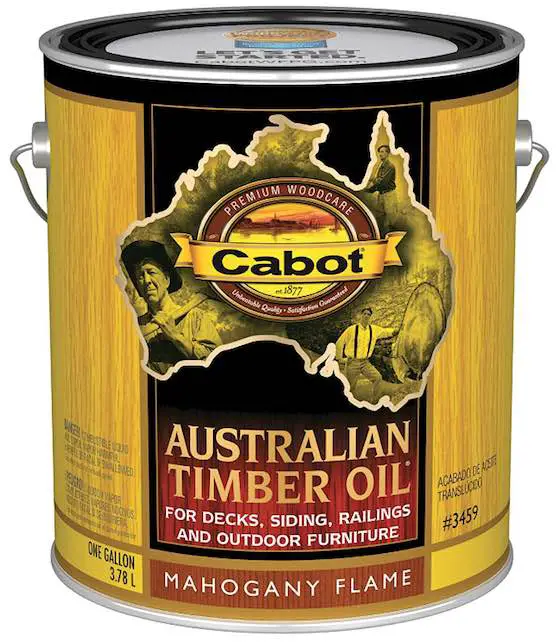
This is the best penetrating wood sealer I know of as of 2021. CLICK on THE IMAGE to have it delivered to your home.
Does Mildew Eat Synthetic Resin?
Mildew will not eat synthetic resin. It's still possible to get a small amount of mildew growth on the siding but the food source usually can be traced to airborne dust or aerosol saps and sugars that rain down from your trees during the active growing season.
How Do You Deep Clean Wood?
You deep clean wood using certified organic STAIN SOLVER. It's an oxygen bleach made in the USA. It will not damage the wood and it's not harmful to vegetation. You use the exact same product for mold removal on vinyl siding.
Stain Solver is MADE in the USA with USA ingredients that are food-grade quality.
Before you apply any water repellent to the siding, you must deep clean it to get the best results. Avoid cleaners that contain chlorine bleach. You can readily identify this by looking at the product label. The chemical name for chlorine bleach is sodium hypochlorite. This chemical can readily bleach the gorgeous natural color from your siding. It is also highly toxic to vegetation and your valuable trees. A neighbor of mine slowly killed one of her trees by using chlorine bleach to clean a patio each spring.
What is a Safe Wood Cleaner?
A safe deep cleaner for wood siding is oxygen bleach. It is a powder that mixes with water. It is non-toxic to vegetation and trees and will not remove any natural color from the siding. You simply keep the wood siding wet with the oxygen bleach solution for 15 minutes. It will remove the mildew and deep clean the siding. Lightly scrub the siding before rinsing with clear water from a garden hose. Avoid the temptation of using a pressure washer. These devices can force water into cracks and seams. This water gets behind the siding and can travel into your home. The intense pressure from these tools can quickly erode and scar soft woods like cedar and redwood.
How Long Can a Wood Sealer Last on Siding?
A top quality wood sealer and water repellent can last up to five to seven years before it needs an additional coat. These same products can be used on wood decks but will not last as long. The orientation of the siding on your home helps extend the life of the water repellent.
Why Do Wood Sealers Last Longer on Vertical Surfaces?
Wood sealers last longer on vertical surfaces because water runs off and the harsh mid-day ultraviolet rays of the sun give the wood a glancing blow, not a direct hit as they do with horizontal wood on decks.
Rainwater runs off the siding. When the sunlight does hit your house the intense mid-day UV rays glance off the siding. Because deck lumber lies flat, water readily soaks into the lumber and the UV rays at high noon blast the wood with a direct hit.
Is Price a Good Barometer When Buying Wood Sealer?
Price is a good barometer for judging water repellent quality. The synthetic resins contain very expensive raw materials. When you are doing comparative shopping, look for the highest priced product. It very likely is made with synthetic resins.
Where Do You Find the Best Wood Sealers?
I'd shop specialty paint stores or buy wood sealers online.
I have had the best success finding these water repellents at specialty paint stores and some log cabin distributors. Oxygen bleach is readily available on the Internet at www.stainsolver.com. Be sure to buy oxygen bleach that has the highest concentration of the active ingredient - oxygen bleach.
BEWARE OF LOW-COST Oxygen Bleach: Many of the well-known oxygen bleach products contain a significant amount of fillers that simply take up space in the container. Furthermore, many of the heavily advertised oxygen bleaches are made in the Far East, not in the USA!
| Message from Tim: |
Years ago while researching a column about cleaning decks, I discovered the wonders of Oxygen Bleach. It is perhaps the 'greenest' cleaner I know of as it uses oxygen ions to break apart stains, dirt and odor molecules. There are no harsh chemicals, and it works on just about anything that is water washable.
I decided to create my own special blend using ingredients made in the USA. In fact, the raw materials in the active ingredient are food-grade quality registered with the FDA. I call my product Stain Solver. I urge you to use it to help with your wood siding cleaning. You will be amazed at the results!
I'm proud of my product and have no trouble promoting it in my columns because I know it works. I know it's the BEST oxygen bleach you can buy. Not many entrepreneurs can say that about their product.
If you're a customer of mine and have used Stain Solver, please feel free to leave a comment below and tell the world what you think of Stain Solver. I thank you in advance.
Column 378

Tim built custom homes and did ultra-custom remodeling for 20+ years before launching his Ask the Builder media presence. He was selected as one of the Big 50 by Remodeling magazine in 1993. This award gave birth to Ask the Builder in October 1993. Tim also operates https://DrawPlumbingPlans.com. His @askthebuilder YouTube channel was the first home improvement channel on YouTube.
Currently have half log cedar siding that has a severe mold problem.
Previously oil based stain (Flood brand-cheap) Mold removal going well using oxygen bleach. do we have to remove all the old oil based stain before re-covering with synthetic based stain? if so, how?
Mary, to do this job right, not over, you should really read my Cleaning and Sealing Your Deck ebook. It's the same process for cleaning siding and fences.
I would be interested in ordering your Stain Solver product, but I see you don't ship to Alaska. You ship to Canada but not Alaska. What's the difference? I imagine there are far lower costs (not to mention customs hassles) shipping to Alaska compared to, say, northwestern Canada.
Please reconsider your shipping policy.
Thanks for your timie.
Kevin
Kevin,
UPS only ships by air to Alaska. It's illegal for me to put Stain Solver on a plane because it's such a powerful cleaner.
I'm trying to locate an Alaskan distributor.
I'm another buyer in Alaska if you can find a distributor.
Be SURE you subscribe to my newsletter. When I find an Alaska distributor, that's where it will be announced.
Apologies for my previous note. (Please don't post) You hit a nerve with that one sentence re. buying the highest priced product. Yet I've since spend an hour discovering your very helpful web site.... and I'm learning ing a lot. thank you.
I was just about sold on going out and buying some oxygen bleach, and was so impressed with all it's wonders as posted in your article...until, I saw this... "I decided to create my own special blend using ingredients made in the USA. In fact, the raw materials in the active ingredient are food-grade quality registered with the FDA. I call my product Stain Solver. I urge you to use it to help with your wood siding cleaning. You will be amazed at the results!". And then there it was...Can anyone say BIAS! Geez man, no wonder you talk about not using this and that and that only "Oxygenated Bleach" will work the wonders and miracles that we are all looking for. Disappointed man.
Dear Mr. Disappointment:
Here are a list of questions you should answer:
So would you rather I not be transparent?
Do you own any Apple products?
Are you 'disappointed' in Steve Jobs because he felt he had a better idea and wanted to SELL a quality product rather than go the Bill Gates route?
Do you own a PC? Does it run Windows software?
Are you 'disappointed' in Bill Gates because he started a company selling software you use?
Should I keep listing GREAT PRODUCTS that are sold by entrepreneurs like me that you probably use every day?
I'm a PROFESSIONAL WRITER. Bias is when you SPIN a STORY and you're NOT TRANSPARENT about what your PERSONAL feelings are about the topic.
There's no bias in the above article. What you're upset about is the refreshing TRANSPARENCY that you rarely see in today's world - especially in any mainstream media news.
Dear "Disappointed man", AKA "Highly frustrated":
(1)I know sending out a free newsletter sounds incredibly lucrative, but trust the rest of us when we tell you Tim still needs a "day job"! (2) May we infer you've spent the last 20 years in Antarctica, since you've never heard of "Oxygenated Bleach" until now? Billy Mays would be sooo disappointed! (3) While you've been selectively browsing the newsletter, the rest of us have noticed that Tim recommends around 50 other products for every time he promotes 1 of his own. (4) Have you, seriously & without BIAS, done some looking around Tim's FREE website? Nearly every article & video attests to his openness & integrity! And the humor is also FREE! (5) Should you feel so "put upon" as to require your unsubscription, know that I & a plethora of other bargain-hunters will continue to absorb FREE information from Tim for as long as he's able!
Tim, you are right on! Mr. Disappointed is experiencing the OPPOSITE of bias. If you recommended Stain Solver WITHOUT mentioning that it was your product, that would be problematic. I know from experience that Stain Solver is a great product. My wife and I both use it for a variety of cleaning tasks.
I've used Stain Solver to clean tile grout. After a previous experience using a chlorine-based bleach, I found Stain Solver to be a great product. It was far easier to use, cleaned much, much better, had no odor, and didn't burn my skin. I've found that when you recommend a product, whether it's something you sell, or something somebody else sells, I can be assured that it will do what you say. I appreciate all the work you do in helping your readers with their home problems.
Tim,
Is your Stain Solver available in New Zealand ? I really hope so,
Best, Chris.
Dear Tim and "Highly frustrated",
I have been using Tim'sStain Solver for years. First was a white asphalt composition roof that was black with algae. Everyone, particularly roofers claimed it needed replacement. After cleaning per Tim's instructions, it looked not new but normal for its age and was good for several more years of service. We since have used it on decks, siding, laundry for normal bleaching and stains, white commercial type kitchen cutting boards, slippery stone steps and walks and lots of other things I can't think of right now.
When I was doing that first roof, I called Tim's office to ask about cleaning a dirty concrete driveway at the same house. The lady with whom I spoke told me to use Dawn detergent for that particular application. She could as easily have told me to go ahead and use more of their product.
I'm delighted with Stain Solver and recommended it to many friends.
Thanks, Tim, for a fine product and all the great free advice you give.
What I really came here for is advice about my house over here near the "left coast" of New England where taxation makes D-I-Y a necessity as well as being an avocation for many of us. We're still here even though you admonished us to move to your side of the Connecticut some years ago.
We have a 36 year old house with unfinished rough sawn Atlantic white cedar clapboards that range from light gray to dark gray to various shades of brown. Some must be replaced so there will be be dry-stored 30+ year old too and, if necessary, some new clapboards and flat trim as well. I want to apply a solid stain of light to medium hue and want to do it right. I need to know what the best product that provides custom coloring as well as durability. Also what do you recommend in the way of prep and optimum moisture reading for the wood before applying stain. Do we need primer. Thank you.
Bill
Tim,
Thanks for the very informative website. Hope you are still active and can answer my question.
We have 12 year old natural cypress shiplap siding and originally stained it with Cabots Bleach Oil . The color has gradually turned too light and we are looking for a good weathered grey stain that can be sprayed on.
One area has been exposed to soil splashing up and has either imbedded dirt or the reddish soil has stained the wood along the bottom. We are going to use OxyBleach to clean this area before re-staining. Should we OxyBleach all the cypress even that that does not seem dirty before re-staining?
Any advise on which stain to use?
Thanks,
Tom
Curious abut your thoughts on the product Alaskan One Time stain for loghomes just add water to a powder form
I have a big job coming up. I have cedar siding, lap and shakes. I live right on the lake. Unfortunately, whoever stained before, used a natural oil stain with linseed. So my beautiful 4000 sq. Ft home is covered in mold. Do you offer your product in large quantities or how much would you first start at, for my house? Would you suggest stripping the oil first?