Sewer Odors in Bathroom
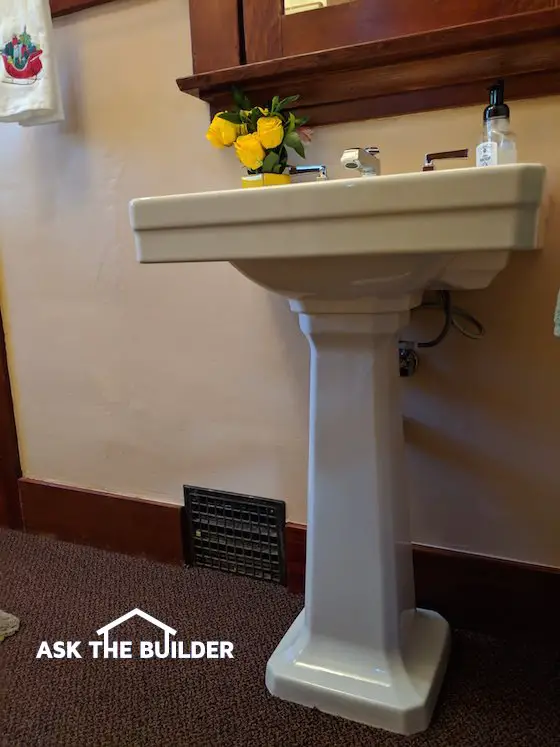
Sewer Odor in Bathroom TIPS
- Run water in the tub and sink to fill traps
- Clean inside of pipe above trap with a bottle brush
- Toilet rock side to side? - replace gasket
- When did odor start?
- CLICK HERE to get Tim's FREE & FUNNY Newsletter
DEAR TIM: We recently have begun to notice a sewer odor from only one of the three bathrooms in our house. It might be the toilet, but it's hard to tell. The smell is not constant and sometimes it's very strong. Everything in the house drains fine, including the toilet with the odor.
Where can the odor be coming from? I have put a bacterial additive in the toilet but this does not seem to help. Is this serious? What can I do to fix the problem? Karen B., Watseka, IL
DEAR KAREN: The odor can be coming from numerous places. Often the source of the problem is simple, but on rare occasions, the problem can be a serious plumbing flaw that is hidden behind a wall. I've found more often than not that the problem can be solved in just a few moments with a quart of water.
CLICK HERE to get FREE & FAST BIDS from local plumbers to STOP sewer gas odor.
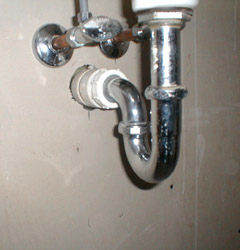
Check the Traps for Water
See if all of the plumbing fixtures have water in the traps. Many people do not realize the purpose of the P shaped traps in the drain lines beneath sinks, tub, and showers. Lots of people think they are there to catch rings and earrings from traveling down to sewers and septic tanks. They do this but they also keep sewer gas and vermin from traveling up and into your home. The standing water in a trap is an excellent barricade against sewer gas.
Plumbing fixtures or floor drains that get little use can lose this effective water seal. The water in the trap simply evaporates and/or it can be sucked from the trap by a clogged vent pipe or a poorly designed or installed plumbing system.
Where Should I Check for Sewer Odor?
Pour a quart of water in every sink, tub, and shower in your home. See if the odor goes away.
You can be fooled when you look into a drain and see the reflection of water. Even though you see water, sewer gas can be passing over this small amount of water left at the very bottom of a trap. Tubs and showers in guest bathrooms frequently are the culprit. Often people will use a toilet or sink in a bathroom but the tub and shower go unused for months at a time.
Pour a quart of water in the sink and tub drains. This is plenty of water to fill the trap and provide the full water seal. If this is the problem, the odor should go away in a very short amount of time. If the odor is still present, then it is time to look at other possibilities.
Is Biofilm the Cause of the Sewer Odor?
The inside surface of the bathroom sink, tub, and shower drains can also be a huge source of odors. Kitchen sinks frequently have similar odor problems. Almost all sinks have a piece of pipe called a tailpiece that extends from the bottom of the sink into the top of the p trap. This pipe is constantly exposed to the air in your bathroom.
All of the bacteria, dirt, grime, mold, etc. pass through this pipe on its way to the sewer or septic system. But often some is left behind. Over time a thick layer of slime starts to collect on the inside surface of this vertical pipe. Mold and bacteria can begin to grow and some produce noxious odors.
What is Biofilm?
This slime is a biofilm. Mold grows FAST in this slime. When you run water, the water touches the ripe mold and it EJECTS spores into the air. The explosion of the spore into the air is caused by a foul gas the mold creates. That's the source of the odor in many cases - the tiny amount of propellent used by the mold to send a spore out into the air in your house!
CLICK HERE to get FREE & FAST BIDS from local plumbers to STOP sewer gas odor.
What Makes it Hard to Clean the Pipes?
Because of the fixed metal parts at the bottom of sink and tub drains, it is virtually impossible to completely clean these pipes while they are in place. Often you can take apart the drain assembly and clean the inside of this pipe in a jiffy. Pay attention to the rubber washers and gaskets as you take them apart. If the drain is old, these parts often need to be replaced with new ones to make sure the drain is leak free once you re-assemble it.
Stain Solver is MADE in the USA with USA ingredients that are food-grade quality. CLICK THE IMAGE to order some NOW.
What is the Best Pipe Cleaner?
I clean out the pipe under my shower strainer using a bottle brush and Stain Solver certified organic oxygen bleach. I mix two tablespoons of Stain Solver with one quart of HOT tap water and stir until dissolved.
How Do You Clean the Pipe?
I pour this solution into the shower drain and use a bottle brush to scrub the side walls of the pipe above the water in the trap below. After rinsing the sidewalls of the pipe with clear water, pour any remaining Stain Solver solution into the drain so it can clean the sidewalls of the pipes that form the p-trap under the shower.
What is the Best Brush to Use?
You can also use the Stain Solver and the bottle brush to clean the sidewalls of the tailpiece pipe that leaves the bottom of vanity sinks.
You'll just have to take out the stopper so you can get the bottle brush down the hole in the bottom of the sink. It's easy to remove the stopper using an adjustable pliers. Just turn the nut on the back of the tailpiece under the sink.

These are typical bottle brushes. You want one that has a diameter of at least 1 and 1/4 inches. A 2-inch diameter one is great for shower drains. CLICK on THE IMAGE TO BUY THESE NOW.
Where Else Can I Find Biofilm?
Biofilm can also develop on the inner sides of the overflow passage in a vanity sink. To clean this out, all you do is use a turkey baster to squirt large amounts of Stain Solver solution down the overflow holes.
Squirt some down at first and then walk away from the sink. Come back every 15 minutes for an hour and do a few more generous FAST squirts sending as much solution as possible down the overflow holes.
What About the Toilet Seal?
If after all of this the odor persists, the problem may be a serious plumbing problem. The toilet seal may be broken. A hidden vent pipe may have cracked. A plumbing professional has the tools, equipment and know-how to often quickly diagnose problems like this.
CLICK HERE to get FREE & FAST BIDS from local plumbers to STOP sewer gas odor
OR
CLICK HERE to have me, Tim Carter - founder of AsktheBuilder.com, CALL YOU on the phone to SOLVE your sewer gas problem. I'm a master plumber and do phone consults for homeowners about sewer gas each week.
Column 347
Watch this video to see how Tim SOLVED a problem in minutes!
CLICK here to contact Tim to help solve your problem.

Tim built custom homes and did ultra-custom remodeling for 20+ years before launching his Ask the Builder media presence. He was selected as one of the Big 50 by Remodeling magazine in 1993. This award gave birth to Ask the Builder in October 1993. Tim also operates https://DrawPlumbingPlans.com. His @askthebuilder YouTube channel was the first home improvement channel on YouTube.
Sewer odors in one of our bathrooms. We have already replaced the p-trap under the sink and the wax ring and flange under the toilet. We put in a new septic system almost three years ago, so I doubt there is a problem there. We ran water down the sewer vent on top of the house and the smell went away, but soon as we stopped running the water the smell came back. Please give me some insight, before my husband destroys my house.
Eugenie, your question requires lots of typing, plus I have some questions for you so I can give you the correct answer(s). I only do pithy answers here in the comment section. If you want to protect the investment you have in your house and not waste time or money *hoping* you make the right decision, you should talk to me on the phone for just 15 minutes. It'll be the best investment you've ever made in your home!
Ever since I used liquid plumber in my bathroom sink for a slow drain problem, I keep smelling an almost brassy type chemical smell from the sink. I smell it especially coming from the drainhole. I have tried baking soda and white vinegar down the drain. It helped a little bit, but the smell is staring to come back. It doesn't smell like sewer gas to me, but a different type. Any other suggestions?
Could you elaborate on the type of plumbing problems that may be found behind a wall? I ask because when we experience the bathroom odor, I also sometimes notice it in the closet that shares a wall with the bathtub.
There is a door in the back of the closet to access the bathtub plumbing, but we see nothing amiss. Would greatly appreciate further info.
I could type for years. This is why I invented my 15-Minute Phone Consult. You and I can talk on the phone about your issue.
I HAVE A VERY BAD SEWER SMELL INMY BATHROOM THAT I USE ALL DAY EVERYDAY. I HAD THIS PROBLEM AWHILE AGO AND THE BATHROOMN IN THE BASEMENT WHEN REMODEL WAS FOUND NOT TO BE CONNECTED TO THE PIPE THAT GOES THROUGHT THE ATTICE OUT THE HOUSE. THEY HAS SINCE BEEN FIXED AND I HAD NO SMELL FOR OVER A YEAR. I HAD A RING OR SOMETHING REPLACE ON THE TOLIET DUE TO WATER LEAKING FROM UNDER THE TOLIET AND A WEEK AFTER THAT I NOW HAVE THAT SMELL BACK AGAIN. I CANNOT TAKE THE SMELL PLEASE TELL ME WHAT I NEED TO DO IN MY HOME TO CORRECT AND FIX THIS PROBLEM ONCE AND FOR ALL. SHARON
Sharon,
You read ALL of the columns that come back in my search results when you type in:
sewer smell odor
into the Search Engine at AsktheBuilder.com.
I have a smell in the bathroom rather like a tom cat smell strong too.please can you help.
Yes I can. Read all my past columns about Sewer Gas Odors.
Is it ok to dump water down the vent pipe to try to clear the sewer smell?
Yes. It's safe to put water down a vent pipe. Be sure someone is indoors checking for possible leaks!
Yes. It's safe to put water down a vent pipe. Be sure someone is indoors checking for possible leaks!
We had city sewer ran in our area around 10 years ago. After a few years, my close neighbors and I began to notice a strong sewer odor coming with the south breeze (I believe there's a juncture over there). We complained and nothing happened. This is year round. I also have a occasional sewer smell from my 1st floor toilet bowl and now I have smelled it upstairs also. My family doesn't notice but I have a sensitive nose. This also happens year round so I'm not getting the odor from outside through a window. Both bathrooms have been recently remodeled so I don't feels its a seal problem. Seems as though the smell is more frequent after a rain. I'm curious if you have any input.
Desperate please help. 2 years ago I bought an older home and started a remodel. I added a master bath,guest bath and an outdoor bath. I moved in 1 year ago and started having an awful smell in the guest bath.the smell would be extremely strong in the morning and then go away during the day. Everyone guessed it was the vent pipe and suggested making it longer which I did. The smell continued for another month and then it was gone. I figured it was a dead rodent left over from the remodel.
WELL,the smell is back one year later to the month. I am besides myself not sure what to do. My 2 carpenters are stumped and have checked for leaks under the house and there is nothing. After all the money and time I have put into this I cannot imagine breaking into walls. PLEASE HELP I am a single woman and not sure what to do next.
I read about a smoke machine that can detect a leak if there is one. Everyone tells me if it is a bad seal on the toilet I would see water,is this true?
Yesterday I wrapped the sink in plastic and covered the shower drain to try and isolate the smell, smell was still there in the morning. Tonight I am covering the toilet.
Help Help Help
I suggest you read every one of my Sewer Smell columns and read all my replies to people's desperate pleas for help. Your answer is there! Do it now.
can a small leak at the base of the toilet, cause septic smell in bathroom. smells only when septic aerator pump kicks on ?
I've recently started getting a sewer type smell in my 1st floor master bath water closet, the shower tub and sinks seem to be fine. There is another1st floor bath toilet with no smell so I don't suspect a vent issue as this smell has just stared. There are no signs of leaking around the toilet and I'm on a slab, what could the issue be ? Possible bad warring seal perhaps ?
We have started to notice a smell of onions from only one toilet in our house, we have tried several cleaners and deodorizer but that only helps temporarily. What can this be? Please help!
A year ago I bought a lower ground floor flat with a newly refurbished internal bathroom in a four floor Victorian house. The extractor fan is sited on the blocked in chimney breast, so extracts into the flue. When the fan operates, a sewer smell generally, but not always, comes from it. The smell definitely emanates from the fan. All the traps are clean and filled with water, and covering them with plastic makes no difference. There is never any smell when the fan is not in use. The builder I called in was baffled. I thought perhaps other flats' bathrooms were extracting into the same flue, but he said they would have separate flues. Any suggestions please? The smell is awful!
On hot humid days we have sewer smell from the bathrooms. Can you explain why and how to remedy it?
Could a leak under the kitchen sink be the cause of a sewer smell in bathroom? Thank you!
Very doubtful. You should do one of my phone consults so I can solve your problem.
http://shop.askthebuilder.com/products/15-Minute-Phone-Conversation-with-Tim.html
One of the 3 toilets in the house smells, often times. It is used regularly. A plumber (here for something different) said that I needed a new toilet. Upon reading about this I see that it can be lack of water in the P-trap, a clogged vent pipe, clogged drain or the wax ring is damaged. The plumber just looked at it and made his diagnosis. Could it STILL be one of the other (easier and less costly ) problems.... he just looked at the toilet and told me the diagnosis (and COST!). Just want to know if I should get another plumber....
I'm a master plumber. I solve sewer gas and bathroom-odor problems over the phone every week at a cost FAR LOWER than having another plumber come by that may give you bogus advice.
You should do one of my phone consults:
http://shop.askthebuilder.com/products/15-Minute-Phone-Conversation-with-Tim.html
bad sewer smell from our bathroom.
That's too bad! I solve sewer gas problems on the phone. Here's how to set up a call:
http://shop.askthebuilder.com/products/15-Minute-Phone-Conversation-with-Tim.html