Wallpaper Removal
Back when I was in college, I used to work part time for an individual who bought old houses and fixed them up for re-sale. I have clear, crisp memories of stripping wallpaper from countless walls and ceilings.
We would do it in the dead of winter with no heat in the houses! It was so cold some days that water would freeze on the walls, so we just used those old fashioned razor wallpaper scrappers on the dry paper.
If the conditions and paper were just right, you could really remove some paper. Fatigue would set in after a while, and the razor scrapper would slip and a gouge into the plaster would happen.
During warm weather, we could lightly mist the walls with regular water. After several applications and depending upon how many layers of paper were on the wall, a regular flat-bladed scrapper would allow you to remove the paper very quickly and easily.
There were no fancy enzyme additives or removers back then! Fortunately, there were no vinyl papers or vinyl coated papers either. Those can be a real bear to strip from a wall!
Washing Walls
Once the wallpaper was off the walls, we would have to wash them with soap and water. If you didn't do this, the residual glue would react with the paints and cause all sorts of problems.
I found that warm water with a strong solution of Spic & Span would do wonders. Any soap will do, but warm water will more readily soften the hard paste on the walls. You can also buy fancy wall cleaners that actually work faster than my method. Use those once you have the paper off the wall.
You need to have the walls glue-free before you start to patch them or paint. Let's move on.....
Surface Area Attack
Instant gratification is fast becoming the standard in our fast-paced society. The Internet, e-mail, cell phones, etc. don't help much. I love the Jamaicans. They have a word that is the opposite of instant gratification.
It is manana. The word translates to tomorrow and is loosely translated as another time. If you ask a Jamaican when something might be done, you get one of two responses: Soon come, Maan or Manana.
The point is that most of us want the wallpaper to soon come off the walls and ceilings. You can do that by using the great enzyme strippers. Want to really get wallpaper off the wall fast?
Then you need to increase the surface area of the paste that the enzymes can attack. You increase surface area by creating more pathways and avenues of attack. This is most easily accomplished by scoring the paper. Each tiny slice into the paper creates a new entry point for the enzyme to attack some of the dry paste.
Just A Few Tools
Let's get started with the tools. Fortunately, you don't need many tools to wallpaper.
Here's a list that will get you going on this job:
- retractable razor knife with snap-off blades
- 4.5 or 6-inch drywall taping knife
- smoothing brush or plastic smoother
- 4-foot level
- grout sponge
- measuring tape
- paint roller & pan
- paint brush
Click the Image Below to get all, or some, of the tools now:
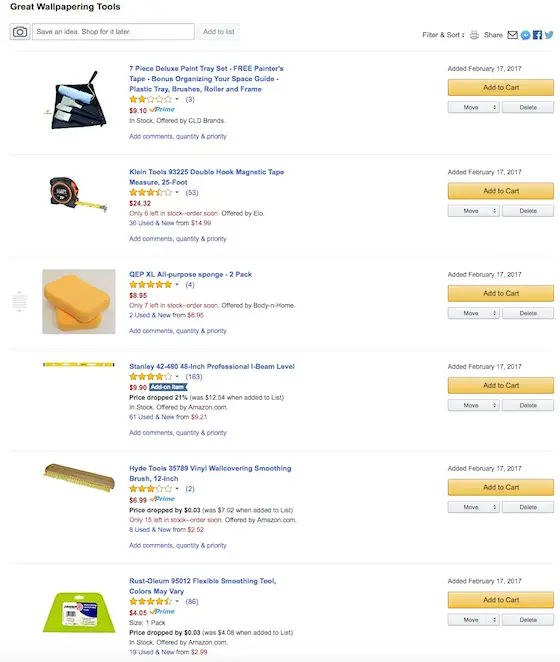
CLICK HERE to get all the tools I recommend in one place. It's easy and fast.
Scraping Paper
The type of scraping tool used and the angle of attack when using the blade determine how well you will remove paper from a surface and how much damage you might inflict upon that part of the wall.
The best angle of attack to remove the most paper and do the least damage to wall surfaces is a low one. My guess - from experience - suggests that you should be in the neighborhood of 15 degrees off the horizontal.
The scraper will jump over the paper and cause you massive frustration if you start the scraping process too early. Remember our discussion of instant gratification? Read the directions on the label of the enzyme wall stripping product and follow those to the letter.
See if it doesn't work well. Always try to work ahead. This means get other walls soaking while you are scraping and washing down a different wall - the one you began with.
Washing Walls
Washing the glue residue from walls works best if you use two simple tools. You need a pump sprayer or an old Windex type sprayer bottle and a large tile grout sponge.
Use the sprayer to mist the entire wall you wish to wash. This will once again re-hydrate or soften the residual paste.
The large grout sponges I use really work well as washing tools. They easily pick up large amounts of glue before they need to be rinsed.
Speaking of Rinsing....
Washing the walls with soap and water is one thing, but rinsing the walls with clear water is just as important. Failure to rinse the walls immediately after and/or during the washing process will cancel out all of your hard work.
Use a different bucket and a sponge or rag to do the rinsing. As soon as the water begins to get the slightest bit cloudy, dispose of it and get fresh, clean water.
Your walls must be free of all glue to get a great paint job or re-paper job. Take your time and wash and rinse well.
Enzyme Wallpaper Removal Products
OK, you want to know how to remove wallpaper but you don't want to use the heavy, hot steamers. Besides, those only work well on the old fashioned wall papers, not the vinyl coated products that are more prevalent today.
You need to use the enzyme strippers. You can find these products readily at any large paint store that sells wallpaper. There are different types of enzyme stripping products, but they all basically do the same thing.
The enzymes - once they are allowed to come into contact with the old paste - actually chemically alter the paste and make it so it isn't sticky. Once the paste loses its ability to be sticky, the paper comes off the wall very easily.
You may see different brands of enzyme strippers or paste loosening agents at the paint stores or home centers. The leader in the wallpaper removal industry is the Zinsser Company. Their scientists have the adhesive removal business figured out! Look for the Zinsser name when you buy your enzyme stripper.
Zinsser makes two varieties of enzyme stripper. The original formula is called DIF. You mix it with water and apply it to the paper. It soaks through regular wallpaper or penetrates through scratches that you make in vinyls or vinyl coated papers.
The enzymes work fairly rapidly - within an hour in most cases - by rehydrating (softening) the paste and turning off the adhesive switches within each paste particle.
Some customers complained about how messy it was to use the original DIF water solution, so the Zinsser people went back to work and developed the premixed DIF Gel formula. This is a ready mixed enzyme compound that you roll or brush onto the wallpaper. No vapors, drips, runs, etc. It is fast acting and can soften most pastes in about 20 to 30 minutes.
Want more information about DIF? Simply visit the Zinsser website or visit your local full line paint and wallpaper store.
The Zinsser people also make two handy wallpaper removal tools. One is the Paper Tiger. It is a hand held tool that has plastic cutting wheels that cut tiny slices in wallpaper. These slices allow the strippers to quickly penetrate the paste.
Once this is accomplished, you use the paper scrapper tool by Zinsser. It has a neat blade that is positioned at the correct angle so you don't gouge the walls. Look at your paint supply store for both of these handy tools!
Related Articles: Stripping Wallpaper - Now it is Easy, Drywall Repair
Column B250

Tim built custom homes and did ultra-custom remodeling for 20+ years before launching his Ask the Builder media presence. He was selected as one of the Big 50 by Remodeling magazine in 1993. This award gave birth to Ask the Builder in October 1993. Tim also operates https://DrawPlumbingPlans.com. His @askthebuilder YouTube channel was the first home improvement channel on YouTube.