Concrete Epoxy Repair Video
Concrete Epoxy Repair
Tim Carter demonstrates how to use epoxy to repair concrete cracks and holes. He shares a secret tip on how to disguise the epoxy patch. Watch the video.
You can also read a very cool column on how to use the same epoxy to fill driveway holes - shallow ones.
CLICK HERE NOW to purchase the epoxy Tim uses in this video.
Click the photo of the caulk gun below to get the high-performance caulk gun Tim is using. You get MORE CONTROL with it than a crap caulk gun.
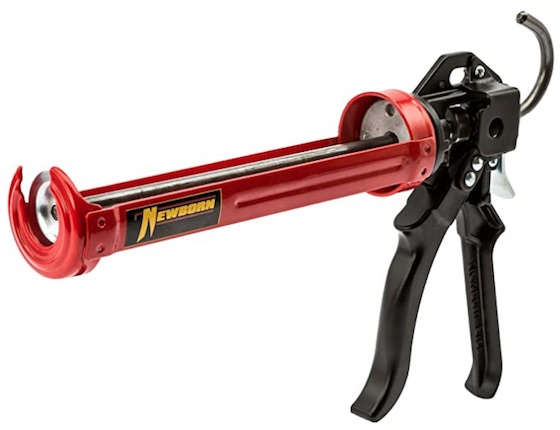
CLICK on the photo to have this caulk gun delivered to your home. It's the one I use.
SPONSORS /
Looks workable! Would like to see how each demo looks after a few days or week. Were you left the viewer to me is a very ugly looking patched area. But did show how easy to do a patch. Thanks for the demo. Ed
Tim,
Regarding the concrete epoxy product. It seems that the mixing tube attachment is good for one use only. If you have product left over, but the material left in the tube hardens, the remaining product is useless. Are additional tubes available for purchase?
Can concrete epoxy be used on filling in bricks where the cement has loosened or come out?
Yes you can, but it's so much cheaper and it will look BETTER to use tuckpointing mortar. READ my past column on how to match brick mortar.
Thanks for the video,Tim. I'm looking for a product to repair the top of a small (5' x 2') kidney shaped pond. I used Quikrete years ago but parts of it recently cracked and chipped off due to weather (Northeast!) Since there aren't any fish or plants in the pond, only a small filter/fountain, I think your product would work great.
In relation to Jim's question, is the tube able to be recapped if not completely used or, like Great Stuff, whatever isn't used has to be discarded?
The long tube that comes with the epoxy is one use ONLY. At the end of the caulk tube, the two components have yet to mix so there's no issue there of a future clog.
The issue is the epoxy IS MIXED inside the rat maze - my term - and it gets hard in about an hour.
Each tube does come with two of the mixing nozzles, so you can get two uses. I try to have enough work to do to be able to use up the entire tube at once.
You can buy the exact same product in the little jars. I show those in the video. But the issue with that is that you apply it, once mixed, with some hand tool, NOT the pressurized nozzle of the caulk gun.
Make sense? It's an AMAZING product and it will make a permanent repair IF the concrete you're working with is CLEAN and free of algae, dirt, oil, dust, etc. The surface can be damp - water doesn't interfere with the bond.
Great idea Tim, you did a great job, but why didn't you show us what it looked like after it dried and the sand was swept off ???? That is what I would have like to have seen 🙂 Can you still show us ????
can you get the stuff in the small cans in larger size cans for bigger jobs?
agree with Kentuckylady717. Why in the world didn't you show us the finished product, that is, with sand wiped away from the epoxy, and the fruit of your labor?
Your suggestion of putting sand to match the texture is well taken but I carry this a step further, I use ready mix cement (without water) and sprikle this on and let it weather off. It will match the color also.
Urethane chalks like S-10 or S-20 are good where flexibility is important. In some applications epoxy will crack with frost movement, etc.
Great video; learned a lot. One question...the concrete slab you made for the demonstration looks to be about 1-2" deep; the repair is about 1/16 to 1/8" deep. This leaves a void below the repair. Is this a problem with freezing and thawing later on? or just breaking due to natural expansion and contraction? I had expected that you would have tried to use a thin wire or stick to try to push as much of that super product down into the crack, 1/2" or up to an inch down. I saw how you used the tip to push some down. So the real question is- should one not try to completely fill a crack?
Thanks for the video. I've got a crack in my garage floor I need to fix, and I've got tenants in a warehouse that used anchors in the floor. This information will come in very handy.
Hi Tim, great video, cool drill. Would you suggest using that epoxy for a large steel handrail mounting into horizontal holes on a cinder block wall? The handrail has square post coming out perpendicular to it.
We mistakenly used an Ice Melt product on our driveway and the top layer of cement has stuffed off large areas so that it is pitted and the rock is exposed. Is there any way a pro can repair that by putting a top coat over the driveway to make it smooth again? What kind of top coat would stick to the whole driveway?