Antigua Construction
I was in Antigua in May of 2015 doing work as an expert witness on a civil construction case.
The photos below show what I've come to realize are somewhat standard Antigua construction.
From what I've seen driving around, there's a significant lower quality standard than what you'd see in certain parts of the USA.
Granted, I've seen some VERY SUBSTANDARD construction quality in the USA too!
These photos should alert you to do your due diligence if you're hiring a builder in Antigua. You MUST ensure the plans and specifications are correct so the proper materials are used.
You must be present at certain times of the work to make sure the proper materials in your specifications are being used. If you can't be there, hire a TRUSTED project manager who will act as your proxy to ensure the job is done right, not over and over and over.
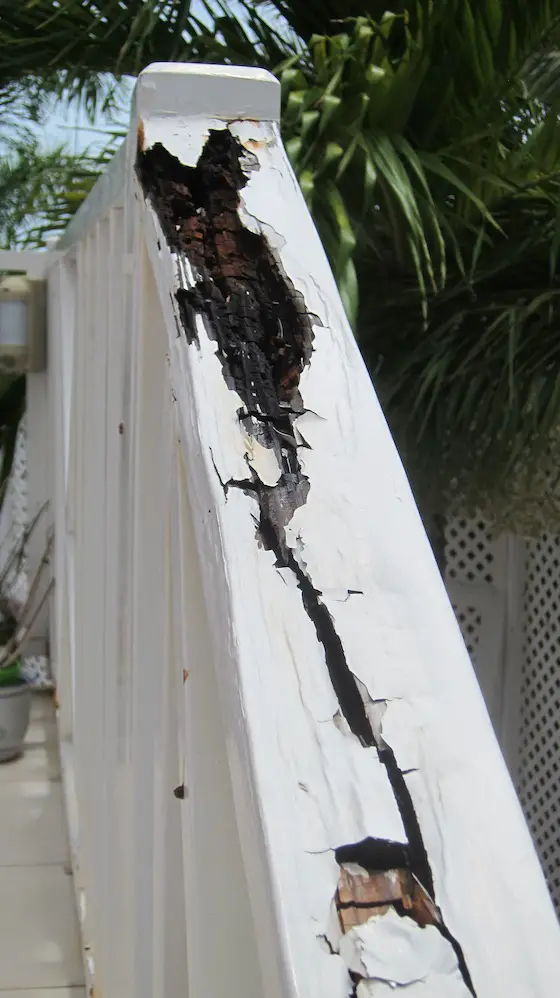
This handrail up a flight of exterior steps is only eight years old. Look at the ROT. Regular nails were used, not stainless steel. Untreated lumber was used for the railing. Photo credit: Tim Carter
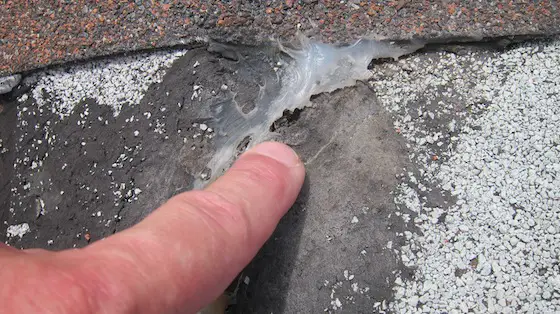
Silicone caulk was used to try to patch a hole in flat roofing material that's falling apart as you look at it. You can see the hole reappeared within a month. Flat-locked tin coated steel or commercial rubber roofing should have been used instead of this inferior asphalt rolled roofing. Photo credit and left index finger: Tim Carter
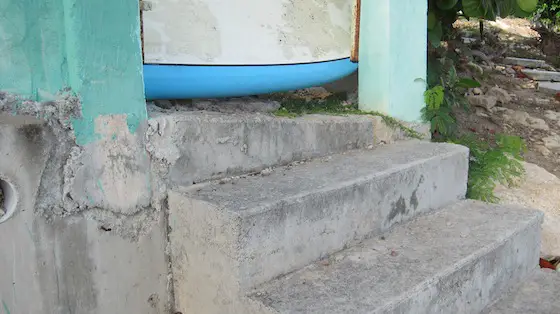
The builder of the turquoise sea wall KNEW there'd be a set of steps leading down to the sea. But at the opening in the wall, they didn't pour the top tread level. I saw construction like this all over the island. Photo credit: Tim Carter
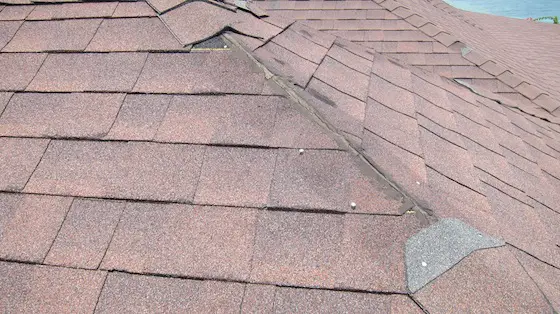
The hip cap shingles missing here face the sea. They were blown off last summer in a low-grade tropical storm. The nails holding them were so short, they barely penetrated into the wood below. Photo credit: very hot Tim Carter
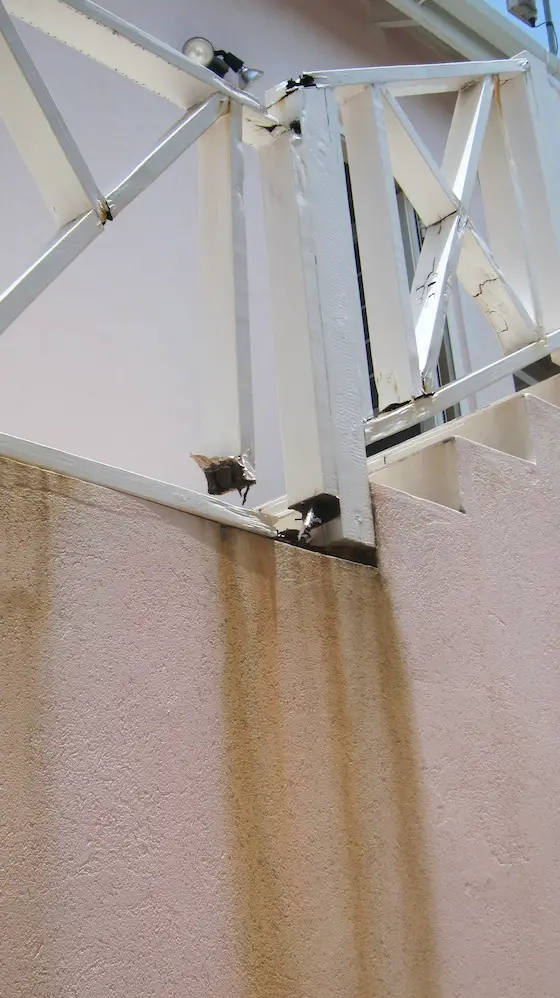
Inferior regular nails have rusted and have stained the gorgeous exterior stucco. The wrong nails and wood in the railing also have created a DANGEROUS problem in the event a person leans against the railing and it collapses. Photo credit: Tim Carter
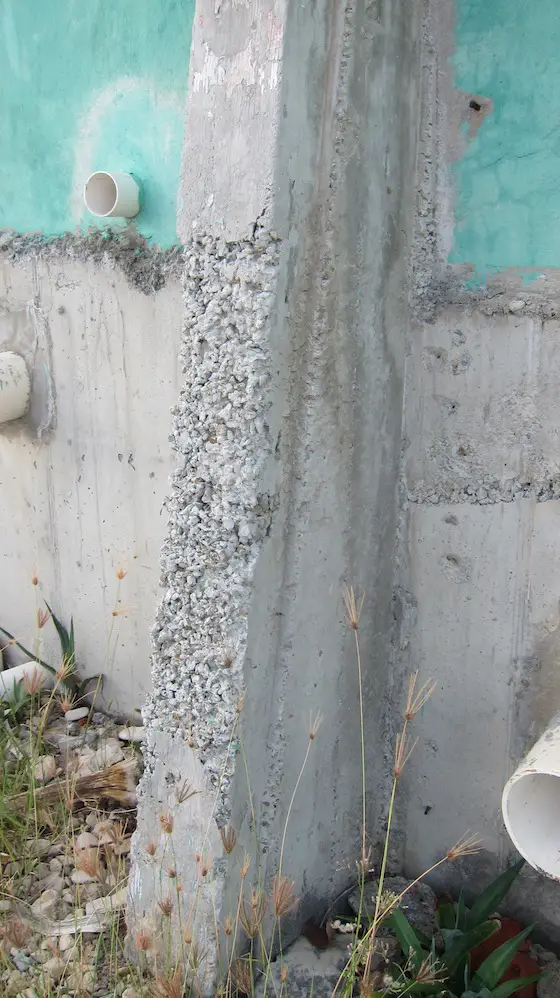
Honeycombed concrete. This happens when the mix is not uniform and there's not enough sand and cement paste in this portion to coat and surround the stone aggregate. This makes for WEAK concrete. Very weak. It's also a sign the concrete was not vibrated well as it was being poured in the forms. Photo credit: almost standing in sea water Tim Carter
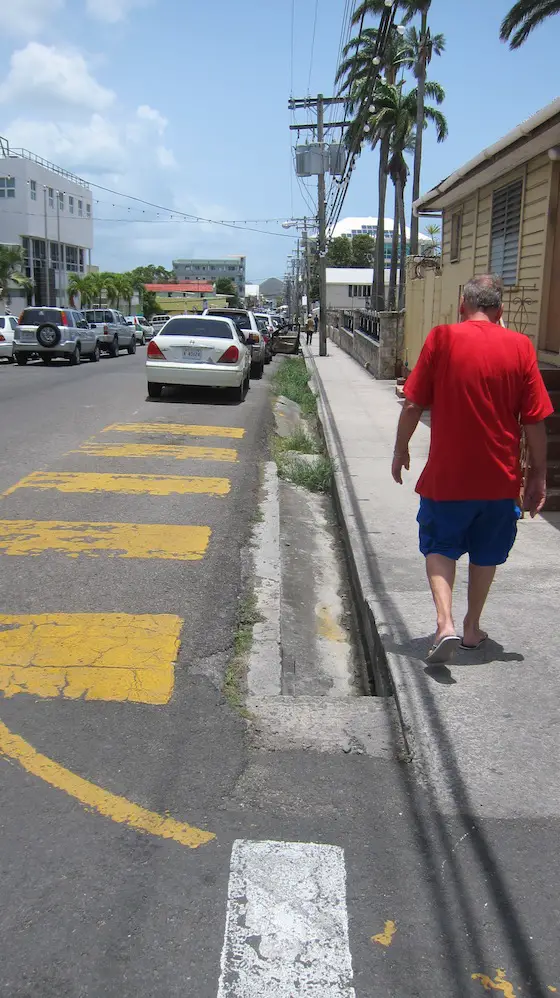
Typical large trench gutter in street in downtown St. Johns, Antigua. You have to walk carefully in downtown as the sidewalks and gutters are very uneven and there are holes in the sidewalks quite frequently. Photo credit: sweltering hot and humid Tim Carter

Tim built custom homes and did ultra-custom remodeling for 20+ years before launching his Ask the Builder media presence. He was selected as one of the Big 50 by Remodeling magazine in 1993. This award gave birth to Ask the Builder in October 1993. Tim also operates https://DrawPlumbingPlans.com. His @askthebuilder YouTube channel was the first home improvement channel on YouTube.
Does Antigua have building codes? What is it like to get a building permit? Do tradesmen have licenses? To get one do you just pay the fee and be done? Do you need one or do you get the hammer swinging.
Interesting pictures (and captions)! Thanks for sharing! 🙂
Thanks for the interesting photos.
I can identify with most of this since having been stationed in Puerto Rico and visited the Virgin Islands a few times.
Beautiful clear water and friendly people, but I sure don't miss the humidity.
P.S. Be sure to try the cheap, local rum drinks!
Dear Tim,
Those defects shown in those photos look pretty bad... However, with a professional like you around, those defects can easily be rectified..
TQ
regards,
LH
Hi Tim,
I want to thank you for the Antigua photos and commentaries!! LOL!!! I appreciate your humor in the comments.
I live in Pennsylvania, and contracted a guy to build my deck, 16 x 24, if I remember correctly. Permit required!, so I set off to the public library and reviewed the building code book. I had no clue what it meant, I know little about construction, BUT, I did understand that "Deck Tension Tie" were required, I named them "Blick brackets" after the Codes Officer, Mr. Blick. My deck was only 3 feet above ground, the guy that was building it was not smart about codes. He was going to bury the posts in the dirt. He didn't know that the 4x4s had to sit on a concrete base and USP Steel G185 Post Base to prevent water from rotting 4x4s, another deduction from his fee. Final inspection? Code Officer liked that I went beyond code and excused the improper handrail for a 3 step stairs, we used a 2x4. Builder ended up $250 short of agreed price due to the costs for proper code expenses. Deck is still standing strong and is 6 years old with no signs of rot!!