How to Prevent Burst Water Pipes – It’s Easy
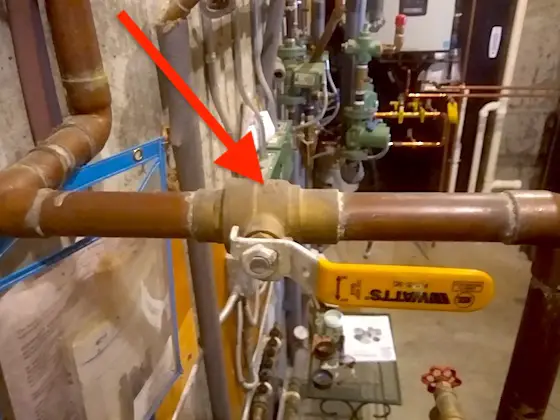
This ball valve is identical to my main water shutoff valve. Do you know where yours is? Do you know if it WORKS? Do you know how to de-pressurize your water lines? Of course, you don’t. The yellow handle is parallel to the pipe which means the valve is WIDE OPEN and water can flow through the valve. If you rotate it from the 3 PM position down to the 6 PM position, the valve will be FULLY CLOSED. Copyright 2021 Tim Carter
Prevent Burst Water Pipes - It's Really Easy
Were you one of the millions of homeowners, renters, or business people who suffered from the recent spate of miserable polar weather in the core of the USA? The storm and low temperatures left millions without power, drinking water, food, etc. Frozen and burst water pipes in houses and businesses are now as plentiful as flies at a summer cookout.
Who Forgot to Teach You How to Prevent Burst Water Pipes?
The past few days, I’ve been trying to make sense of all the misery out there. A week ago, I was a guest on the live midday WGN-TV news show to try to help the folks in Chicagoland who were suffering from extreme cold, ice dams, and whatnot.
My takeaway from that brief appearance, as well as an avalanche of incoming help requests on my AsktheBuilder.com website, is that somehow you may have not been injected with the simple and easy things you can do to protect your home when these severe weather events happen.
Common Sense and Knowledge Not Being Transferred
I don’t know where the blame lies for this lack of transfer of basic home-maintenance and how-your-home-works information, and to be honest, I don’t care. All I care about now is getting you up to speed so you know what to do to prevent burst water lines in your home. It’s important to realize I’ve been a master plumber since age 29.
Shortage of Plumbers
Why is this important to know? It’s simple math. How many plumbers are there in Texas or the other areas impacted by burst water pipes? I don’t know, but I do know there are 100, 1000, or 10,000 times more people that NEED a plumber right now than there are plumbers. So you tell me how long it’s going to take to get your water lines fixed?
CLICK OR TAP HERE to get FREE BIDS from local plumbers to help you.
Why Do Water Pipes Burst?
Water pipes burst because water expands in volume by 9 percent when it freezes. This usually isn’t a big deal if it freezes in an open bucket where the extra volume can go up into the air. Your water lines are different. They’re a closed system much like a can of fruit juice. Put one of those in your freezer and the next day it’s going to be split wide open just like your burst copper or galvanized iron water lines.
Will PEX Water Lines Burst?
There are water lines that can handle this expansion. I have them in my own home and I installed it in my daughter’s new home. PEX plastic water lines can freeze and not burst. If you’re going to build a new home or remodel consider PEX.
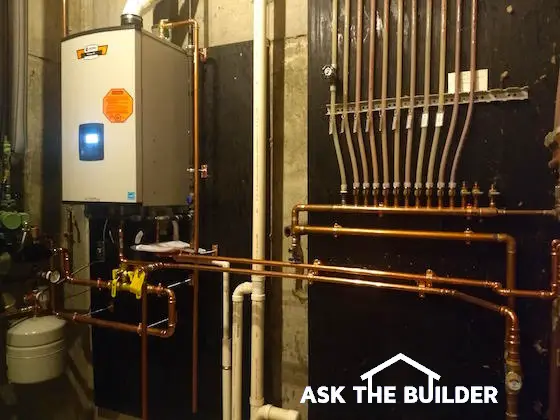
Those light-colored water lines going straight up in the upper right of the photo are PEX water lines in my house. These are the HOT water lines. Note the small shutoff valve at the bottom of each PEX line. I can shut off the hot water to just ONE fixture and still have HOT water going to all the other fixtures. Copyright 2021 Tim Carter
Is it Easy to Work With PEX?
Yes, it's so easy any homeowner can do it. Watch this video!
Easy Steps to Prevent Burst Water Lines
Here’s what to do if you don’t have PEX water lines:
Step 1
Step one is to clean your bathtub(s) and fill it to the brim with clean water. Do the same with as many buckets, bowls, pots, etc. that you own. You’ll use this for drinking, cooking, flushing toilets, etc. during the crisis.
Step 2
Step two is to locate your main water shutoff valve and turn it off. It’s almost always where the water line enters your home. It could be in your basement, crawlspace, or a closet.
You need to make sure the valve works and actually shuts off the water. This can be a touchy test because if you’ve not exercised the valve before, it may not work, you may break the handle, or it might not reopen. Don’t do this test hours before you’re expecting twenty guests for Thanksgiving dinner. Don’t do this test on a weekend when plumbers might be hard to come by.
Let’s assume the valve works. Your water is now off so if the water lines were to burst, you’d not have thousands of gallons of water flowing across your floors like the great Mississippi River flowing across the flatlands.
But you’ve now created a hidden time bomb. Shutting off the water is not enough. We need to get as much water out of the water lines as possible. Find the lowest sink in your house and turn on both the hot and cold valve as if you needed warm water.
Step 3
Now go through the entire house and flush every toilet, open up every valve, including tubs, showers, outside hose faucets, etc. You’ll see lots of water start flowing out of the first sink where you opened up the first valve. Gravity is pulling the water out of your water lines and replacing it with wonderful air. Do NOT close the valves on any faucet. Leave them open until such time as you can once again turn on the water.
Should I Shut Off the Water to My Water Heater?
Turning off the water supply line to your water heater will do nothing to prevent damage to the heater. You can turn off the gas valve or electricity to it if you want. The issue is if you leave the water in the heater with the supply valve shut off and it gets bitter cold in the house, the water in the tank can freeze and burst the actual water heater.
Bitter Cold? Drain Water Heater Too
If you feel it’s going to get bitter cold in your home, you’ll need to drain your water heater as well. That’s easy as it has a drain valve on the bottom of it. IMPORTANT NOTE: If you have an electric water heater, you MUST SHUT OFF THE ELECTRICITY TO IT BEFORE YOU DRAIN IT. Failure to do this will cause the electric heating elements inside the heater to burn up. If you have a propane or natural-gas water heater, shut off the gas valve to it. You don't want to be heating an empty water tank.
RV Antifreeze in Toilets and Sink Drains
Let’s say the power doesn’t come on and the temperature in the house is getting close to 32 F. Now it’s time to protect your toilet tanks and bowls and all the sink, tub, and shower traps. You can pour some RV antifreeze in all these. Most septic tanks and sewer systems won’t suffer with RV antifreeze. Don’t use regular car antifreeze as it’s quite toxic.
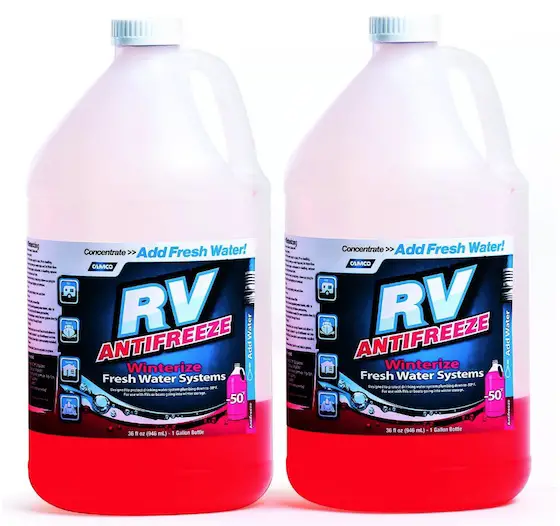
If the water in the toilet bowl or traps freezes, you’ll have even more misery and expense. It’s so easy to prevent this damage, but then again it requires you to have three or four gallons of this antifreeze stored in your home and not sold out the day after the power goes out. Be prepared like a boy or girl scout.
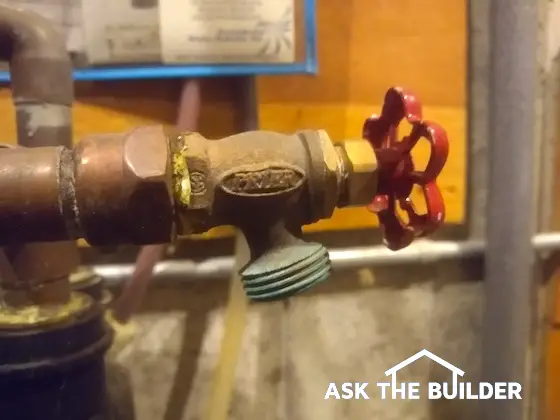
This is a typical boiler drain. You turn the round red handle to open or close it. Note the standard garden hose threads. Do you see how this could be quite helpful to get water to some part of your home if you isolate one of these valves in between two standard ball valves on the main line? Look at the illustration below to see how you need to do this.
What is the Best Way to Install a Main Water Shutoff Valve?
The best way, in my opinion, to install a main water line shutoff valve is to install TWO of them, not just one.
When you install two shutoff valves within about one foot of each other, you can install a boiler drain between them. Look at the illustration and I'll explain why this setup is so beneficial.
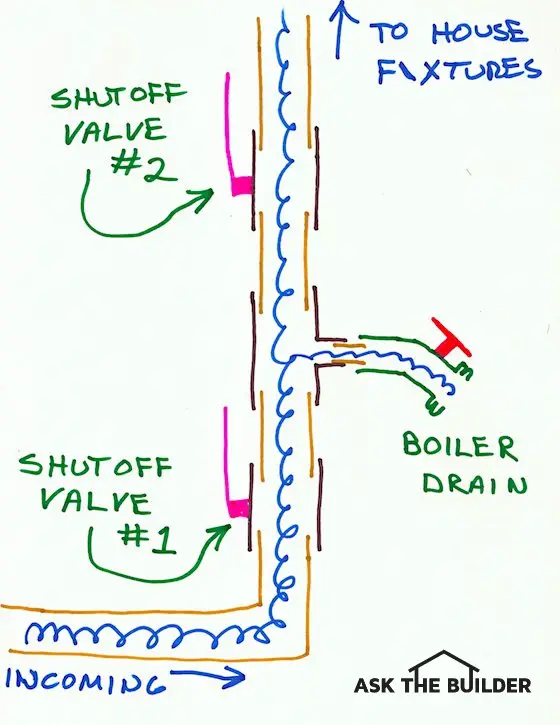
COPYRIGHT 2021 Tim Carter ALL RIGHTS RESERVED
To shut off the water to a house and DRAIN the plumbing system, you CLOSE the #1 shutoff valve. You then attach a garden hose to the boiler drain and run the hose to a nearby floor drain or outdoors. Open the boiler drain and go through the house and start to turn on EVERY faucet, flush every toilet, open every outdoor hose bib. Water will gush out the end of the garden hose.
Once all the water has emptied out of the water lines, CLOSE the #2 shutoff valve. If you then OPEN the #1 shutoff valve you'll have water flow out of the garden hose at full force. This allows you to bring the hose back inside and use it in the house to flush toilets, wash dishes, etc.
When the heat comes back on and all is once again normal, you disconnect the garden hose, CLOSE the boiler drain and open BOTH the #1 and #2 shutoff valves. You'll need to go through the house and turn off all the faucets as well as the outside hose bibs.
Column 1394

Tim built custom homes and did ultra-custom remodeling for 20+ years before launching his Ask the Builder media presence. He was selected as one of the Big 50 by Remodeling magazine in 1993. This award gave birth to Ask the Builder in October 1993. Tim also operates https://DrawPlumbingPlans.com. His @askthebuilder YouTube channel was the first home improvement channel on YouTube.
Tim, All your work on this water freezeing is wonderful, I know as I was a water plant operator in Virginia. Yes it does get that cold here! I remember replacing chemical feed lines in the winter because some one (not me!) cut the flow off on a 0 degree night. They were "saving water". And the double shut offs are good, wish every house had a place for this equipment.
I read the article in my local newspaper and it does not have the recommendation about turning off power to the water heater. I think that should of been mentioned like it is on your website. Also a recommendation for gas water heaters.
Thanks for the article, Tim. I knew to shut off the water and open the faucets to drain but didn't know about the RV antifreeze in the traps and toilets, that's a great idea. I also hadn't heard about the boiler drain idea. I think that's great also. Sounds like you use your noggin for more than just growing hair! 🙂
This deep freeze was a real bummer.I live across the bay from Galveston. The temp.got down to 18 degrees and did not get above freezing for about 30 hours.We were without power for 36 hours.I drained my water line and came out OK,but had to use heat on the main shutoff. Hopefully,many will read your column and remember it.
Great advice. I just printed it our so if I lose power I can go right your advice. Thanks.
Thanks so much for informing and illustrating how to drain your house's pipes for a deep hard freeze. Here in Texas we have gotten pretty complacent about our winter issues. Never again. I sent your column to a lot of email friends just now.
Would you mind if I sent your link to the local Houston News outlets to be used next winter before it happens again? It might be 30 years before we get in trouble again, but we have no way of knowing when Mother Nature will have another temper tantrum.
By the way, according to the news last night, there are currently about 35,000 licensed plumbers in the State of Texas.
Thanks for helping a lot of Lone Star residents.
VERY INFORMATIVE. THANK YOU.
What about people reading this after the RV antifreeze is already out of stock? Coincidentally, I needed some a month ago (for Winter Field Day, to pour in the drain trap of the camper after using it), and Walmart was out of stock. Luckily, I found some at the Auto Parts store. Tell me whether or not Plan B was a good idea:
If I wasn't able to find RV antifreeze, I was going to bring along a jug of salt water and use that. It's probably not a good idea to use that in the drinking water lines, but it seems like for the drain traps, it would be better than nothing.
Does that sound like a bad idea for any reason? Or can you think of any household chemicals that would work better than salt?
Very good and thorough discussion...
thanx
Looking at my own house, I can see that if things really froze all over in the house, heat off, etc. the pipe from the street that comes into my house and up to the lower cut-off would freeze as well. Just one thing to repair, but still one thing. Also, since things like the Texas issue don't seem to occur frequently, maybe it's not worth the effort to make all these preparations.
Why doesn't the water to the left of Shut Off Valve 1 (i.e., the incoming water line) freeze? Or have the potential to freeze?