Footing/Foundation Importance
Summary: A patio slab that doesn't have a foundation shouldn't have a structure built on top of it. Foundations protect structures from frost heaving that could crack the slab.
DEAR TIM: I have a concrete patio slab which is in excellent
condition. I would like to construct a screened-in porch on this slab. The
screening materials as well as the other building materials are lightweight. Do
you think the slab will be able to handle the weight of the structure? G. Y.
DEAR G. Y.: The slab will probably handle the weight,
however I feel that you have a more serious problem. Based upon your information
and sketch, your slab has no foundation beneath it. It simply is not a good idea
to build a structure on such a slab.
The reasons for this are numerous.
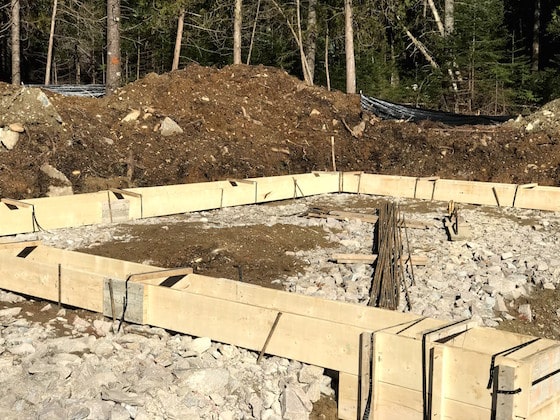
Some of the primary reasons structures require foundations are as follows. The
foundation of a building is designed to withstand the loads placed upon it.
Without a foundation, a wall or column supporting a concentrated load could
actually crack the slab and sink into the soil. Believe me, that could really
ruin your day.
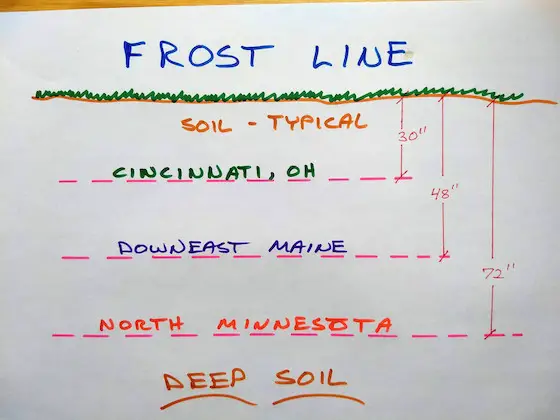
Foundations also protect structures from frost heaving. I have seen certain
clay soils heave a slab 2-3". Frost is a powerful force in certain climates and
must be respected. Foundations and the footers that support foundations should
be poured below the frost line. Frost lines can range from inches below the
surface to several feet. Check with your local building officials to determine
the frost line in your locality.
If you build your screened porch on the
slab several things could happen. Frost action could lift the slab and pull part
of the porch away from your house. The frost action could also crack the slab
and cause differential movement by lifting one part of the slab higher than the
other.
My advice is simple. I suggest that you remove the slab and install a properly designed foundation system. Reinstall a new insulated slab so that you have the potential of using this room on a 365 day-a-year basis should your space requirements change in the future.
|
|
Comments:
Mark C. Baker 04 Mar 2008, 12:02
I have a house in Lexington Ky, built in 1976, with a full, unfinished,
walk out basement. The house sits in the center, at the end
of a downward sloping court. The foundation walls are simple concrete block with no cement fill, and no steel rod. The rear wall, which is almost entirely below grade, is 12 blocks high (10 of which are below grade) and 16 blocks long. There is a large hickory tree at one rear corner and the previous owner had let one of the down spouts drain against this corner for years! He actually told me he thought the tree could use the water so he didn't even have a splash block! I fixed the down spout problem the first year we moved in, routing it well away from the corner. At that time the cracks in the walls were minor and we had no water coming in. Not knowing any better I did not worry about it. About 4 years ago during a really wet spring we developed the following issues... First, the rear wall started bowing inward. A small crack developed, about 5 blocks down, between the blocks in the mortar joint, and ran the entire width of the wall. Then, later in that year, a vertical, floor to ceiling, break in the blocks occurred in the corner where the tree is located. This break was about 8 inches in from the corner. For the first time just a bit of water came in the basement after a long wet period. A year later I fixed the surface water issues by installing (what I now know is called a French drain) to divert surface water. Water no longer comes in even after a hard rain, but four years later, the long crack has widened to almost 3/4" and the vertical break has allowed the whole wall to move inward almost an inch in that corner! This year I consulted with two companies: A foundation repair company who quoted me $18,582 to first remove the large tree, completely dig up the foundation along the back and one side wall where the tree is, install drain tile, rebuild the entire back wall and part of the side wall, waterproof the walls, then backfill everything; and a company that 'stabilizes walls' who quoted me $1500 to just install steel I beams anchored to the slab floor and floor joist and to install a B-Dry system on that one wall to catch any water that might come in. His idea, was to just stabilize the wall to prevent further movement and call it good. I am about to sell the house and build another one and can not afford option #1. Option #2 sounds like it would be a good stabilizing solution, but would be butt ugly, and certainly not confidence inspiring to a purchaser! I came up with a third option. Could I not install the B-dry system at the base of the existing wall, then build another block wall on top of the slab just in front of the existing wall? I could form a footer on top of the slab to distribute the load of the wall and use re-bar and cement fill to make a stronger wall. I got an estimate of $2500 to build the wall. My question is will the slab support the wall? If the existing footer is 16" wide and the slab was poured on top of that, then the new footer would have about 4" of footer support under it. Any ideas would be appreciated!
AsktheBuilder 08 Mar 2008, 17:08
Mark,
This qualifies for one of my phone consults. This comment area is not intended for manifestos. :->
eduardo covarrubias 08 May 2008, 09:49
Hello.
I'm in the process of building a home patio with cement ballisters all around. The patio will be 33'x30' and the ballisters weight about 30 lbs each and are placed about 12 inches apart. Also, I'm laying some brick colums so I can include posts that will form a canopy roof. Can you please provide a diagran of how my foundation/footing should look. Oh, and by the way I am building other structures on top of my patio, like a brick grill, brick island with brick chairs. Can I fill in the center of the patio with bricks instead of spending too much money on cement? Thank you for your advice. View all comments |