Black Algae Stains On Asphalt Shingles
Black Algae on Shingles
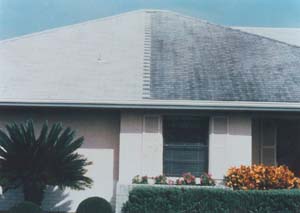
The shingles on the left are made with granules that contain copper. The copper leaches out each time it rains and creates a toxic environment for the roof algae. Photo by: 3M Corporation
DEAR TIM: I've got a problem. Three years ago, I had a new fiberglass asphalt shingle roof installed. It was the same color as my old roof, a light tan. Within the past 6 months, several areas of the roof have developed a dark, mildew-like stain. It is spreading. The climate hasn't changed and there are no trees that shade my roof. What in the devil is going on? Can I easily remove the staining? Can it be prevented? Ginny U., Ft. Pierce, FL
DEAR GINNY: They're heeeeeere! You, my friend, have been invaded by Gloeocapsa magma, a very hardy algae. These dudes have probably been up on your new roof since day one. The streaks and discoloration you are now seeing is an accumulation of their dead, dark colored cells. While this algae can grow just about anywhere in the continental USA, it really likes humid environments. The algae was deposited on your roof by wind and/or wildlife.
This algae most probably invaded your last roof as well. But it starved to death. The new fiberglass shingles you just installed are actually quite different from your old shingles. Your new shingles contain lots of ground up limestone. It is used as a filler to increase the weight of the shingles.
Guess what? Gloeocapsa magma loves to eat limestone. Older shingles used an asphalt-saturated felt paper made from scrap cotton rags and wood chips. New synthetic textiles eliminated the cotton rag market, so roofing companies switched to fiberglass. They solved one problem but created another.
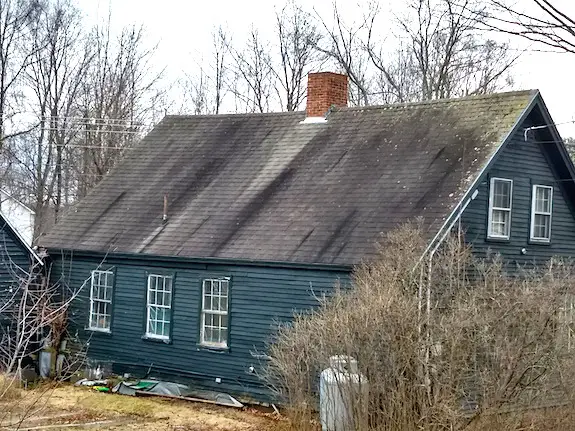
This roof is covered with different species of roof algae. You can see where the lead is helping to keep the roof clean. If there was a copper strip along the entire roof ridge, the roof would be perfectly clean. CLICK THE IMAGE to purchase the copper strips and solid copper nails.
This algae can be prevented from growing on roofs. All you need to do is introduce copper or zinc into the picture. Gloeocapsa magma hates copper or zinc. These metals are a very effective poison. Because your roof is still quite new, you are going to have to install some copper strips as high as possible on your roof. Rain will wash small amounts of copper down your roof which will poison the algae.
Copper Roof Strips
Consider installing long, seven-inch-wide strips of copper underneath the last full course of shingles at the top of your roof. You should be able to slide the copper up under the shingles approximately five inches or so. This will leave approximately two inches exposed to the weather.
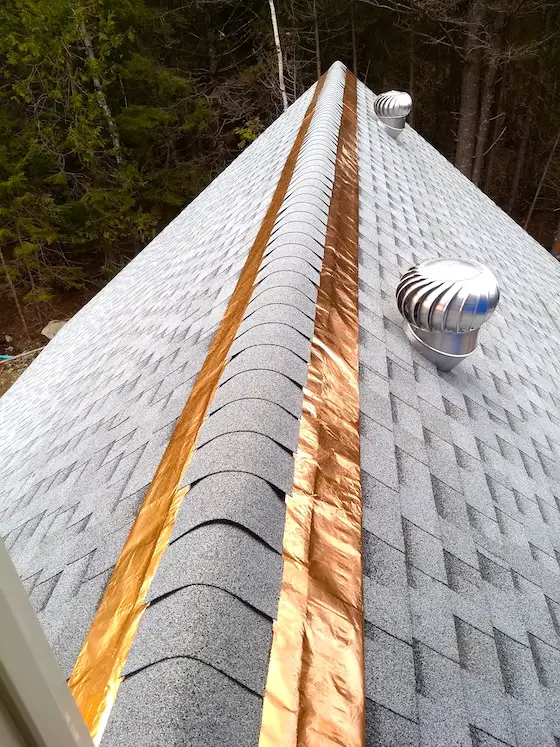
I applied these copper strips on my daughter’s new home five years ago. Invisible atoms of copper wash down onto the shingles each time it rains. This can add 40, or more, years worth of service life to the roof. Copyright 2024 Tim Carter
If you are getting ready to install new shingles, you need not do this. Many fiberglass shingles are available with colored granules that contain copper. There are enough granules present on each shingle to kill the algae. The copper is slowly released over time. Many of these shingles are guaranteed to kill the algae for the life of the shingle.
To remove the existing stains, you need to use a safe cleaning solution. Believe it or not, there are several treated wood deck cleaners that will do the job without hurting you, the roof, your gutters, and any vegetation below.
Look for deck cleaners that contain oxygen bleach. Do not use cleaners that contain chlorine bleach. Oxygen bleach is a non-toxic powder that mixes with water. Do not use a pressure washer. Apply the oxygen bleach solution to a cool roof surface on an overcast day. Do not let the solution dry. If windy or sunny, be sure to continue to apply a light spray of the oxygen bleach solution.
After it has soaked for 30 minutes, brush the solution with a stiff broom or brush. Always aim the rinsing hose down the roof, not up under the shingles. Be sure to wear a safety harness while working on the roof, as wet shingles are very slippery. BE CAREFUL!

Tim built custom homes and did ultra-custom remodeling for 20+ years before launching his Ask the Builder media presence. He was selected as one of the Big 50 by Remodeling magazine in 1993. This award gave birth to Ask the Builder in October 1993. Tim also operates https://DrawPlumbingPlans.com. His @askthebuilder YouTube channel was the first home improvement channel on YouTube.
I've heard the copper and zinc are bad for marine life.
Not true. Both are naturally occurring elements.
Where can I find the copper/zinc plates? Lowes is clueless.
You just do a search on Bing.com. So so easy.
Copper flashing should be readily available at Home Depot and Lowes
Thanks for the help on this big issue for most home owners. I have an additional problem applying strips. my roof is on a 2 story house with a 12/12 pitch. so very, very, steep. would using a pressure washer to spray copper sulfate solution work. not long term, but something that could be done every few years? and will copper sulfate harm singles?
You do not provide a reason why not to use chlorine bleach. Temporarily hurting the grass below is not sufficient reason.
It's highly toxic and KILLS vegetation. How's that for a reason? Just dust off your high school chemistry book and look up oxidizers.
A couple of years ago, I purchased some zinc strip samples from a major outlet and jammed them, half protruding, under shingles. They have done NOTHING.
The installed roof flashing and chimney cap are working, however, so my next step is to get additional strips of this. I figure to install at the peak and bout 10 feet or halfway down the slope.