Water Softeners – The Basics
Water Softeners - The Basics
DEAR TIM: I'm thinking about adding a water softener to my plumbing system. Just what is hard water? Are there any real benefits to soft water? Are any piping changes necessary? O. S.
DEAR O. S.: You are making a smart move. Soft water makes it easier to clean just about anything. It prevents the buildup of scale in pipes, water heaters, and boilers. The Soviets figured this out in 1910. They were the first to use soft water in electric power plant boilers.
Water from wells, aquifers, rivers, etc. contains dissolved chemical elements. Two of these, calcium and magnesium, cause water to be hard. The higher the amounts of these elements in a given measure of water, the harder the water. Water hardness is measured in grains per gallon. One grain weighs 1/7000th of a pound. Water containing 7 or more grains of these elements per gallon is considered hard.
Hard water can cause big problems. When water is heated, the calcium and magnesium decide it's time to get up and leave. They exit the water and begin to form a scale on the inside of pipes, boiler tubes, and hot water heaters. This scale buildup in hot water heaters and boilers can slow down the transfer of heat into the water. This slowdown can raise your fuel bills by as much as 30 percent.
A majority of your laundry problems are also caused by hard water. Hard water interferes with the cleaning action of soaps. Your white clothes turn grey because of unremoved dirt. Colors fade for the same reason. Soft water eliminates mineral deposits commonly found in toilet bowls and on ceramic tile and plumbing fixtures.
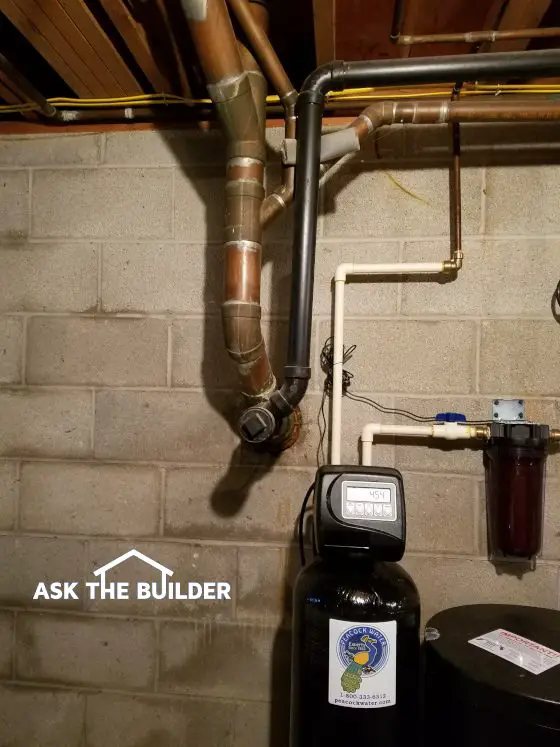
You soften water by removing the calcium and magnesium. It reminds me of a game I played as a kid: King of the Mountain. Hard water enters your water softener. It begins to pass through a bunch of tiny resin beads (mountains) that contain sodium. The calcium and magnesium jump out of the water and onto the beads. In the process, the sodium is knocked off into the water.
Eventually, the softener begins to fill with calcium and magnesium. These elements are removed from the softener in a regeneration process. A brine solution containing a high concentration of sodium is injected into the softener. This sodium jumps onto the beads and knocks off the calcium and magnesium. The calcium and magnesium are flushed out of the softener. The softener is now ready to work again.
Because you pay to soften water, you don't want to waste' soft water on your lawn, flowers, and shrubs. So, make sure your plumber pipes outside hose bibs with hard water. However, give serious consideration to installing a soft water hose bib in your garage. Cars rinsed with soft water don't experience water spotting.

Tim built custom homes and did ultra-custom remodeling for 20+ years before launching his Ask the Builder media presence. He was selected as one of the Big 50 by Remodeling magazine in 1993. This award gave birth to Ask the Builder in October 1993. Tim also operates https://DrawPlumbingPlans.com. His @askthebuilder YouTube channel was the first home improvement channel on YouTube.