Ask the BuilderAsk the Builder
Ask the Builder's on:

Subscribe to askthebuilder's videos

Air Conditioning
Asphalt - Blacktop
Brick
Building Tips
Cabinets
Caulk
Ceilings
Ceramic Tile
Checklists
Chimneys
Concrete
Concrete Defects
Concrete Installation
Condensation
Countertops
Deck Construction
Deck Maintenance
Design
DIY
Doors
Drainage
Drywall - Plaster
DVDs
EBooks - EDocs
Electrical
Energy Savings
Engineered Wood
Fences
Fireplaces
Flooring
Foundation
Garage Doors
Glue
Hardware
Heating Design
Home Builders
Home Depot Stories
House Plans
Hurricanes
Insects
Inspections
Insulation
Interior Walls
Kitchen
Lighting
Lots
Miscellaneous
Mold
New Construction
Online Courses
Outdoor Projects
Painting - Staining
Patio
Payments
Plumbing Design
Plumbing Supplies
Projects
Radiant Barrier
Remodeling
Retaining Walls
Roofing
Rough Lumber
Screened Porches
Sheds
Siding
Specialty Accessories
Stone
Storage
Structural
Stucco - EIFS
Tools
Trim Lumber
Vapor Barrier
Ventilation
Videos
Walk Throughs
Wallpaper
Windows
Glossary


Attic Ventilation - Ridge and Soffit Vents

By Tim Carter
©1993-2008 Tim Carter
Summary: Attic ventilation is so important. Ridge vents and soffit vents can remove heat and prevent frost problems through the changing seasons.

DEAR TIM: Yesterday afternoon, I went up into my attic to retrieve an old book. It was so hot that I became dizzy and almost passed out. The 3 square metal vents in my roof were not clogged. The air was stagnant. Should I improve my attic ventilation? Is it necessary? F. B.

DEAR F. B.: You're lucky you made it out of your attic alive. Had you passed out, it's possible you might not be reading this column. Attic temperatures in non or poorly ventilated attics can soar to 160 degree Fahrenheit. This type of heat harms your body, books, and your house.

Attic ventilation awareness is at an all time high. This awareness, I believe, is a result of the energy savings breakthroughs the home building industry has and continues to experience. Your house, when it was built, probably had state of the art ventilation. Times have changed and so must your ventilation.

Ventilating an attic needs to be done on a continual basis. The temperature and dew point of the air inside your attic needs to be as close as possible to the air on the other side of your roof. Wide differences in either of these numbers can cost you money in repairs or higher heating and cooling bills.

Poor attic ventilation in colder climates can cause frost and condensation to form on the underside of your roof. It can rain inside your attic. I have personally witnessed this phenomena. In hot climates, elevated attic air temperatures cause your air conditioner to work longer and harder. Asphalt shingles, roof boards, and insulation can be damaged by elevated temperatures.

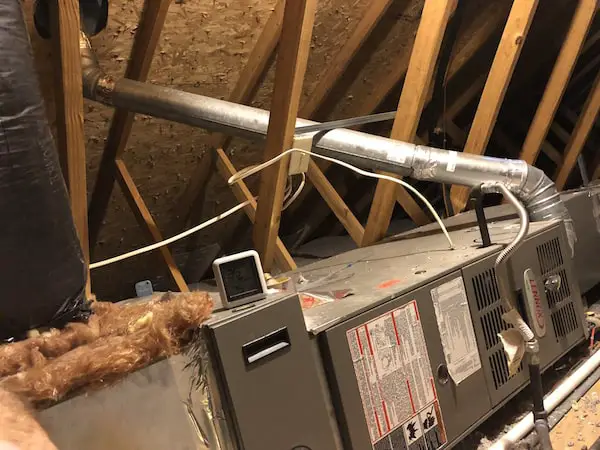
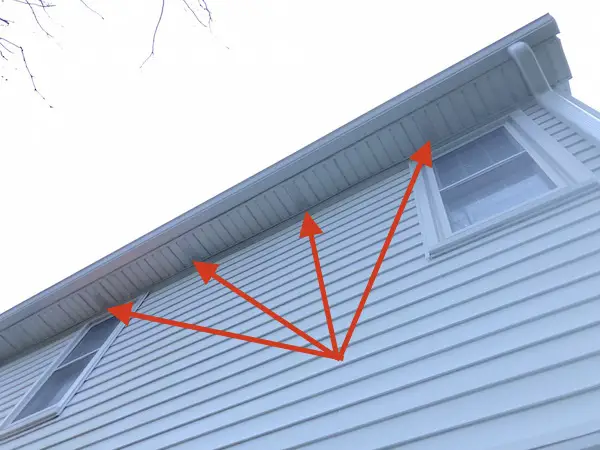
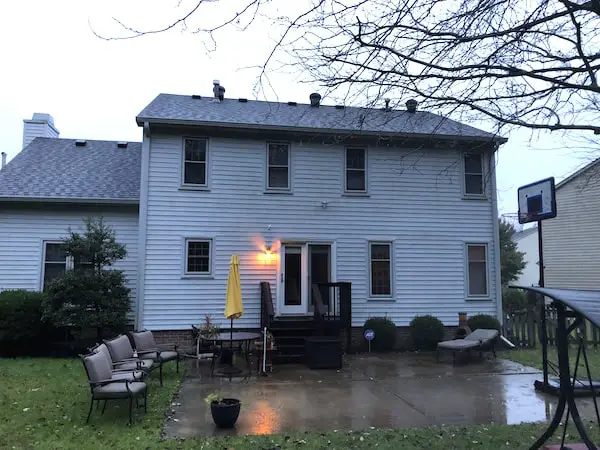
Your photos reveal two major problems. First, you have no lower undereave or soffit ventilation. Secondly, based upon this lack of lower ventilation and the size of your attic (1,025 square feet), you need an additional 17 roof vents to satisfy most current minimum code requirements.

You need flow through ventilation for your attic spaces. Outside air enters your attic space at the bottom edge of your roof. It is exhausted near the top of your roof. These ventilating systems use wind and thermal convection to continually exchange the air in your attic with outside air. On breezy days, wind blowing across the top of your roof creates a partial vacuum which sucks air out of your attic. On days with no wind, hot air, which builds up in your attic, simply floats out of hidden vents located at the top of your roof.

Many continuous ventilation systems are available that are virtually invisible. Upper roof ventilation products can hide beneath your cap shingles. Lower roof ventilation can be achieved either behind or above your gutters. If your roof needs to be replaced soon, your roofer can remove your three metal pot vents, repair the holes, and install these newer continuous ventilation materials. When installed properly, most of these ventilating systems meet or exceed minimum building code requirements and recommendations.


Comments

Armand Petrillo
22 Jan 2008, 14:09
What about ridge vents when you have cathedral ceilings. are they needed
AsktheBuilder
22 Jan 2008, 14:31
Armand,
They are a decent idea in that situation.
Mr. Olsen
25 Jan 2008, 23:38
An older house was constructed with 4x3's rafters (beams) running hoziontally, 48 inches on center. Ignoring "code", would a ventilation solution be to install 2 vents per section?

A two story 2nd house on the same property has a one story addition with a low pitch roof butted to the main house on two sides, and of course no vents. To complicate matters, there is a wood deck over (and supported by) the 1 story addition. Since I have to replace the roof entirely and it has (provisions for) lower soffit vents, what upper ventilation product is best for this 10x10 room?
AsktheBuilder
26 Jan 2008, 07:39
Mr. Olsen,
It sounds like a decent solution.
Bill
05 Feb 2008, 09:05
Within the past two years we had new roofing paper and shingles installed on our 9/12 pitch roof. This was not an overlay. At the same time we had the turtle vents removed and continous roof vents installed. We left the soffit vents and the gable end vent on the north east side intact (only one gable end because of chimney). Shortly after the shingles were installed we climbed through the access hole to check the inside of the roof. We found a great deal of mold, primarily over the bathroom located on the south west side of the house. However, we feel certain the mold was there before new shingles were installed.

We treated the mold with a solution of bleach and water which killed the mold. We checked a few months later and the mold had not reappeared.
Later, I was told that the gable end vent should be closed off as it did not work well with ridge vent. I did close the gable end with foil and duct tape. The soffits are vinyl and have very small vent holes that are not visible under beadwork that runs perpindicular to the house.
We have a r-19 factor attic insulation (at least) on 2nd floor celinig.
The bathroom fan vents empty into the soffit.

Now several months (7 or 8) after we last checked we find the mold is back.

We have questions.

1. Should I uncover the gable end vent even though we have ridge vent in place?
2. Do you feel the bleach and water solution sprayed on the mold with a garden sprayer will defeat the mold? Or are we going to end up replacing the sheeting and shingles?
3. Will an attic vent fan help?
4. Is attic mold a common problem in newer homes?


Thank you,
Bill
AsktheBuilder
05 Feb 2008, 09:13
Bill,
You need to read ALL of the columns in these categories to get a full understanding of the dynamics of what is going on inside your attic:

Condensation category
Mold category
Ventilation category

This is going to take you several hours and you will be able to apply that time for college credit in Building Science. Just kidding!

Bottom Line: You need to lower the humidity indoors AND you need to have dry, cold air pulled through the attic *constantly* to push out the humid air that comes into the attic from your home.
Jamie
07 Feb 2008, 09:07
Hello everyone,
We have an attic that becomes so super heated in the summer that it clearly affects the ac systems performance. I have read everything I can find on improving attic ventilation and everything seems to suggest soffit vents and ridge vents. My house was built in 2000 and has a soffit/ridge vent system in place. There are baffles installed and the soffits are unobstructed. The soffits run the full width of the house as does the ridge vent. However, there are 2 factors that I am thinking are maybe the cause of my extremely hot summertime attic. One thing is that because of a porch off the back of the house there are no soffit intakes on that side of the house, only the front. The second thing is that the house is a cape cod style with an extemely long, high pitched roof deck with black shingles. I am wondering if the the air being pulled into the soffits is so super heated by the time it gets past that long dark roof and into the attic that it really gives no relief to the scorching attic temperature??
Any thoughts or suggestions on what I can do to relieve my problem would be much appreciated.

thanks
Jamie
Virginia
Mr Olsen
07 Feb 2008, 09:27
As a layman, I wonder if the superheated attic of Jamie MIGHT be because the insulation was installed tight against the roof, thus not allowing air flow.

Might you use some visual device to check if air is getting sucked into the soffit?

Since your builder omitted soffits on one half the roof, you have to install some "intake". Would explain your "easy bake attic." as much as paragraph one.
AsktheBuilder
08 Feb 2008, 09:03
Jamie,
You need to read this column:

http://www.askthebuilder.com/690_Hot_Garage_Ventilation.shtml

And to help put this in perspective, you need to think about how hot the surface of a metal guardrail gets on a roadway that has 100% ultimate ventilation. In other words wind is blowing and there is nothing but air around it.

So anyone who ever thinks they will significantly cool an attic that is in direct sunlight needs to do a reality check. The solar heat gain is enormous. And as I say in the column, the best you might ever do is get it to air temperature!
Jamie
08 Feb 2008, 10:04
I understand...but with temperatures nearing 155 degrees when it is 90 degrees outside, something must be done...Would a gable vent at each end of the house with a fan pulling air through work or would it totally disable the soffit/ridge vent system that is currently in place? Would it be better to use 2 gable vents without a fan to just allow the necesary intake for the ridge vents in place to work better?

Thanks for you help,
Jamie

     View all comments
*Name:
Email:
Notify me about new comments on this page
Hide my email
*Text:
Security Image:

Visual CAPTCHA


Ask the Builder Comment Help

Helpful Comment Tips: If you need help with a problem, please try these things now before you type in a comment. You could discover your answer in just minutes.
  • Read ALL Comments Before Submitting One: If there are lots of comments that are already part of this column, there is a very good chance your question has already been answered by me or someone else.
  • Read Similar-Titled Columns First: The column above is almost always part of a two-or-three-part series. The answer to a question you may have is probably in a related column or in comments that are part of that column.
  • Read Columns in a Category: Take the time to read many columns in a category. The amount of information you will discover will amaze you.
  • SHARE a Story: Please share any tips or amusing tales of glory! Tell others what has worked for you. Maybe you have a disaster you want to discuss. Let's collaborate so we all learn together.
Don't show this alert again.