Cold Weather Concrete Installation
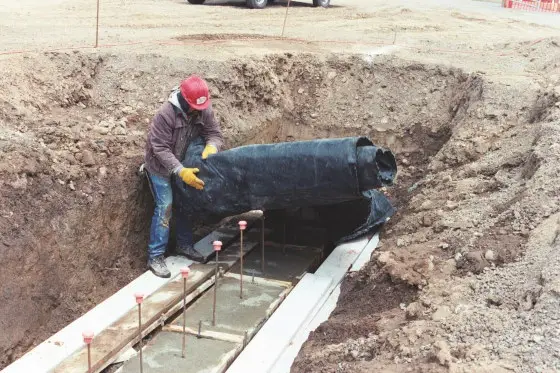
This worker is using a waterproof insulating blanket to cover a freshly poured footer. The heat produced by the chemical reaction of hydration within the concrete will be retained within the concrete by using the blanket.
DEAR TIM: Last winter I had a new concrete driveway and sidewalk installed. Months later the finish began to scale off and spall. The concrete finisher is blaming the concrete supplier. The concrete supplier says the mix was fine. I'm stuck in the middle. What do you think happened? Could my problem have been prevented? Was it a mistake to pour concrete in cold weather? E. G.
DEAR E. G.: If I was a betting man, I'd place my money on the concrete supplier's statement. In all probability, your spalling concrete is a workmanship issue. You need to recreate the events and weather conditions at the time of the pour and ask your concrete finisher some hard questions. Your local branch of the National Weather Service can provide you with excellent weather data for this time period.
First of all, let's define cold weather with respect to concrete. As stated in ACI 306 (American Concrete Institute Code), the definition of cold-weather is “a period when for more than 3 successive days, the average daily air temperature drops below 5°C (40°F) and stays below 10°C (50°F) for more than one-half of any 24 hour period.” Cold weather can have a detrimental affect on concrete for several reasons.
Concrete is an interesting material. It transforms magically from a liquid to a solid material chemically. The speed of the reaction depends upon the temperature of the concrete. When it's hot outside, the reaction proceeds quickly. When it is cold, the reaction slows down. Herein lies the problem. The concrete needs to harden as rapidly as possible to resist pressures caused by water which may freeze within the concrete.
Want perfect concrete work? Find a pro by using my Concrete Work (Sidewalks, Driveways, Patios & Steps) Checklist. I offer a 100% Money Back Guarantee.
In your case several things may have happened. The concrete may not have attained a minimum strength (500 PSI) soon enough to resist the effects of freezing temperatures. Was your concrete protected with insulated blankets after it was poured? If not, it may have cooled too rapidly, slowing the chemical reaction.
Poor finishing techniques may have doomed your slabs. Freshly poured concrete often bleeds. The water in the mix floats to the top, as it is the lightest ingredient. Floating or troweling this water into the concrete weakens the top layer. Troweling the concrete too early can seal this bleed water just below the surface as well. If your slab was then exposed to freezing temperatures several days later, this water could have frozen and fractured the top layer.
Concrete can be successfully poured in cold weather. Several precautions need to be taken. Never pour concrete on frozen ground, snow or ice. Be sure to order air-entrained concrete. Request a heated mix or order 100 lbs of extra cement for each cubic yard of concrete. This extra cement helps develop early strength. Be sure the concrete is ordered with a low slump (drier mix). This minimizes bleed water. After the final finish is completed, cover the concrete with plastic and insulated blankets. The plastic will cure the concrete. Finally after 7 - 10 days, remove the plastic and allow the concrete to air dry before exposing it to freezing temperatures.

Tim built custom homes and did ultra-custom remodeling for 20+ years before launching his Ask the Builder media presence. He was selected as one of the Big 50 by Remodeling magazine in 1993. This award gave birth to Ask the Builder in October 1993. Tim also operates https://DrawPlumbingPlans.com. His @askthebuilder YouTube channel was the first home improvement channel on YouTube.
Thanks, do you as well know about cinderblock and attaching boards in freezing temperatures? Really need to know if I can get the stained boards out of my utility room on a driveway wall?
Yes watch my video about attaching Wood to Concrete.
I have poured concrete plenty of times in cold weather against my will. You will not get even close to the same results pouring in the cold even if you add 1 percent and calcium. Exposed concrete is terrible in the cold. I'm sure it had alot to do with the cold weather. They should have known better or there just trying to work year round when they shouldn't be.