House Wrap Will Save Money
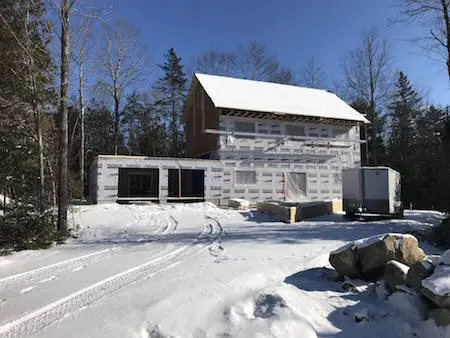
DEAR TIM: I would like to keep my energy costs to a minimum in my new home. Do you think it is worthwhile to have my builder install a whole house wrap air barrier product? Do they work? Are there other advantages in using them? Can you share some installation tricks? L. O.
DEAR L. O.: I have used the house wrap products on all of my jobs. They are an extremely important feature that is often left out of many new homes. They will save you money on your heating and cooling costs. In addition, these whole house wrap products will protect the structure of the house in the event of water infiltration.
The idea of wrapping houses is not new. Many of the older homes that I rehabilitated early in my construction career had been wrapped with tar paper. The tar paper functioned primarily as a water barrier on wood frame houses. It probably helped to limit the amount of air that infiltrated as well. For some reason the use of tar paper was abandoned by many builders after World War II.
The modern house wraps are actually air retarders. Air infiltration can be a huge drain on utility costs. Air leaks into and out of houses in between gaps that are usually found where exterior walls sit on foundations and wooden subfloors. Air can also leak where sheets of plywood or wall sheathing abut one another. An average house has between 70 and 200 square inches of air leaks.
The air infiltration products do not block the flow of air entirely. To do so would be a big mistake. Water vapor from the inside of your house needs to be able to find its way to the exterior air. If the vapor were to become trapped, it could easily begin to cause moisture related rot problems. These building products resemble some modern fabrics - they repel liquid water but allow liquid vapor to pass freely.
All houses that are framed with lumber need protection. Brick veneer is not water proof. Wood, vinyl, and aluminum siding can develop leaks. Construction details around doors and windows are sometimes sub-standard. The whole house wrap products, when installed properly, create a very effective waterproof skin. Water that gets behind the exterior finish material of your house flows down the wrap and exits just below the top of your foundation or slab.
Installation of the whole house products requires attention to detail. These products need to be installed just like the old tar paper - start from the bottom and let subsequent pieces overlap the lower ones. All seams must be sealed with a special adhesive tape sold by the manufacturer. The wrap needs to be in place before doors and windows are installed. In fact, it should be installed prior to the placement of the second top wall plate that sits immediately below the roof rafters. By sandwiching the wrap between the double top wall plate, you virtually eliminate the entry of any soffit down drafts behind the house wrap. Be sure the house wrap extends over the top of the foundation at least 1 inch.
Some house wrap products can hide the location of wall studs. If you use such a product, be sure to align the outer wall stud markings on the house wrap with the studs. If this is too much trouble, consider using a translucent house wrap. In either case, the bricklayers and siding installers will thank you.

Tim built custom homes and did ultra-custom remodeling for 20+ years before launching his Ask the Builder media presence. He was selected as one of the Big 50 by Remodeling magazine in 1993. This award gave birth to Ask the Builder in October 1993. Tim also operates https://DrawPlumbingPlans.com. His @askthebuilder YouTube channel was the first home improvement channel on YouTube.