Condensation – Sources and Solutions
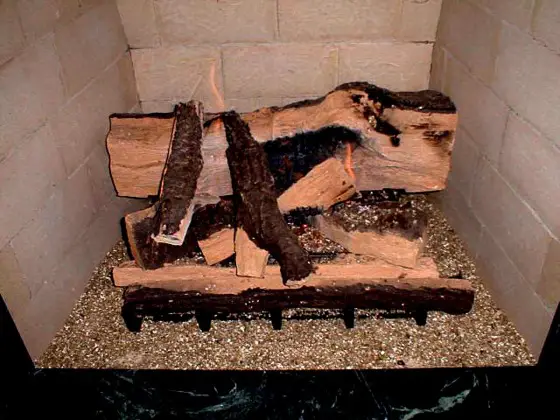
These gas logs look harmless. But when they are burning, they create vast amounts of water vapor. This vapor goes up my chimney. If you have a vent-free set of gas logs, the water vapor your logs create stays in your home!
DEAR TIM: I recently had siding and new insulated glass windows installed. The place looks great, but now I have mildew growing on my new windows and on the ceilings above a couple of the windows. I have electric baseboard heat which is very dry. We also installed a vent-free fireplace to minimize our use of electric heat. There is more condensation now than ever before. I thought I had it all figured out, but now I am crazy with frustration. Are the windows poor quality? What is the problem? Stacy J., Cambridge, OH
DEAR STACY: Don't admit yourself to the funny farm just yet. The excessive condensation may be traced to several problem areas. The recent home improvements you have completed have drastically altered the dynamics of air movement in and out of your home. In addition, the vent- free fireplace is adding more than heat to your indoor environment. You should be able to stop the condensation on the windows, but the solution may be painful.
Condensation can appear on new windows in just about any part of the nation. If you can get beads of water to form on a cold can of soda or an ice cold glass of tea while inside or outside your home, you can get windows to do the same. Homeowners who live in the South and Southwest can create condensation on the exterior surface of widows if they set their air conditioning too low. Condensation occurs when the temperature of a glass, metal, or any other surface reaches or drops below the dew point of the air in contact with the material.
Condensation, or dew, forms when the cold or cool surface chills the adjacent humid air and the water vapor in that air changes back to liquid water. To make matters worse, the dew point can fluctuate up or down without giving you any real notice. In very cold climates, the interior glass, metal, or plaster surface can get so cold that the condensation turns into ice or frost.
The new siding and windows of your home have probably helped to stop air infiltration into your home. Cold air can hold much less humidity or water vapor than warm air. Before you changed your windows, drier cold or cool air used to leak into your home and mix with the warmer more humid inside air. This lowered the overall relative humidity of the air in your home. Your new windows and siding have actually caused the humidity level to rise in your home because this mixing no longer takes place. Even though the windows may be top quality, the temperature of the inner pane of insulated glass may still reach or drop below the dew point of your interior humid air.
I actually feel the condensation problem is being caused by the new vent-free fireplace. These energy efficient devices keep all of the heat inside since they do not require a chimney, but they pump vast quantities of water vapor into your home as they burn. Water is a by-product of the combustion of natural or propane gas. For every 100,000 Btu's of gas burned, approximately 1.5 gallons of water is created and added to the air inside your home. If you stop using the fireplace for several days, the condensation problem should lessen considerably. Keep in mind that if the outside air temperature rises during this test period, you may be lulled into a false sense of security. Remember, as the outside air temperature rises, so does the surface temperature of the glass, wall, and ceiling surfaces adjacent to outside walls.
The water vapor that is causing the condensation may also be coming from a crawl space. Crawl space soil needs to be completely covered with high performance vapor barriers. Even though the soil inside a crawl space appears dry, it is releasing water vapor into your home 24 hours a day. High performance vapor barriers are made with two cross laminated sheets of high grade virgin polyethylene. They perform much better than standard polyethylene vapor barriers sold at most hardware stores and home centers.
The windows you purchased may also be part of the problem. Not all windows are made the same. Windows that are the least susceptible to condensation at a given dew point are those that pass voluntary manufacturing standards implemented by various organizations and associations. Top quality window manufacturers that submit their products to these independent tests use high performance glass and materials. Look for widows that have certification labels from either AAMA, NFRC, or Energy Star.
Column 301

Tim built custom homes and did ultra-custom remodeling for 20+ years before launching his Ask the Builder media presence. He was selected as one of the Big 50 by Remodeling magazine in 1993. This award gave birth to Ask the Builder in October 1993. Tim also operates https://DrawPlumbingPlans.com. His @askthebuilder YouTube channel was the first home improvement channel on YouTube.
Tim, This is a good article. All that you mentioned particularly together are not well understood. Many other "advisors" create more confusio than they cure. You would be doing your readers a big favor by including more articles on condensation, excessive bathroom moisture and moisture barriors instaaled under siding. Thanks. George