Fiber Cement Siding – Durable and Loves Paint
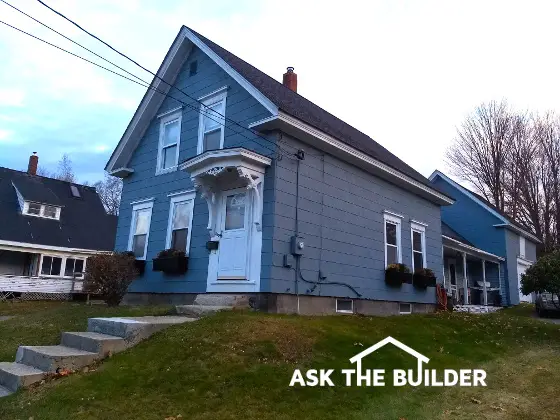
This is a house covered with fiber cement siding. It was built probably in the late 1800s in Laconia NH. It's on Elm Street. That gray siding is fiber cement that could well be over 100 years old. See below for a close-up photo. Copyright 2017 Tim Carter
Fiber Cement Siding TIPS
- Oldest is the most durable
- Modern has wood fibers instead of asbestos
- Fiberglass fibers would be ideal
- Paint doesn't peel from fiber cement
- CLICK HERE to Get Tim's FREE & FUNNY newsletter
DEAR TIM: I'm really tired of the ho-hum horizontal lap siding I see on so many new homes today. I'm looking for a unique siding style.
I grew up in an old house that had these tough, thin panels that resembled armor plating. Is this siding still available? What was it and how is it installed? Jenny W., Fresno, CA
DEAR JENNY: I know exactly what you are talking about! There are thousands of homes in my city that sport this incredibly durable siding material. It's simply fiber cement siding.
Related Links
Fiber Cement Installation HACKS
Modern Cement Siding FREEZING Damage!
Fiber Cement Developed in France
The product was developed in France about 100 years ago. In the first place, concrete paving is durable. The French developers modified the concrete making process and produce thin shingles that one could nail to a house.
The good news is that fiber cement siding is alive, well, and flourishing. What's more, several of the 100-year-old patterns are still available.
Free & Fast Bids
CLICK HERE to get FREE & FAST BIDS from local siding contractors who can install cement siding.
Old Fiber Cement Can Be Found In Many Cities
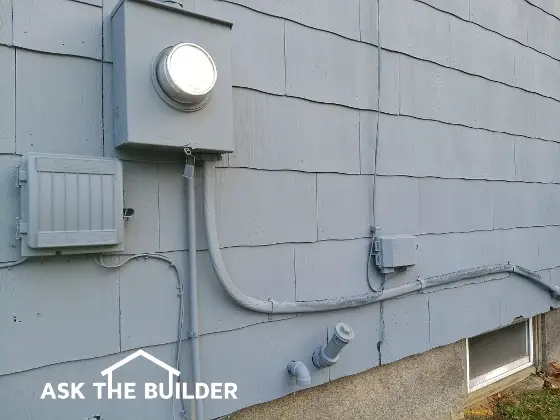
This is a closeup shot of thin fiber cement siding on the Laconia, NH house. This siding could well be eighty, or more, years old! Copyright 2017 Tim Carter
I can drive you by existing homes that still have this ancient siding on it. It may be dirty, but it's in excellent condition.
It's important to realize the older siding is still in great shape because the manufacturing process included asbestos fibers in the thin sheets of cement siding. Asbestos is a natural rock product that is unaffected by water.
The Portland cement and fine sand used in the old fiber cement siding are also waterproof. If you're lucky enough to have this old siding on your home or roof, it's the same as having a thin layer of rock protecting you from the elements. It's no wonder it lasts for decades with no wear!
Asbestos in Fiber Cement NOT A Hazard
The asbestos is NOT a hazard in this siding because it's not able to become airborne. It's locked into the Portland cement and sand matrix.
The first thing to remember is you can release asbestos fibers into the air if you cut into the siding creating lots of dust. The asbestos fibers can be contained if you keep water on the siding as you cut.
The water turns the dust into a safe slurry. Bottle the slurry and dispose of responsibly at your local landfill.
Modern Cement Siding
Modern fiber cement siding is a mixture of cement, wood fibers, finely ground sand, additives, and water. It resists, fire, insects, some water, wind, etc.
I have fiber cement siding on my recent home here in New Hampshire and if it soaks up water and freezes, the siding falls apart. I've often wondered why the manufacturers don't use fiberglass instead of the pulpy wood fibers that soak up the water allowing it to freeze and blow up the siding.
You were not far off when you compared the siding to armor plating. Cement siding is very nearly maintenance free. The original shingles developed 100 years ago required no finish.
They had different colored exterior skins. I know of 100-year-old cement siding houses that simply need to be washed to look as good as the day they were built.
CLICK HERE to get FREE & FAST BIDS from local siding contractors who can install cement siding.
Many Old & New Profiles
Fiber cement siding comes in a wide variety of styles. People who like the ho-hum horizontal lap siding that you find boring can find a number of fiber cement products to finish their homes.
The product even comes in large sheets similar to plywood. By all means the shingles you want are by far the most distinctive.
There are three basic types:
- one with a wavy bottom edge
- one with a straight bottom edge
- one with a random notched bottom edge
The random notched edge resembles a thatched wood shingle. All of the shingles have either a combed textured or a wood-grained texture. They are very handsome.
Odd Old Sizes
These old style fiber cement shingles come in very peculiar sizes. The shingles range in height from 12 to 14 and 5/8 inches high and they are either 24, 25 and 3/32, or 32 inches long.
All of them are just under 1/4-inch thick. Not only can they be used for new homes, but they also are made so that they can act as replacement parts for old homes that have broken siding shingles.
They are also excellent materials to use for room additions to old fiber cement sided houses. The owners of those homes end up with an expanded house that matches nearly perfectly with the exterior construction details of the original home.
Easy to Install But Tough to Cut
Fiber cement siding or shingles are easy to install. The new house or room addition needs to be covered with oriented strand board or plywood. This provides a solid nailing surface.
The unique shingles come with factory punched holes that serve as handy alignment guides. It's best to use small headed stainless steel nails as the nail heads are exposed.
Most manufacturers require that asphalt-saturated felt paper or a air and water barrier be used under the siding. Do not use coal tar saturated felt paper.
The oils in this product can stain some fiber cement products. The siding is cut with a saw fitted with an abrasive blade, a snapper, power shears, or it can often be scored and snapped like drywall.
Beware Cutting Dust
The dust created when cutting cement siding is unhealthy. It contains silica. Wear approved dust masks to avoid hurting your lungs.
Paint Loves Cement Siding
Fiber cement shingles and siding can be painted. They hold paint very well because the products do not expand and contract with changes in humidity.
If you buy high-quality paint and follow the recommendations of the siding and paint manufacturers, it's entirely possible that your next paint job will be twenty to twenty-five years from now.
All things considered always wash siding first with soap and water before you attempt to repaint it. You just might be surprised how good it looks!
CLICK HERE to get FREE & FAST BIDS from local siding contractors who can install cement siding.
Column 327

Tim built custom homes and did ultra-custom remodeling for 20+ years before launching his Ask the Builder media presence. He was selected as one of the Big 50 by Remodeling magazine in 1993. This award gave birth to Ask the Builder in October 1993. Tim also operates https://DrawPlumbingPlans.com. His @askthebuilder YouTube channel was the first home improvement channel on YouTube.
Is there a book or something on installing cement siding. I have been thinking about installing it on my house. Thanks
.