Ask the BuilderAsk the Builder
Ask the Builder's on:

Subscribe to askthebuilder's videos

Air Conditioning
Asphalt - Blacktop
Brick
Building Tips
Cabinets
Caulk
Ceilings
Ceramic Tile
Checklists
Chimneys
Concrete
Concrete Defects
Concrete Installation
Condensation
Countertops
Deck Construction
Deck Maintenance
Design
DIY
Doors
Drainage
Drywall - Plaster
DVDs
EBooks - EDocs
Electrical
Energy Savings
Engineered Wood
Fences
Fireplaces
Flooring
Foundation
Garage Doors
Glue
Hardware
Heating Design
Home Builders
Home Depot Stories
House Plans
Hurricanes
Insects
Inspections
Insulation
Interior Walls
Kitchen
Lighting
Lots
Miscellaneous
Mold
New Construction
Newsletters
Online Courses
Outdoor Projects
Painting - Staining
Patio
Payments
Plumbing Design
Plumbing Supplies
Projects
Radiant Barrier
Remodeling
Retaining Walls
Roofing
Rough Lumber
Screened Porches
Sheds
Siding
Specialty Accessories
Stone
Storage
Structural
Stucco - EIFS
Tools
Trim Lumber
Vapor Barrier
Ventilation
Videos
Walk Throughs
Wallpaper
Windows
Glossary


Positive Drainage Keeps a House Dry
By Tim Carter
©1993-2008 Tim Carter
Summary: To eliminate standing water problems around your house your foundation must be waterproof. Foundation drainage codes require a natural slope away from the house for water flow. Drain pipes, downspouts or a sump pump also can all pipe water away from the house.

Related Articles: stormwater drainage, French drains, French drain illustration

DEAR TIM: I am building a new home soon and I do not want water drainage problems of any sort in my yard. My existing home is built on a slab and I frequently have standing water around the house after a rainfall. My new home will have a basement. Can I build a house with a dry basement or will it leak over time and become damp, musty and useless? Surely there must be a way to elimnate all water problems around a home. Amy C., Dubuque, IA

DEAR AMY: You bet it is possible to eliminate water problems around the average home. The good news is that many of the things required to achieve a dry, well drained lot are very economical. The largest expense will be the cost to actually waterproof your new foundation. It is a one time expense and if you use one of the better systems out there your basement, like mine, will be bone dry for many years to come.
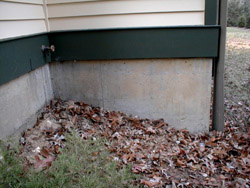
The first thing your builder needs to do is to make sure that the top of your foundation or slab actually sticks high enough out of the ground. All too often builders set houses into the ground too deeply. When this happens it is nearly impossible for a builder to create gentle sloping grades that direct water away from the house and to the lowest point of the lot where water would have drained naturally before the house was built.

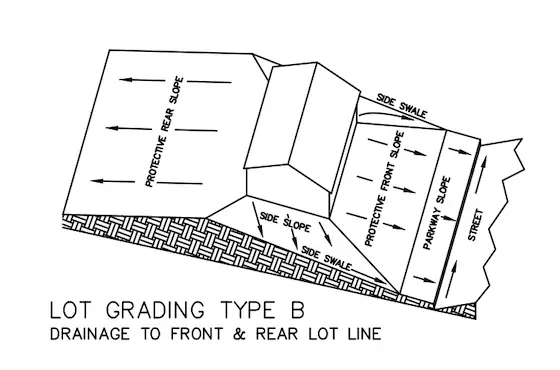
The model building codes are very specific about foundation drainage and many state that the ground should slope at least six inches down in the first ten feet of distance away from the house. If your house is built close to the lot line a ditch needs to be built that allows similar natural drainage.
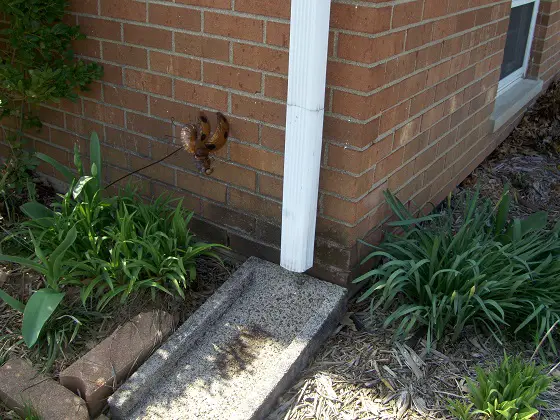
Water that leaves your roof can cause all sorts of problems if it is not collected and piped away from the house. An average one floor house might have approximately 2,400 square feet of surface area on the roof. When a storm produces one inch of rain, the amount of water draining from the roof to the ground equals nearly 1,500 gallons! Allowing this water to simply collect near the house or discharge from down spouts onto simple splash blocks at the base of a foundation is asking for trouble.

The better solution is to pipe this water away from the house. Many municipalities are now requiring that this storm water be collected and put into retention ponds before being allowed to enter natural drainage systems like brooks and streams. Interior sump pump discharge pipes should also be connected to these down spout drain pipes. Allowing sump water to discharge along side a foundation is insanity. The water you just paid to pump will usually enter the sump again in a matter of hours.
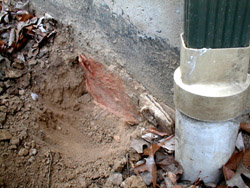
Make sure your builder waterproofs your foundation. Do not confuse true waterproofing systems with the thin sprayed-on asphalt that many builders install. The thin asphalt coatings are damproofing and meet the minimum code requirements for unfinished basement areas. My basement is actually waterproofed. I used a thick modified asphalt compound that actually contains rubber. The rubber allows the material to bridge small cracks that may develop at a later date. The thick coating was then covered by a rigid fiberglass insulation that keeps my basement walls warm and helps to channel water directly to the drain tile at the base of my foundation.

There are other high quality waterproofing systems out there. Some are actually synthetic rubbers that have incredible elastic properties. Other systems use a natural clay that swells when it gets wet. You can even get special urethanes that will waterproof a foundation. Finally, there are some innovative plastic foundation wraps that claim to waterproof a foundation. These plastic products come in large rolls and look like a muffin pan. The bumps in the plastic create a pathway for water to easily flow down the sides of the foundation to the drain tile.

The key to a dry basement and lot is to cooperate with Mother Nature. One of her rules happens to be gravity. Use it to your advantage. Make sure that you use gravity to pipe surface and sub-surface water away from your house as quickly as possible. Do this and you will be the driest person on your block.


Comments

Henrietta
17 Dec 2007, 17:04
I have a home in Indiana. The lower level has a bedroom, shower, family room and a sun porch. The utility room,bath room and bedroom get standing water during a storm. I have had two contractors out who say I should dig inside the home around the perimeter and install a drainage system to sump pump. I feel like the outside should be tackled and sealed and drained to the lake. Won't the water continue to come into the house and then drain?
AsktheBuilder
17 Dec 2007, 17:33
Henrietta,
Please read ALL of the columns in the Drainage category of my website. The answer is there and your instincts are right! Wait until you discover how I would solve that problem if I came to your house! :->
Michael in Long Island
03 Feb 2008, 14:05
Hi Tim,

I've read through your Patio, Drainage and Concrete sections but don't really have the complete answer I need...

We bought a house and cleared a lot of brush. We also discovered that in spite of the prior owner's claims, there are leaks into our basement. The house is a typical Long Island Split Level with a full basement.

We are on the bottom of a hill yet our drainage problems are not on the high side but on the patio (which is perpendicular to the high and low side).

The patio, for some unknown reason, slopes towards the back of the house and into the basement and den (den is on same level as the patio). Further the patio is bi-level and the lower level is on the high side of the house! Water, naturally is dammed by the level and it pools where the two levels meet and where the den slab meets the basement drop. As such, I had to sand bag this are heavily to prevent leakage into the den or basement.

We had some work done and windows replaced and new siding and some fix to the concrete near a door where water came in. So far no problems in the last major rainstorm which was a doozy.

My concern is what I can do where the two patios meet for the short term and what we'll have to do for the long term.

A gutter and downspout was added to a short roof that helped accumulate water on that area of the patio and now I need to move the water away and off the patio.

It doesn't seem like an easy task other than replacing the patio but money is very tight at the moment...

HELP!!!

I can send pictures if needed...

Thank you in advance,

Michael
AsktheBuilder
03 Feb 2008, 14:22
Michael,
How about reading my Concrete Overlay columns and think about adding a wedge of overlay to create the positive drainage you need?
Michael in Long Island
03 Feb 2008, 15:37
Thank you!! I did not see that (of course)!

Thanks again,

Michael
Sandy
06 Feb 2008, 00:58
There's an area between my house that's built on a slab and the asphalt driveway (about a foot wide) where water gathers, and it seems to be getting into the house. What is the suggested solution to this problem. I was thinking about having a trench dug and have a pvc drain pipe installed, however this doesn't take the water away from the house. Have a better idea? Thanks for your input!
AsktheBuilder
06 Feb 2008, 06:02
Sandy,
Unless I am missing something, the message in this column is pretty clear. Read it again and tell me if it isn't possible to achieve positive slope in this area.
Jack Cox
22 Feb 2008, 08:15
I have a drainage problem in my yard and was told I could use a sock pipe. The pipe has slots and a sock over it. I had considered a french drain but if the sock dosn't deterioate then that would be the cheapest route. My neighbor has used sock pipe without any problems for over 10 years. I was told the only way sock pipe gives problems if it is exposed to sun light. Is this true? I don't want to lay the pipe with sock if it is going to rot in the next 4 or 5 years.
Please advise.
AsktheBuilder
29 Feb 2008, 17:53
Jack,
Read all of my Drainage columns and do what I say in the columns.
Shawn Moore
04 Mar 2008, 10:56
Thanks for introducing me to French Drains. I am hopeful that they can help what seems like a very big basement water problem.

We have an over active sump pump and our finsished basement leaks during rainstorms. After reading your articles I feel the drainage around the lot could be a factor, but am unsure if it will help in our low lying area. I am also concerned that the groundwater or a spring is a major issue.

The sump pit is a ticking time bomb. When I bought this house a year ago the basement floor had a hole chipped out with an active sump pump in the pit. (It was the dry season so I had no idea about the problems I was getting into) I had a plumber install a newer sump pump and a proper pit with a battery backup system, so the pit is consequently larger now. The scary part is that when it rains the water level in the pit comes within inches of overflowing into the basement and the primary pump barely keeps it at this level. It seems that larger sump pit installed allows much more water to flow. Consequently the sump pump doesn't shut off during storms. This will last for 12 hours or so depending on the amount of precipitation. Then for a few days it will cycle on and off until the water level sits about 4 inches below the foundation and no longer activates it.

A year ago, when it was just a small hole with the old sump pump, I don't remember the sump ever staying on...it seemed to cycle, indicating to me that there was less water coming in at that time.

I don't think this sump pit has any of the drainage tile routed to it. Therefore I am not sure why it was orginally installed and if it is serving a purpose now. I assume it was supposed to relieve pressure on the foundation, however I have a hard time believing it is making any difference fighting the amount of water that now flows into the pit.

The basement leaks in several areas during heavy rains and is getting worse

My questions are: Do I need this hole in my basement with the sump if there are no weeping tiles drained to it? Do you have any suggestions regarding the sump pit?

Are French Drains still a viable solution to reduce the amount of water in the sump pit during rainstorms as it seems that this is a significant amount of ground water coming from below?

If so should I also consider digging up my foundation and waterproofing prior to installing the French Drains?

Thanks for any input...we don't have a lot of qualified people on this subject in Nova Scotia...as most houses here do not require sumps.

     View all comments
*Name:
Email:
Notify me about new comments on this page
Hide my email
*Text:
Security Image:

Visual CAPTCHA


Ask the Builder Comment Help

Helpful Comment Tips: If you need help with a problem, please try these things now before you type in a comment. You could discover your answer in just minutes.
  • Read ALL Comments Before Submitting One: If there are lots of comments that are already part of this column, there is a very good chance your question has already been answered by me or someone else.
  • Read Similar-Titled Columns First: The column above is almost always part of a two-or-three-part series. The answer to a question you may have is probably in a related column or in comments that are part of that column.
  • Read Columns in a Category: Take the time to read many columns in a category. The amount of information you will discover will amaze you.
  • SHARE a Story: Please share any tips or amusing tales of glory! Tell others what has worked for you. Maybe you have a disaster you want to discuss. Let's collaborate so we all learn together.
Don't show this alert again.