Cast Iron Drain Lines are Easy and Quiet
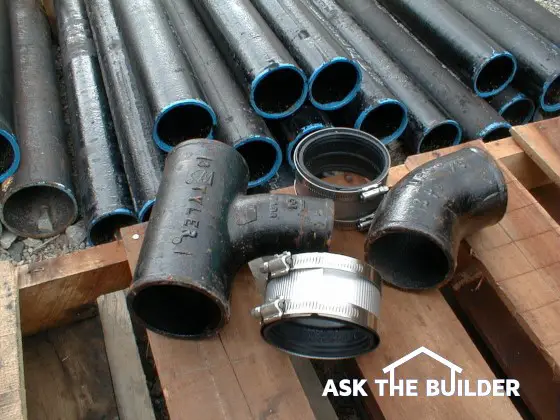
Cast iron drain lines, pipes and fittings are joined together with rubber seals and stainless steel band clamps. These can be assembled just as easily as gluing PVC pipe. This column was SO GOOD that I shared with the 31,000 subscribers who read my January 12, 2019 AsktheBuilder Newsletter.
Cast Iron Drain Lines
DEAR TIM: We are building a new home soon. The house will have a second story and a finished basement. Every time you flush a toilet in my existing home it sounds like a waterfall in the wall. The builder has said that he will insulate the plastic drain piping to prevent noise problems. Will this really work? Is there an alternative material that can be used? I want a noise-free plumbing system. Iris S., Winchester, VA
DEAR IRIS: Thousands of people suffer as you do because of noisy plastic drain piping. Plastic is an attractive building material for many reasons. It is relatively inexpensive, it is easy to assemble, and it will not corrode over time. But it's not a very dense material. As water crashes around inside the piping as it flows towards the sewer or septic system, it creates the annoying and sometimes embarrassing noise you speak of. Insulating plastic pipes will help control noise but only if the job is very well done.
There is a time tested alternative drain pipe you can use. It is cast iron. New cast iron drain piping is very dense and transmits little, if any, noise as water travels through it. Don't confuse new cast iron to the old cast iron pipe you might see in a 100-year-old structure. There is a huge difference in modern cast iron.
Older cast iron was sand cast. This manufacturing method was a little less than perfect. The side wall thickness of the pipe could vary and it was possible for pin holes leaks and rust pimples to develop over time as a result of this deficiency. Modern cast iron piping is spun cast. This method creates a sidewall thickness that is very consistent and is virtually defect free.
The individual pieces of pipe and the cast iron fittings are not joined with molten lead and oakum, oil soaked hemp, as in the old days. Stainless steel clamps wrap around rubber gaskets that fit at the end of each pipe or fitting. Once the stainless steel clamps are tightened with a small ratchet, the joint is leak free. If you need to adjust a fitting to achieve a perfect fit, you simply loosen the clamp. You don't have this luxury with plastic piping. Once the primer and glue is applied and you slide a pipe into a fitting, you only have a few seconds to get the joint orientation right. If you goof up, you have to cut out the crooked joint and start over.
The cast iron drain pipe does not have to be used in the entire plumbing system. Plastic pipe is a great choice for the vent system. Plumbing drainage pipes contain air before water drains down the pipes. As water enters the pipe it displaces the air. The air needs to be replaced. This is accomplished by a network of pipes that extend from the drain pipes up to the atmosphere at roof top level. Since the in-rushing air doesn't create vibrations, the plastic vent pipes will be whisper quiet.
Working with the cast iron drain piping is not much different than plastic. The biggest challenge is cutting the pipe to length. This can be done with several tools. You can rent a cast iron snapper that actually cleanly cracks the pipe to the desired length. An abrasive cut-off saw with a special metal cutting blade can also be used. The least desirable tool in my opinion is a reciprocating saw with a coarse metal blade. If you use this saw, you have to pay attention in order to make a straight cut.
The cost of the cast iron is more than plastic drain piping. The material may cost, on average, about $200.00 more per full bathroom. I feel this is a bargain since you know you will have a quiet plumbing system. Keep in mind that if you choose to use plastic drain pipes, it will cost extra to insulate them.
Don't forget that your water supply lines can also create noise. To minimize water supply line noise be sure that the water lines feeding each fixture group are at least three quarters of an inch in diameter. A one half inch diameter water pipe should never feed two separate fixtures. Small diameter water supply lines cause the speed of the water to increase as it flows towards the fixture. This increased speed creates turbulence and vibration which in turn creates noise.
Column 380

Tim built custom homes and did ultra-custom remodeling for 20+ years before launching his Ask the Builder media presence. He was selected as one of the Big 50 by Remodeling magazine in 1993. This award gave birth to Ask the Builder in October 1993. Tim also operates https://DrawPlumbingPlans.com. His @askthebuilder YouTube channel was the first home improvement channel on YouTube.
All very well and good, but what about this?
https://www.pipelawsuit.com/
Well, did you notice that the claims are all pretty much centered in Florida? If the cast iron was put into brackish groundwater, then no wonder it's corroding!
Cast iron waste and vent lines that don't have salt water in them last for hundreds of years. There are countless older homes and businesses in many East Coast cities that have cast iron drain stacks that have been in service since the early 1900s.
So I gather that the cast iron drain pipes in my house (built in the 60's) were made to much lower standards than today; every single trap sooner or later rusted through. The last one, thought to be clogged, was 'opened up' by Roto Rooter. Flow was perfect - though when you went downstairs to the bathroom below, there was a flood! Funny thing, but the guy from RR had a very sudden change in attitude when he saw the mess he created drilling right through the drain. I did eventually got a refund and I was finally able to reach my favorite plumber!
Today's spun-cast iron has wall thicknesses that are consistent. Old cast iron had thin places that could create premature failure.
How about the longevity of the rubber connectors? I’d be concerned that over time, they would deteriorate and leak.
Rubber exposed to ultraviolet light might have some issues. But once again, it's time to initiate critical thinking. Can you surmise any other places in plumbing systems where rubber has been used for decades and not really deteriorated but from back and forth movement?
How about washers in faucets? 😉
What about using cast iron pipe for just the second floor baths and vertical stack drops to the first floor and then using either ABS or PVC for the first floor and main sewer line? All the venting pipes could be ABS or PVC.
Yes. You can do that.
Concerning faucet washers: I’d be a wealthy man if I had a dollar for all the faucet washers I’ve replaced.