Masking Tapes
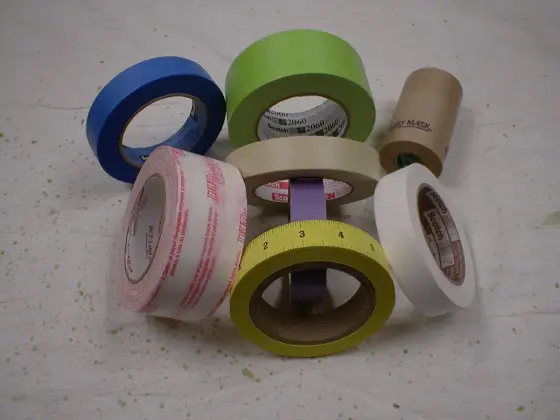
Masking Tape - The old standard is right there in the middle - the beige rubber - based masking tape. But look at all of the fascinating tape products that surround it!
DEAR TIM: I gave up on using traditional beige masking tape years ago. It destroyed several finishes, stuck to my glass windows and hardwood floors and basically was more trouble than it was worth. Now I see different colored masking tapes at the hardware store. Is this just a clever trick to repackage a product that has disappointed me far too many times? Are there masking tapes that indeed work? Tara C., Yakima, WA
DEAR TARA: Ouch! I definitely feel your pain. You and I and most likely millions of other contractors and homeowners have ruined painted finishes, floors, furniture and wallpaper by trusting traditional masking tape. Traditional beige masking tape, to the best of my knowledge, has never come with instructions. All the tape manufacturers needed to tell us was that you can not leave it in place for much longer than 4 to 24 hours on most surfaces and to never use it on other delicate surfaces. The good news is that there are a multitude of ouchless, user friendly, high performance masking tapes available today.
The beige masking tape that you see in many paint stores and hardware stores was developed nearly 80 years ago. The adhesive on many of them is rubber based. When you apply the tape to a surface the solvents in the adhesive often soak into that porous surface. The mechanical bond of the tape to the object increases as more of this solvent leaves the adhesive. Heat and ultraviolet (UV) light can rapidly increase the setting time to such a degree that in some cases the tape can't be easily removed in just four hours! If you leave traditional masking tape on for days or weeks at a time, it can become a nightmare to remove.
About 15 years ago, the masking tape industry responded. New tapes were developed that use an acrylic based adhesive that is much more forgiving. In fact many of the acrylic adhesives are so highly refined and UV resistant that certain tapes can be left in place for longer periods of time with little risk of damaging the surface you are trying to protect from paint or stain brush strokes or over-spray.
The tape manufacturers also came to realize that no one masking tape could do all things for all people. This is another reason why there has been an explosion of different tapes in just the past five years. You can purchase a masking tape that will safely protect delicate wall paper or a 6 hour old faux paint finish. If you need to apply masking tape to a coarse surface like concrete block or rough wood siding you can now buy a tape that will do the job and release cleanly. No matter what the job, there is very likely a specific tape that will yield magical results
Masking tapes fail or harm surfaces when they are left on a surface too long. Many of the new tapes are labeled in such a way that they clearly indicate the maximum time you should leave them in place. Some manufacturers have even gone so far as to print use instructions and guidelines on the inner core of the roll so you have a built-in users guide with you at all times. This is indeed a handy feature.
One of the coolest safe release tapes I have seen is a yellow one that looks like you glued a tape measure to a wall. The tape has highly accurate inch markings - from 1 to 96 - split up into16ths of an inch that repeat every eight feet. This is a handy tape to use if you are faux painting and need to create perfectly aligned strips on a wall or ceiling. Use your imagination for other uses of this neat tape.
You can still have problems with certain new masking tapes. If you are trying to create crisp lines or pin stripes and are painting with latex paint, you should apply the tape to the surface and use significant pressure on the paint edge line. This will prevent paint from seeping below the taped edge. Immediately after you apply the paint, remove the tape. As you pull the tape off the surface, keep it at a 90 degree angle from the surface to get the most crisp line. If you wait for hours or days to pull the tape, you can have a real mess.
Column 382

Tim built custom homes and did ultra-custom remodeling for 20+ years before launching his Ask the Builder media presence. He was selected as one of the Big 50 by Remodeling magazine in 1993. This award gave birth to Ask the Builder in October 1993. Tim also operates https://DrawPlumbingPlans.com. His @askthebuilder YouTube channel was the first home improvement channel on YouTube.