Adding a New Tub or Shower
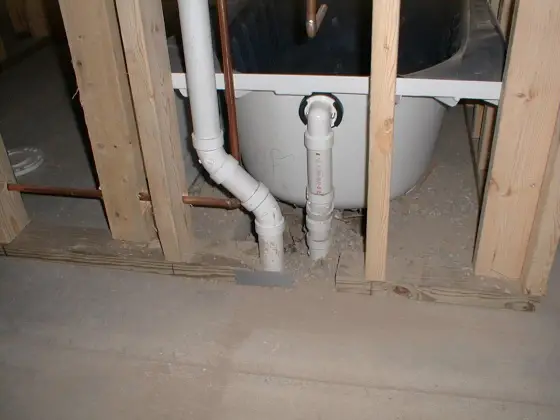
The pipe leaving the tub is the overflow drain. It connects below the slab to the waste piping and the trap. Yes, you can't see it! There is a cutout in the concrete slab that allows you or the plumber to connect all of these pipes to the actual drain. The second pipe leaving the wall plate is the vent for this tub.
DEAR TIM: I would like to add a bathtub in a room that has an existing walk in shower. The floor of this room is a concrete slab poured directly on the ground. There is a floor drain within four feet of where I would like to add the tub. Can I just allow the tub drain to flow over to the floor drain? It seems that would work just fine to me. Or do I have to connect it to the pipes below the slab and add vent piping? I live far out in the country and I doubt an inspector would ever know what happens one way or the other. Brad G., Waldo, AR
DEAR BRAD: Plumbing codes were not enacted to simply create work for people who might otherwise not be able to find work. The interest of public health and welfare are the basis for the plumbing code. Plumbing inspectors help to keep you and your family safe from the spread of disease. Consider him to be a friend, not an obstacle. Don't worry, you can work off some of that steam I just caused swinging a 12 or 16 pound sledge hammer.
To answer your first question, you can set the tub on a small platform and pipe the tub water over to the floor drain. Sure, the waste water from the tub would flow into the floor drain and it would travel from there into the plumbing drainage system. But this solution is not a code approved method. The waste water from the tub is often contaminated and can harbor all sorts of bacteria. Allowing this water to flow freely and splash about over the top of the floor drain is simply a health hazard.
The tub drain water needs to be piped directly from the tub outlet into the plumbing drain system. This fixture requires a connection to the plumbing vent system as would every other fixture. Many people are stumped by tub drain connections. In reality they are no different than any other sink in your home. The primary difference is that the tub is a sink that is at floor level.
To help you visualize what is necessary to properly connect this new tub to the plumbing drainage system, take a peek at the underside of your bathroom vanity sink. You should see a vertical pipe that connects to the bottom of the sink. This pipe then connects to a U shaped pipe that is part of a fitting we plumbers call a P-trap. The P-trap is a transitional fitting and redirects the waste water sideways towards the wall.
Behind the plaster or drywall at the sink is another vertical pipe. The sink drain pipe connects to this vertical pipe with a tee fitting. The waste water from the sink flows into the tee fitting and into the plumbing drainage system on its way to the sewer or your septic tank. But rising out of the tee fitting just behind the wall is usually a vent pipe that works its way up to the roof of your home. This vent pipe along with other vent pipes in the house supply air into the plumbing drain system. Water flowing into drainage pipes displaces air that was residing in the pipes just before you pull the plug in a sink or flush a toilet. Vent pipes prevent vacuums that otherwise would resupply this air by sucking the water out of adjacent P-traps in nearby fixtures. The water that sits in a P-trap acts as a seal and prevents foul sewer gas and vermin from making their way into your home.
To connect your new tub you need to mimic this connection. But don't think for a moment that it is easy to do. The drain pipe sizing is critical and the plumbing vent connections also have to be sized and connected correctly. Furthermore, you just don't tie into a plumbing drain system where it is convenient for you. You may choose the wrong place to connect and cause a drainage problem for a nearby fixture. In other words, adding a new fixture to an existing system is not a recommended do-it-yourself project. What's more, many plumbing codes restrict this work to licensed and trained professionals because of associated health risks.
I suggest that you make a deal with a local plumber. Consult with one that will allow you to do all of the back breaking labor to remove the necessary concrete and dirt beneath the slab that allows the plumber to make the necessary connections. You can also do other interior demolition that will expose existing plumbing vent lines. The plumber will hopefully work with you and show you some tricks that will keep your workload to an absolute minimum.
Column 401
Watch this video to see how Tim SOLVED a problem in minutes!
CLICK here to learn more on how Tim can help solve your problems.

Tim built custom homes and did ultra-custom remodeling for 20+ years before launching his Ask the Builder media presence. He was selected as one of the Big 50 by Remodeling magazine in 1993. This award gave birth to Ask the Builder in October 1993. Tim also operates https://DrawPlumbingPlans.com. His @askthebuilder YouTube channel was the first home improvement channel on YouTube.