Special Gray Primer
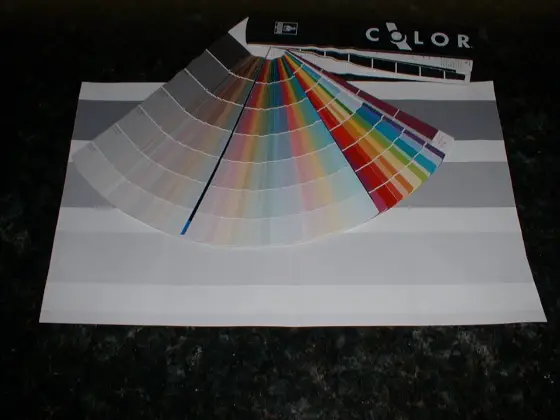
DEAR TIM: I have had all sorts of problems in the past with finished wall paint colors not being what they look like on the color chip. The end result is that I might have to paint the wall surfaces two and possibly three times even though the paint manufacturer claims one coat coverage. What am I doing wrong? Is there a way to get true one coat coverage and a perfect color match at the same time? Carol K., Pepper Pike, OH
DEAR CAROL: You are by no means alone. Your wall painting troubles are experienced by many homeowners and rookie painters alike. The causes of the poor coverage and color rendition problems can be traced to many things, not the least of which might be simple operator error. In other words, it is possible that you are putting too little paint on the wall. But residential paint technology has recently undergone a huge change. Color rendition and coverage problems are being overcome in a most unusual fashion.
Although it may not seem so to the average person, paint is a very complex product. But if I had to define paint in two words, I would simply say that it is colored glue. It can be formulated in many different ways so as to coat many different things. The pigments that produce color in paint are also very complex. The characteristics of both the paint and the pigments need to be finely tuned to produce different qualities such as hiding power, washability, fade resistance, etc. To further complicate the issue the paint needs to be easy to apply, meet Federal EPA guidelines, have exceptional durability, clean up quickly, etc.
Painting tools and application techniques further complicate the issue. You may have a superior paint product but it may not look good once applied if you use poor quality brushes, roller covers and spray equipment. Add to this the human factor. I have seen people paint walls in the most unusual ways. Typically they apply the paint too thin. Keep in mind that the volume of paint that you apply to the wall is not the finished volume once dry. The water or petroleum based solvents that give paint its liquid characteristic when wet evaporate into the atmosphere as paint dries leaving a much thinner coating than what you look at while applying it.
Up until recently paint manufacturers and store clerks have advocated using a white primer/sealer paint to cover new drywall, wood and plaster in homes. It was not uncommon for a store clerk to recommend tinting the primer a similar color as the finished wall paint. But even still paint coverage problems persisted. The use of a primer/sealer on both new and existing wall and ceiling surfaces is a very good thing. These often overlooked paints solve porosity problems where light and dark grains in wood or differences in drywall paper and joint compound soak up paint at different rates. The heavy pigment content of the primer/sealers also help to create a uniform finished texture. But even after using these products people still had trouble getting one coat coverage that yielded perfect color rendition as seen on the paint color chips.
Some very clever paint researchers discovered that tinting the white primer/sealers to various shades of gray solved the one coat color issue. A few colors worked fine over the white primers but a majority of the color palette that you see in the huge displays and color chip fans require a gray tinted primer to reproduce the exact color you see on a particular color chip. The paint manufacturers and retailers in certain stores know exactly what shade of gray to tint the primer/sealers so that the colored finish coat paint covers in one coat.
This technology of using a gray primer instead of a colored one is based in black and white photography. Have you ever watched an old movie? The actors and scenery were absolutely in vibrant color, but they only had black and white film. So what you and I see are different shades of gray except when a true black or white image was captured on camera. Each color, no matter if it's a shade of blue, yellow, green, red, brown, purple, etc. has a corresponding shade of gray! You can prove this by taking a photo with your digital camera in the black and white mode. Use the correct shade of gray that corresponds with your color, and magic happens.
There is a huge advantage in painting with this new system. Without the gray primer/sealer you may get the good coverage and true color rendition. But by not using a primer/sealer you very likely will see shadows on a wall or texture differences that detract from the beauty of the painted surface. Using a tinted paint with the appropriate gray primer will insure that the two coats will result in a perfect paint job. Visit your local paint store or a retail store that sells paint. If the store manager or head clerk is clueless about the special complimentary gray primer/sealers, you better walk out the door and find the right paint retailer!

Tim built custom homes and did ultra-custom remodeling for 20+ years before launching his Ask the Builder media presence. He was selected as one of the Big 50 by Remodeling magazine in 1993. This award gave birth to Ask the Builder in October 1993. Tim also operates https://DrawPlumbingPlans.com. His @askthebuilder YouTube channel was the first home improvement channel on YouTube.
What about combination primers/finish colors? Do they work, and if they do, should one or two coats be required? I was checking recently, and it seems most come this way now.
Yes, some paints come with primer in them, but you have to read the label to see if they GUARANTEE they'll work with new drywall that's never been painted. Read my past columns here at the site about joint banding issues with new drywall.
Dont do that! Do not use a Paint/Primer product on New Drywall and mud. Use a Regular Primer like Kilz, Bin, or another product Made for Priming and Sealing New drywall. They Seal and create a Adhesion surface layer for the latex or oil paint that you may use. Those one coat products do not do that. They have an additive that makes the Paint Bond tighter to the surface but...Not a True Primer. I havent used it yet but have read up on it and the reviews. You will probly have to coat the wall 2 or more times Anyway to get good coverage so doing it right will just cost you a another roller cover unless u clean yours out and reuse it. I wouldnt take the chance.
Hi Tim
I had my living room, dining room and upstairs hallway painted last month. The company used the gray primer you mentioned. It wasn't a bad color on it's own! They did put two coats on the walls but it looks fantastic! I would use that product again.