Asphalt Driveway Sealers
Asphalt driveway sealer
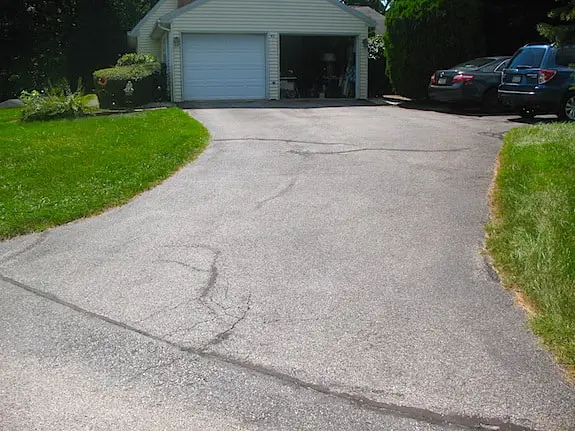
This is the characteristic gray color of an asphalt or blacktop drive that's not been sealed. All those smaller white spots are pieces of limestone or possibly granite in the asphalt mix. Copyright 2018 Tim Carter
"Cracks are the cause of asphalt pavement failure.... Spend your time fixing and filling cracks instead of sealing if you want your asphalt to last."
Asphalt Driveway Sealer Checklist
-
- Roads are never sealed
- Cracks should be filled
- A strong gravel base under the asphalt is the answer
- Asphalt with a strong gravel base can last decades
Related Links
The Best Way to Repair Cracks in Asphalt - SECRET Information - Do NOT Share
Pro Patching Tips for Asphalt & Blacktop
Free & Fast Bids
CLICK HERE to get FREE & FAST BIDS from local contractors who can fill the cracks in your drive.
DEAR TIM: I was reviewing a quote I received to have my asphalt drive sealed. But it dawned on me that the streets in my community never get sealed. Is sealing an asphalt driveway really necessary? If so, when should they be sealed? Ron P. Westchester, OH
DEAR RON: Touche! I'll bet you were the captain of your high school debate team. With a point such as that, you can definitely win an argument or two. But in this case, I might have a stronger rebuttal point!
Why Are Roads Never Sealed?
There are several reasons why you don't see highway maintenance departments using traditional sealers on roadways. The heavy volume of traffic on the average road would rapidly wear away a surface coating of asphalt sealer.
How are Roads Built?
Roadways are also built differently than the average residential driveway. Roads in cities and towns have a much stronger gravel base than your driveway. This gravel, if done correctly, provides support so the asphalt surface doesn't crack.
What is the Cause of Asphalt Driveway Failure?
Cracks are the cause of asphalt pavement failure. Cracks that extend through the asphalt to the gravel base allow water to enter the gravel base. Spend your time fixing and filling cracks instead of sealing if you want your asphalt to last.
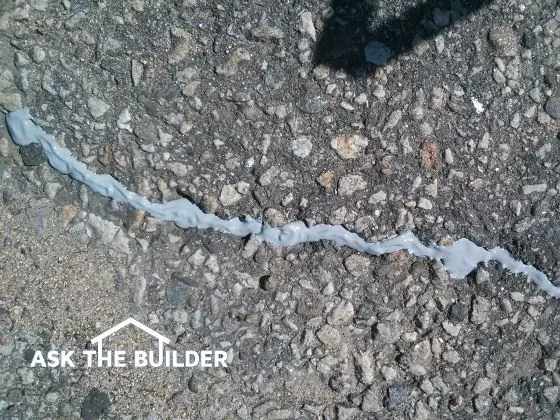
Here is the crack during the repair process. I've injected the crack with a special epoxy that works even if the blacktop is wet. The next step is to press the magic stones and sand into the epoxy to disguise it. Look at after photo below. Copyright 2018 Tim Carter
How is Asphalt or Blacktop Made?
Asphalt or blacktop used to build roads and your driveway is made with just three ingredients:
- stones of different sizes
- sand
- liquid asphalt cement
The asphalt cement is the glue that holds together the gravel and sand particles that actually make the superb driving surface.
Can the Sun Hurt Asphalt Driveways?
Asphalt is damaged by the sun's ultraviolet (UV) rays and oxygen in the air. The UV rays can blast apart the asphalt molecules allowing oxygen in the air to connect to the asphalt.
Oxidation causes the asphalt to become brittle. Brittle asphalt can crack. Cracks allow water to enter the paved surface. This water can freeze in colder climates causing further damage.
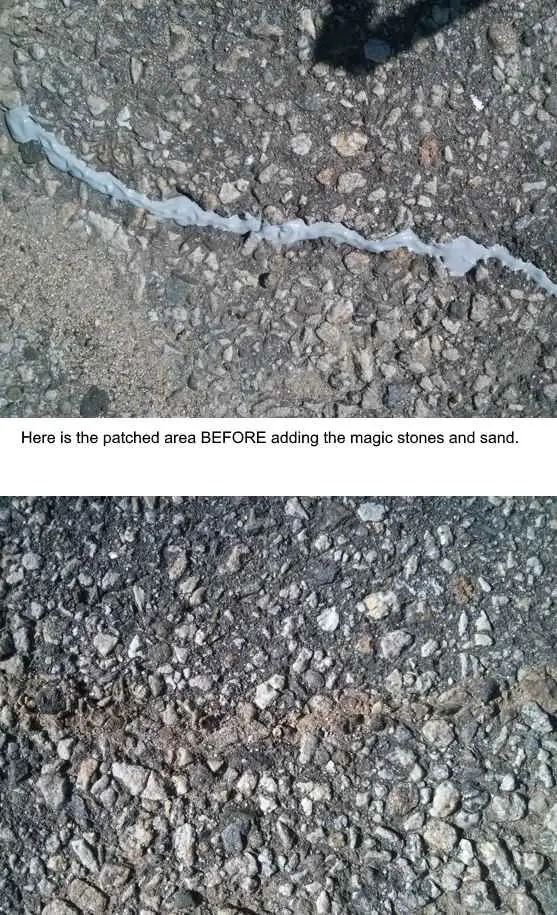
Look closely at the two photos. If you get even closer, look at your own asphalt you'll see many sand particles where you see black in my photos. Much of the dark black areas in these photos have lots of sand that can't be seen at the resolution of these photos. Copyright 2018 Tim Carter
How Much Asphalt is Exposed to the Sun's UV Rays?
Not much asphalt is exposed to the sun's rays. The top surface of asphalt, if you look at it closely, is made up almost entirely of the stones and sand. The asphalt is just the tiny black lines or spaces in between each piece of sand or stone.
Sand and stones don't need a coat of sealer because they're naturally resistant to damage from the sun or water.
Does Traffic Wear Away Asphalt?
The traffic on roadways actually wears away the brittle asphalt and exposes fresh asphalt. Furthermore, oil drippings from cars and trucks that get spread over the road surface actually act as a low-grade sealer. But typical residential driveways don't get the traffic that roadways receive.
If Asphalt Driveway Sealer is a Waste, What Should I Do?
The bigger issue for residential asphalt driveways is cracking. Cracks that allow water to penetrate into the gravel base are a far greater threat to the long-term health care of your driveway.
Water that enters the gravel base can then soften the soil under an asphalt drive. If this happens, the weight of the cars going over this soft area can cause the paved surface to crack in even more places.
Is Asphalt or Blacktop Flexible?
Asphalt paving is actually a flexible pavement. The strength of asphalt surfaces comes from strong soils and a strong base material under the finished surface.
Keep in mind that asphalt sealers are simply coatings that paint the asphalt surface. Sealers lay on top of the pavement. If you seal too often, you simply are adding layers of asphalt that can peel off. Asphalt drives should be sealed when you can clearly see the color of the stones that are used to make the asphalt paving.
What is a Strong Stone is Asphalt Mix?
Limestone chips are very strong stone and perfect to make asphalt paving. Left alone to weather, an asphalt driveway obtains a uniform color of gray. There are asphalt drives in my neighborhood that have not been sealed in 15 years.
Tim, Is Your Asphalt Sealed?
My own asphalt drive in New Hampshire as approaching 20 years of age and has never been sealed. It's in great shape other than the few areas where the contractor didn't put in a strong enough gravel base.
Had they been sealed three times in that time period I can't say that the driveway would be in any better condition.
Should I Seal New Blacktop?
Do not seal a brand-new driveway. Fresh asphalt contains light-weight oils that eventually evaporate into the atmosphere. These oils are responsible for the tender nature of fresh asphalt.
As these oils evaporate, the asphalt gets harder and harder. Sealers prevent this evaporation. Seal a new asphalt driveway and it may stay soft forever.
What is the Best Asphalt Driveway Sealer?
The best sealer, in my opinion, is the cheapest one. You want the sealer to wear away in one year or less.
CLICK HERE to get FREE & FAST BIDS from local contractors who can fill your driveway cracks.
Column 435

Tim built custom homes and did ultra-custom remodeling for 20+ years before launching his Ask the Builder media presence. He was selected as one of the Big 50 by Remodeling magazine in 1993. This award gave birth to Ask the Builder in October 1993. Tim also operates https://DrawPlumbingPlans.com. His @askthebuilder YouTube channel was the first home improvement channel on YouTube.

Should I place asphalt over an old cracked up concret drive way? This drive way is used very little, I just want to make it look better.
Jim, you should consider investing in a 15-Minute Consult with me. Look at my cart for that. Lot's to discuss. I just do short pithy answers here.
Would you recommend sealing an asphalt driveway if it is 2 years old and looking gray? I live on Long Island,(NY) so winters can be cold and snowy.
You may want to revisit this article and rectify it with what you say later in you syndicated column of 8/16/2016. There you're pretty convinced that sealer is a useless product. As am I.
My driveway is 6000sf of asphalt put down ten years ago and never sealed, and it's beautiful. My wife and I are very glad we didn't put down the black sealer (and buy into the required periodic resealings) and allowed it to weather and age to a very nice gray.
Done. Thanks for the nudge. I forgot all about this column and as I got smarter over time, I figured out what was really in play.
The research for my Roofing Ripoff book was the final piece of the puzzle. I was exposed to what really happens with asphalt and oxygen!
https://www.roofingripoff.com
quality control is also a huge difference between a residential drive and a road... any raveling, alligator cracking (without a rut), early permeability, etc are all concrete issues rather than section design problems. seals are meant to band-aid these problems