Concrete In Cold Weather
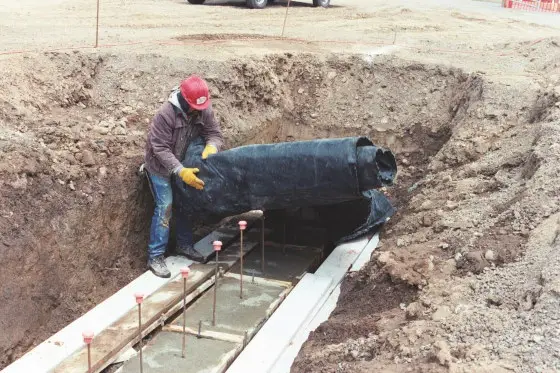
This worker is using a waterproof insulating blanket to cover a freshly poured footer. The heat produced by the chemical reaction of hydration within the concrete will be retained within the concrete by using the blanket.
DEAR TIM: I am one of the lucky snow birds that commutes back and forth between my winter home down south and my summer home up north. I need to have a sidewalk replaced at my northern home immediately due to a water main break. Cold weather is just around the corner. Is it safe to pour concrete this late in the season? One of the bidding contractors says it is no problem as they add calcium chloride to the mix. Is that going to work? Will I have problems in the future? Greg H., Chicago, IL / West Palm Beach, FL
DEAR GREG: Isn't it wonderful that we are lucky enough to live in a nation that is so large that you can escape from the cold biting wind and snow during the dreary winter months? You are lucky indeed! But you will need much more than luck to insure that you will not be installing that sidewalk a second time in the spring or next summer when you flutter back north. You need a skilled concrete mason who knows exactly how to order, place and protect concrete that is being poured in cold weather.
I have always felt that concrete is an amazing building material. Its ingredients are basic: sand, gravel, water and Portland cement. Yes, there are other additives and ingredients such as fly ash, plasticizers, accelerators, etc. that can be mixed with concrete. These extra ingredients often allow concrete masons to pour and finish concrete in extreme weather conditions. The calcium chloride mentioned in the one quote is an accelerator that makes the concrete get harder faster.
Freshly mixed concrete is a plastic liquid. In fact, as soon as water is mixed with the Portland cement, a chemical reaction called hydration begins. This chemical reaction causes microscopic crystals to grow between the sand and gravel interlocking them together. As more and more crystals grow, the concrete gets harder and harder. But this reaction is temperature sensitive . In very warm or hot weather, the reaction happens quickly. In cold weather, the reaction slows down.
Want perfect concrete work? Find a pro by using my Concrete Work (Sidewalks, Driveways, Patios & Steps) Checklist. I offer a 100% Money Back Guarantee.
The challenge in your case is to get enough crystals to form so that the concrete can resist destruction caused by rain and snow melt water that soaks into the concrete surface and then freezes. The freezing water expands and can fracture the crystals that are holding the sand and gravel together.
There are all sorts of things the concrete mason should do to insure that your concrete will last for many years. First, the ground upon which the concrete will be poured must not be frozen. In fact, it would be ideal if the contractor could suspend some tarps over the area and run a heater to raise the ground temperature. The warmer the ground the better. The ready mix concrete company will very likely mix the concrete with hot water. If the sand and gravel can be pre-heated, all the better. Special Portland cements can be used that are made to develop an early strength. Boost the amount of cement in the mix slightly. Demand that you have a 4,500 or 5,000 psi mix. For your small pour, it may only add $40.00 to the cost for the extra cement. Be sure air is added to the mix as well.
As soon as the concrete is placed and finished, make sure a liquid curing compound is sprayed on the surface. This liquid insures that the water added to the mix does not evaporate from the concrete. The water added at the ready mix plant is needed to fuel the chemical hydration reaction that will continue to happen all winter long while you are busy getting a tan.
Finally, insulated blankets must be placed over the concrete. Fortunately, the chemical reaction that is happening actually produces heat. This heat is desperately needed to keep the concrete from freezing before it achieves the necessary strength to resist Mother Nature. The insulated blankets will keep the heat inside the concrete where it is needed so long as the edges of the blankets are weighted down. Cold winds that get under the blankets can rapidly steal heat from the concrete. Make sure the contractor leaves the blankets in place for a minimum of four days.
Column 441

Tim built custom homes and did ultra-custom remodeling for 20+ years before launching his Ask the Builder media presence. He was selected as one of the Big 50 by Remodeling magazine in 1993. This award gave birth to Ask the Builder in October 1993. Tim also operates https://DrawPlumbingPlans.com. His @askthebuilder YouTube channel was the first home improvement channel on YouTube.
thanks a lot from this information. i learned more about concret that how can we put concret in cold weather, how can we cover it, what can we add to it. thanks a lot again.
My concrete porch has not fully cured. Thermal blankets were used to cover during cold weather. That was back in December and now it is September and the thermal blankets wrinkled and left moisture in the concrete. Will stain cover this and will it still cure if covered?
Your concrete cured MONTHS ago if it was left covered all that time with the thermal blankets!
Still, I don't think we have a good idea of the temps involved. I'm looking to getting a concrete driveway done. It's now near the end of October on Long Island, NY. What temps are needed for proper cure.