Replacing EIFS with Traditional Cement Stucco
DEAR TIM: I own a six-year old home covered with EIFS synthetic stucco. Even though I have the home inspected each year for moisture intrusion, I am convinced I will replace the EIFS with a mixture of real cement stucco, artificial stone and possibly brick. Can these products be installed over the existing EIFS? If it can, is it a good idea? If you were running this job, what other things would you do to make sure this is a permanent solution to moisture infiltration? Lynne McD., Arlington, TX
DEAR LYNNE: Another one bites the dust. I know you are not the first nor will you be the last person who abandons the EIFS cladding on their homes. While moisture can get behind just about any exterior surface on a home, the plastic nature of the EIFS synthetic stucco coatings tends to trap moisture. This trapped moisture is the match that lights the mold growth and wood rot fuse. When enough of either grows, you can have an explosive repair bill.
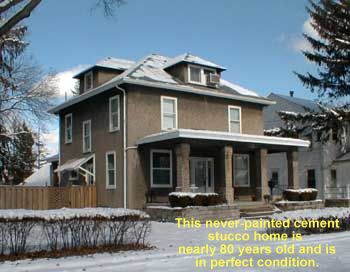
Perhaps the best thing to do is be pro-active. Replacing rotted structural framing members and hiring people who work in moon suits to remove mold can be an expensive proposition. If you have neither at this point, thank your lucky stars. Some people may get relief from insurance policies, but that income stream is rapidly drying up. Insurance companies no longer wish to take the fall for poor workmanship and unforgiving building materials.
The EIFS synthetic stucco system must be removed for any number of reasons. Even if you could leave it on, it would pose an enormous hidden risk. Imagine what might happen when water gets behind your new cement stucco, brick and stone. If it then traveled behind your current EIFS cladding, you would be no better off than you are today. Furthermore, the detailing around windows and doors becomes very difficult if these openings are recessed too far behind the exterior surface.
If I were in charge of this job, I would want to inspect all of the exterior sheathing and framing that was covered by the EIFS stucco. The specter of mold and wood rot would have to be removed from my mind as a builder. If I discovered either, now is the time to repair any and all damage.
Removing the EIFS system also gives me access to the windows and the doors. There is a very good chance that these items were probably not installed with the best flashings. Furthermore, window and door flashings and their nailing fins must interface a special way with the water barrier that covers the wood framing and sheathing. I would not hesitate to use traditional 30 pound felt paper as the primary water barrier. It is a superior product that has yielded the spotlight to the glamorous air and water infiltration house wraps.
If you decide to use brick, you may need to employ a structural engineer. This professional will create a detailed plan that shows what structural elements are necessary to support the brick load. The weight of the stunning artificial stone and stucco does not concern me. Both of these stunning exterior finishes can be easily attached to the wood-framed structure.
I would give serious consideration to the creation of a hidden drainage plane behind the new stucco, brick and stone. Once the 30 pound felt paper has been properly attached to the home, you can fasten vertical strips of one half inch thick by two inch wide pieces of treated plywood to the outside of the home. The stucco and artificial stone may be applied to stiff galvanized mesh that is fastened to these strips. Water that gets behind these materials now has a large and direct pathway down to the ground. This system also allows air to readily circulate behind the masonry materials. Dry is good as water fuels mold growth.
Finally, consider tinting the stucco you apply. If you chose a color that compliments the stone and brick, exterior painting may be limited to a few trim boards. Be sure to have the stucco mason do a test panel. The stucco color often changes as it cures. Try to arrange for the stucco work to take place when outdoor temperatures are in the 50F range if at all possible. Extreme weather conditions of any type can cause all sorts of stucco installation problems.
Column 453

Tim built custom homes and did ultra-custom remodeling for 20+ years before launching his Ask the Builder media presence. He was selected as one of the Big 50 by Remodeling magazine in 1993. This award gave birth to Ask the Builder in October 1993. Tim also operates https://DrawPlumbingPlans.com. His @askthebuilder YouTube channel was the first home improvement channel on YouTube.
I can't see why a new drainage plane couldn't be created over the existing EIFS, with a new layer of stucco or cement board (on which thin brick, stone, tile, etc. can be stuck) over that. It would be a challenge flashing under the windows to direct the water out to the new drainage plane, but I wouldn't assume that it's impossible, since drainage planes are put over foamboard all the time and EIFS is just foamboard covered with glue. I hate the thought of all that expensive insulation being thrown into a landfill.
THE BACK OF A THREE STORY HOME I MAY BE PUCHASING IS EIFUS. HOW EXPENSIVE IS IT TO REPLACE IT WITH REAL STUCCO 1600 SQ. FT. SURFACE AREA?