New Water Heaters are Safer
New Water Heaters are Safer
DEAR TIM: I was shopping for a new gas water heater and looked closely at the labeling. I never realized that the pilot light and actual burner flames could ignite vapors from flammable liquids. I have a friend who stores gasoline and other flammable liquids in their garage which also happens to be where their water heater is located. Why hasn't their house gone up in smoke? Is the danger real or imagined? Are gas water heaters safe? Should I buy an electric heater? Sally F., Lansing, MI
DEAR SALLY: Existing gas water heaters are safe. The unsafe part of the equation happens to be us. We humans frequently do unsafe things. Stop by your local fire department and ask the officer in charge how many fires they have extinguished that were caused by negligent humans who stored flammable liquids in a very unsafe manner. Common sense should tell you that any flame or spark in the presence of invisible flammable vapors is a recipe for disaster. Loss of life is a reality. But do you need to buy an electric water heater? I think not.
What are water heater manufacturers doing about the flammable vapor issue?
Interestingly enough, the major manufacturers of gas water heaters decided to be very proactive with respect to the flammable vapor issue. With the approval and cooperation of the Consumer Products Safety Commission, these major water heater manufacturers began to jointly study the issue. They shared research and patents while they individually developed separate new gas water heater products that stop the ignition of flammable vapors outside of the water heater. This was a voluntary effort on the part of the manufacturers.
What is a flame arrestor barrier?
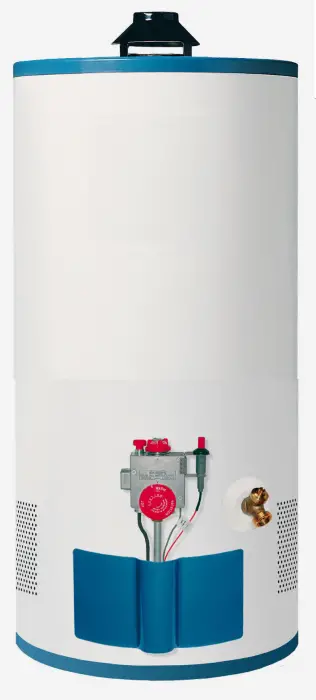
Flame arrestor barriers represent an enormous technological safety advancement for traditional storage water heaters.
Effective July 1, 2003, all new 30, 40 and 50 gallon gas water heaters that use a traditional atmospheric vent must meet a new standard. This standard was written by the American National Standards Institute (ANSI) and it basically states that any heater meeting the above description made after this date must be designed so that vapors created by spilled gasoline near the heater will not ignite outside of the water heater. Thirty, 40 and 50 gallon power vent water heaters must meet this standard on July 1, 2004. All other residential models must meet this same ANSI standard on or before July 1, 2005.
These new heaters are very interesting as they all employ a special one-way technology that allows regular combustion air as well as flammable vapors to enter the combustion chamber of the water heater. But if flammable vapors enter the sealed combustion chamber and ignite, the fire can't go backwards and ignite the rest of the vapors just outside of the heater. More importantly, the heaters have built-in sensors that detect the burning vapors. The designs of the heaters are such that the supply of gas to the heater and pilot light is shut down.
CLICK or TAP HERE to get FREE BIDS from local plumbing contractors.
What is the biggest problem for water heaters?
Perhaps the biggest problem that all of the new water heaters face is lint, dust and oil. In the past, many people were not concerned with dusty and lint-covered appliances in a basement or garage. But the new heaters built with this advanced safety technology will work best when you keep them free of as much lint and dust as possible. As you begin to see these new water heaters in the marketplace note that some will have filters and others will not.
If there happens to be airborne dust and lint in your environment, be aware that this particulate matter can and will find its way into the water heaters unless you stop it in some manner. You may choose to maintain a cleaner environment to stop problems before they begin. You may choose to use a water heater that sports an external filter that is easy to clean. Or you may choose a heater that claims to never need cleaning, although the dust and lint most certainly is accumulating somewhere within the heater. My advice is to do your best to eliminate lint and dust in the vicinity of the water heater and buy a water heater that fits your lifestyle.
How to protect your family from flammable liquids?
If you want to really protect yourself, your loved ones and your possessions, I think the best advice is to schedule a fire prevention meeting at your home with your local fire department. Ask the visiting official about flammable liquids and the absolute safest way to store them. Be aware that these include gasoline, kerosene, paint thinner, etc. I am quite certain the fire official will tell you how to safely store them.
Finally, do not be lulled into a sense of security with these new, safer water heaters. When you buy one, do not think for a moment you can now store or work with flammable liquids and be immune to danger. Gas water heaters are by no means the only thing that can ignite the invisible and deadly flammable vapors!

Tim built custom homes and did ultra-custom remodeling for 20+ years before launching his Ask the Builder media presence. He was selected as one of the Big 50 by Remodeling magazine in 1993. This award gave birth to Ask the Builder in October 1993. Tim also operates https://DrawPlumbingPlans.com. His @askthebuilder YouTube channel was the first home improvement channel on YouTube.