Toilet Size Specs – 10 12 & 14
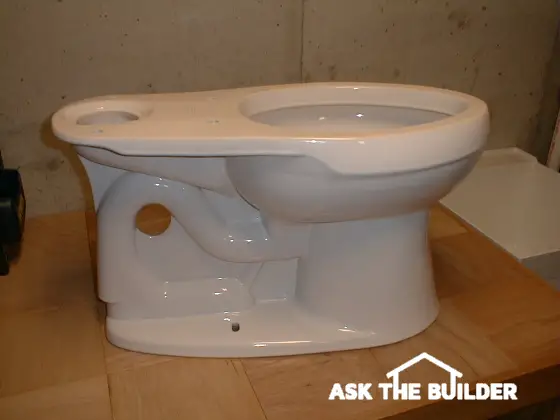
Toilet Size Specs | It's a standard 12-inch rough-in. This is a fairly standard toilet bowl. Note the exposed colon of the toilet. It is the snake-like bulge that leaves from the left-bottom of the bowl and travels up and over the hole. The end of the colon is right at the base of the toilet foot where you see the small hole for the toilet bolt.
"The most common dimension is 12 inches from the finished wall surface."
Toilet Size Specs - 12 Inches is the Magic Number
DEAR TIM: I am looking at toilets for my new bathroom. Our current toilet measures 23 inches from the back wall to the front edge of where the toilet touches the floor. Many of the measurements in brochures seem to start at nearly 27 inches. Space is valuable in this small room. We also have a flushing problem with our current toilet. It seems to always require two or three flushes to rid the bowl of waste. Karen N., Williamstown, NJ
DEAR KAREN: I don't think you are comparing apples to apples. You measured the foot extension of the toilet. The foot is the actual surface dimension and shape of where the toilet bowl base contacts the floor. Bathroom planners and plumbers are rarely interested in that dimension. The most critical dimension is the distance from the front of the bowl where the toilet seat contacts the china bowl to the back of the toilet. My guess is that if you measure your existing toilet, you will quickly discover it extends 27 or even 28 inches from the back wall.
What is the rough-in dimension of a toilet bowl?
An often overlooked measurement is the rough-in dimension of the toilet bowl. This measurement is the distance from the back of the toilet to the center of the waste outlet hole on the underside of the toilet bowl.
It's important to realize this dimension is measured from the finished wall surface.
The most common dimension is 12 inches from the finished wall surface. But many toilet manufacturers also offer two other sizes in case mistakes are made during construction or a pesky floor joist gets in the way. It is not unusual to find toilets with a 10 or 14 inch rough-in dimension. Be sure you purchase a toilet bowl that has the correct rough-in dimension to match your current drainage pipe location.
Be aware you can also use an offset flange to get past a pesky floor joist. CLICK or TAP HERE to get an offset flange.
Do low flush toilets actually save water?
Toilet technology has made significant advancements in the past seven to ten years. In fact, certain manufacturers continue to devote significant research and development resources to toilet design and functionality. There are millions of consumers who are disappointed with the performance of toilets since the low flush water savings law was enacted in January of 1994. You are a perfect example of how that law has backfired. The intent was for toilets to save water by using less water per flush. But if you flush twice or even three times, you may end up using even more water than with an older 3.5 or 5 gallon per flush model.
CLICK or TAP HERE to get FREE quotes from local plumbing companies to install your new toilet.
How Do Toilets Flush?
Flushing toilets is all about physics and stored potential energy. The water that is at rest in the tank just before the flush has the ability to do work because of its weight and the pull of gravity once the flush handle is activated.
For the flush to be complete, this water needs to enter the bowl as rapidly as possible and encounter as little friction as possible as it leaves the bowl on its way to the drain.
You can buy toilets that have enormous three and one-quarter inch flush valve openings at the bottom of the tank. These same toilets have fully-glazed trap-ways so the water and waste slips through the toilet with minimal friction.
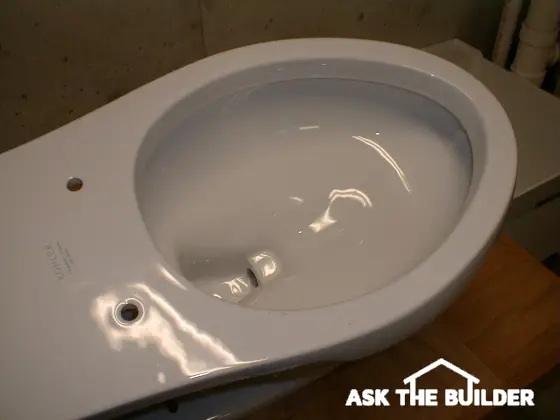
Look at the bottom of the empty bowl. You can see the siphon-jet hole where the water from the tank starts to force water and waste into the colon.
Certain toilets are so well-engineered they can flush solid waste with just 1.4 gallons of water per flush instead of the industry standard of 1.6 gallons of water. This small savings per flush can add up to big savings over time. A family of four using one of these toilets can save nearly 2,000 gallons of water per year. Imagine how much water could be saved if an entire subdivision or city used these toilets.
What other advancements have been made in toilet design?
The advancements in toilet design do not stop at the toilet bowl. You or your plumber can now buy new toilets that take the hassle out of connecting the tank to the toilet bowl. In years past, I and many others struggled with bolts and washers that passed through holes in the bottom of the tank. Tighten the bolts too much and you risk cracking the china. If the bolts were not tightened enough water would leak through the bottom of the bowl.
A new tank design eliminates these holes by using a hidden steel plate on the underside of the tank. The bolts lock into the steel plate and then pass through the holes in the back of the toilet bowl. It is an ingenious concept that will save both time in installation and service calls created by leaks.
Received April 12, 2004:
"This is the first column I have read by anyone that so correctly details how the 1.6 gallon toilets work. My company has installed over 60,000 low flow 1.6 GPF toilets in the Tampa Bay area with virtually no trouble. In fact, the only problem we have is with competing plumbers who say ' ...those new toilets don't work!' Thanks for setting the record straight." Lou Bernucca
Author's Note: Thanks Lou! I am humbled to get praise from a fellow licensed plumber. TC
Low-quality toilets can have a hidden defect that is often very hard to see. Toilets have a colon inside of them that is simply the path of the trapway. The trapway is the internal sealed tube that connects the bowl with the drain exit hole at the base of the toilet. It serves the same purpose as the trap drains one sees under a standard kitchen or bathroom sink. This colon used to be hidden on many older toilets but it is now common to actually see the convoluted pathway the water and waste takes as it travels from the bowl to the drain hole in the floor.
Why do some toilets clog or are hard to flush?
Toilets that are hard to flush or that clog on a frequent basis may be the victims of poor colon design. You can clearly see the colon of a toilet in the top photograph. The bends within the colon may be too tight. The actual interior size of the colon may be small. Try to buy toilets that have a two inch minimum trapway/colon or those that have even large diameter colons. Ask the plumbing supply sales person to show you different toilets with exposed colons so you can see how some have better streamlining than others.

Tim built custom homes and did ultra-custom remodeling for 20+ years before launching his Ask the Builder media presence. He was selected as one of the Big 50 by Remodeling magazine in 1993. This award gave birth to Ask the Builder in October 1993. Tim also operates https://DrawPlumbingPlans.com. His @askthebuilder YouTube channel was the first home improvement channel on YouTube.
I recently bought a new toilet on trade me without realising it had a very small outlet ( 45mm ) It is chinese i think by the package writing and I worry about installing it in case it blocks easily. We set it up outside and it successfully flushed newspaper. It looks similair to the one on this video with the small jet hole in the front ( at bottom of bowl ) Hope you can reassure me or advise to biff it. Thanks, Peter.
Peter, your question requires lots of typing, plus I have some questions for you so I can give you the correct answer(s). I only do pithy answers here in the comment section. If you want to protect the investment you have in your house and not waste time or money *hoping* you make the right decision, you should talk to me on the phone for just 15 minutes. It'll be the best investment you've ever made in your home!
One more caution for the DIY home improver. Despite doubting that anyone would make this mistake, be sure that your measurements permit the bathroom door to open and close without being blocked by the toilet bowl. It can look great in the store, but not fit in your home.
What is your experience with residential wall hungs? A dealer in Sharonville claimed that they are the cat's pajamas. Our Glenwall is only 57 years old.
Dear Mr.Tim,
A few years ago I broke the lid of a toilet. As we are unable to pick up a toilet, we immediately called our licensed plumbing company. The kind employee had me measure from the back wall to the center of the flange as the video described. 12” We ordered a beautiful toilet from a local plumbing supply company. The plumbers brought it in and it didn’t fit! They had to take the toilet back and we paid a hefty restocking fee! The problem they said was that the measurement was correct but it didn’t take into account the thickness of the old tile which they deemed to be commercial type and not residential. A quick run to the big box store and luckily they had the 14” we needed at the height we wanted. Being short, height is very important! A costly error that could have been avoided if the plumber had come out and looked for themselves. But all was good, the 50 year old blue toilet was replaced with standard white!
The other thing I would like to share is the flushing capability of a toilet. In this same house, a toilet off the laundry room would not flush solid waste. The plumbers had come out and cleaned the lines twice. Frustrated I took out the valve and replaced it, looking over the old one it hadn’t been set to a strong enough flush. So that’s the first thing I would check in the future. Hope this helps some of your readers.
Kindest regards,
Elaine
As a home owner I have dealt with a clog problem many times. The cause is almost always the internal shelf at the exit of the Colon. Why is this not streamlined. Once I found a small perfume bottle caught here most often it was a large hard movement.
Is that feature inside the colon necessary to the flush or just an oversight of the designers.
Its such an obvious hang spot.
Clearing this with a snake leaves unsightly marks. And the spouse now demands a new toilet.
What designs do not have this if any?