Raised Floor Systems
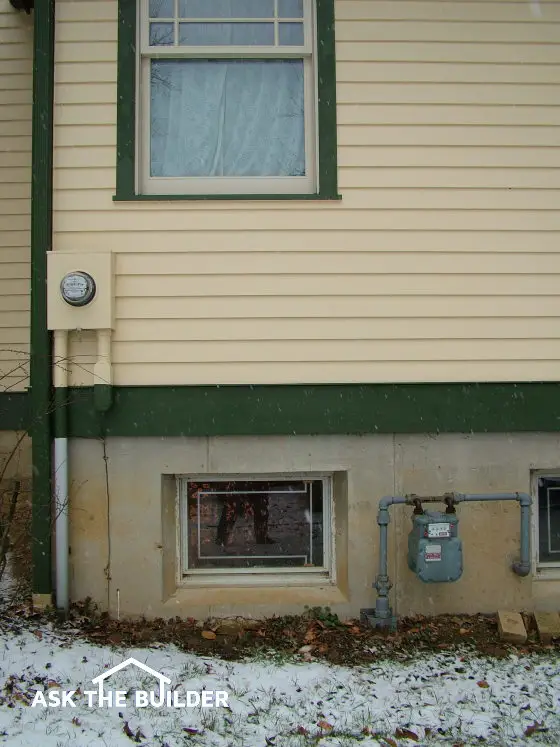
See that horizontal green fascia board just above the foundation? Behind it is the first floor of my home. My raised floor allows me to have commanding views from my windows, allows abundant light to stream into my basement windows and keeps my wood floor system far away from moisture. PHOTO CREDIT: Tim Carter
DEAR TIM: My husband and I are getting ready to build a new home and the builder is really pushing us to simply pour a concrete slab directly on the soil. I feel uneasy about this for any number of reasons. The builder says it will be cheaper and I am needlessly worrying. What would you do and why? Donna S. Orlando, FL
DEAR DONNA: I can understand why your builder is pushing for a slab on grade solution for your new home as your water table is so high in the sandy soil of Florida. But the builder may be blind to at least one other option that has been around for many years. In fact, I would be willing to bet that within one or two miles of your downtown area we could find several older homes that are 50 or more years old and are not built on slabs that lie directly on the soil.
The older homes we would discover would undoubtedly have a raised wood floor system. The original builder or the architect of these homes probably cleverly disguised the fact that the home is sitting up off the ground 20 or 30 inches.
Why not build a house on a a slab?
I love concrete and think it is a fabulous building material, but I would never personally own a home that is built on a slab. There are several reasons for this. First and foremost, I want to be able to have complete access to all plumbing, electrical and mechanical systems in my house. Houses built on slabs at the very least have the plumbing drainage system buried under the slab. In some instances, heating ducts and some electrical cables are also buried. In a house with a raised floor system, all mechanical systems are readily visible and almost always accessible.
What is a raised floor system?
Raised floor system homes besides their increased functionality simply look better than the same home built directly at grade level. The wall area of the raised foundation helps to give the home both stature and balance. Homes that can be built with raised foundations in areas where basements are possible allow basement windows to be placed above grade. Windows placed above grade permit the maximum amount of available light to readily stream into the lower basement space.
People who live in areas where expansive clay soils are especially troublesome can really benefit from raised wood floor systems. Pier and beam foundations can be used that bypass the pesky clay soils that often cause significant cracks in slab-on-grade homes. Slabs can be engineered to resist expansive clay soils, but if the workmen don't build the slab exactly right, the best intentions of the engineer become worthless as soon as the soil expands or contracts.
Another often overlooked benefit of raised wood floor system construction is a savings for those who live in flood plain zones. You can often build in these designated areas, but if your first floor level is exactly at the elevation of predicted floods you pay a steep flood insurance premium. But for every foot you raise the floor level above the projected flood level, you pay significantly decreased flood insurance premiums. The savings over time can be dramatic. But in addition to those savings, imagine the peace of mind knowing your house stayed dry during a flood while a neighbor's house built on a slab might have had 28 inches of murky polluted water invading his house for days.
What about the cost savings of a raised floor system vs slab on grade?
As for the cost savings of building a raised floor system versus a slab-on-grade home, you are talking chump change in my opinion. If your builder does an accurate labor and material cost comparison, I'll wager that the extra cost of a raised wood floor system for an average home will not exceed an extra $1,500.00. Yes, it is more money, but that extra cost buys you numerous advantages as well as increased curb appeal.
Some opponents of raised floor system construction say it is too difficult to go up and down steps to get into and out of the house. It is very easy to grade the exterior of the ground around some of these houses to create a gently sloping landscaped berm that serves as a pathway to the front porch so that all but one step is required to enter the home.
There are multiple foundation types to choose from when building a raised floor system. The pier and beam method works well in areas that have mature trees and vegetation. This system requires that the builder just dig several pits to install square or round footers that support the weight of poured concrete or concrete block columns.
A traditional continuous poured footer foundation with a continuous concrete block wall or poured concrete wall can sever many tree roots and weaken or kill nearby trees that add value, beauty and perhaps natural shading in sunny hot climates. It is always a good idea to consult with a certified arborist before you decide upon which foundation method your builder is going to employ.
Column 553

Tim built custom homes and did ultra-custom remodeling for 20+ years before launching his Ask the Builder media presence. He was selected as one of the Big 50 by Remodeling magazine in 1993. This award gave birth to Ask the Builder in October 1993. Tim also operates https://DrawPlumbingPlans.com. His @askthebuilder YouTube channel was the first home improvement channel on YouTube.
Hi Tim,
My husband and I are having our new home built with a raised floor foundation. It is a two story home with a view out basement. The home is primarily vinyl sided with brick facing at the base of the home in the front only (due to budget). Here is our dilemma. We recently went to see the progress, and now that the siding is done and the brick is up, externally, about 2.5 to 3 feet of foundation is showing below the siding / above the soil. I think they are going to grade the surrounding property a bit. The back of the house is completely sided with very little, if any foundation showing. The sides of the house look plain silly with all that foundation showing. Our garage is a side entry, and it appears that theh concrete floor of the garage is about a foot or more lower than the very top of the exposed foundation. We didn't pay for brick on the sides of the house, and I don't think they can attach siding to concrete, if I am correct. We don't want to have to plant all around the home to hide all of the foundation, and it seems that none of our neighbors have foundation showing on their homes... What are our options to remedy this situation? Is there a requirement to have some foundation exposed on the outside of the home. Is there a standard? Thanks!!!
Ann,
I developed my 15-Minute Consult for tough dilemmas like this. Consider it. No way can I take the time to type that much.