Garbage Disposal Smell
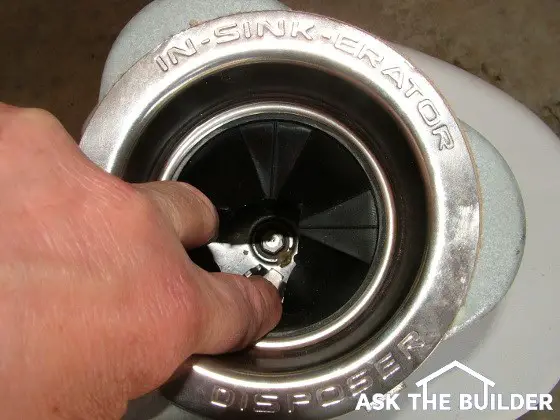
Garbage disposal smell originates down in the dark bowels of the machine. There are several ways to deodorize the disposal. Copyright 2018 Tim Carter
"The spinning motion of the disposal blades throws a slurry of garbage up on the sides of the disposal chamber and..."
Garbage Disposal Smell Removal Tips
- Fill sink 1/3 way with water before grinding
- Pull stopper and turn on the disposal
- A surge of water helps rinse sides of disposal
- Use certified organic oxygen bleach and dish soap to remove odor
Related Links
Garbage Disposal Odor - Yucky!
Septic Tank Garbage Disposal - Yes, a Special One!
Tim Carter Short Video Showing How to PREVENT Garbage Disposal Odor
DEAR TIM: My garbage disposal stinks. My wife has been fighting with a stinky garbage disposal. It's relatively new (I replaced it for other reasons last year).
She's tried many different approaches to cleaning, and yet to her the smell returns. Before I pop the drain pipe and see if there's something accumulating down there, do you have any tips for cleaning a garbage disposal? Leo N., Seattle, WA
DEAR LEO: This is pretty simple to solve but because you now have an odor problem, it is going to take a little work. Let me explain what has probably happened over time.
Where Do Garbage Disposal Smells Come From?
The garbage disposal smells come from rotting food inside the machine.
This decaying food creates a biofilm inside surfaces of the garbage disposal.
What is the Wrong Way to Use a Garbage Disposal?
The wrong way to use a garbage disposal is to not use enough water before, during, and after grinding the food waste.
Many people simply throw garbage down into a garbage disposal, turn it on while some water is running through it and quickly turn the disposal off as well as the water.
Where is the Rotting Food?
The spinning motion of the disposal blades throws a slurry of garbage up on the sides of the disposal chamber and the small amount of water coming from the faucet doesn't always completely wash this organic slurry off the sides of the disposal.
Does Rotting Food Create an Invisible Gas?
Rotting food creates an invisible gas as well as a feasting place for nasty bacteria.
If this slurry of organic debris is not completely washed off the inside of the disposal, it begins to rot and this decomposition produces a foul gas.
If you do this enough times - meaning not rinse off the organic slurry, it can harden over time and then becomes a problem to clean. You have to re-hydrate the hardened slurry.
How Do You Clean Garbage Disposal Smells?
The best way to clean garbage disposal smells is to re-hydrate the food slurry. You can do this by filling your sink about 1/3 of the way, or more.
Once the sink is filled with clear water, pull the stopper allowing the water to enter the disposal. At the same time, turn on the disposal to swirl the water in the drum. Keep the sink water running as you do this.
Wait about thirty minutes and repeat the process. However, before pulling the stopper add a generous amount of liquid dish soap to the sink water. As the water flows into the disposal with the machine on, squirt more soap into the whirlpool of water.
Keep the water running so you have a soapy foam slurry inside the disposal.
You can also add certified organic oxygen bleach to help get rid of any residual bacteria.
How Do You Prevent Garbage Disposal Smells?
The key to preventing garbage disposal smells is to rinse the disposal well after each use. Once the food has been ground up, fill the sink 1/3 of the way up with clear water.
Remove the stopper, leave the water running and turn on the disposal. The swirling action of the disposal should remove all of the food slurry from the inside of the machine.
CLICK HERE for FREE & FAST BIDS from local handymen who can clean your disposal.
Column 566-A

Tim built custom homes and did ultra-custom remodeling for 20+ years before launching his Ask the Builder media presence. He was selected as one of the Big 50 by Remodeling magazine in 1993. This award gave birth to Ask the Builder in October 1993. Tim also operates https://DrawPlumbingPlans.com. His @askthebuilder YouTube channel was the first home improvement channel on YouTube.

Hi, Tim --
I have a persistent odor from my disposal. Your advice is to "rehydrate the hardened slurry." How do you do that?
Thanks,
Nancy Darling
Nancy,
Lots to discuss on how to do this. Plus you need my Stain Solver. It destinkifies garbage disposers.
To talk about the job, consider my 15-Minute Consult.
I had an insinkerator Essential installed 2 years ago. It stinks all the time. I clean it and after a few uses it stinks again. I have had disposals in my homes for over 40 years and never had disposal odors, NEVER. I recently found the reason. The anti-vibration mounting ring at the top of the chamber is shaped in such a way that it is a natural food trap. Put your fingers just under/inside the steel mounting ring and curve them up toward the sink. There you will find a ridge about 3/8 inch deep that will be filled with old stinky food, gross.
I called insinkerator about the POOR DESIGN of this unit and they just didn't get it. They said I am the only person who has ever complained. They tried to troubleshoot the cause of the odor everywhere, even though I told them all about the large amount of stinky food I found trapped in the anti-vibration mounting ring. They were of no help at all. They agreed to send me a new replacement unit. I said OK, but the problem is a design flaw, and a new replacement unit will not fix it unless you have corrected this serious design flaw.
Hi...I have the same problem as does my cousin.....can you get the serial # for me. Maybe if 3 of us go to them and demand our money back, they will listen....thanks
So basically...Stain Solver won't help with a design flaw of the Insinkerator Essential ?
I have no idea what you're talking about. What design flaw?
I have the same problem and have to continually remove the rubber splash guard from the drain and clean it. This problem started about 3 years after we built our new kitchen and installed a new Insinkerator. Yes it is a POOR DESIGN. The indifference to the problem by Emerson and the "I've never heard of that before" comment, even by their authorized dealers is poor customer service. It's clear they don't have any idea what Google is.We too, have had an in-sink-erator for 40 yrs or more and never had this problem.
Same here. 6 month old Insinkerator smells awful. I have always had garbage disposers and they never smelled bad before.
Mary, you need to plug up the drain outlet hole from the disposer temporarily. Then you fill the disposer with HOT water and add two tablespoons of my Stain Solver oxygen bleach. After 30 minutes of soaking, run the disposer to agitate and stir the solution. The Stain Solver will clean off the offensive biofilm that has formed on the side walls of the disposer. Once this is gone, it will smell great. You keep it clean by filling up the sink with CLEAR water just after each disposer use. Pull the strainer out and the draining water FILLS the disposer. While this happens, turn ON the disposer to swish the clear water around and it rinses the sides of the disposer.
I have a very foul smell coming from my insinkerator. I've sniffed around and the smell is strongest from under the sink at the very base of the UNIT. It was in the house when we bought it over 15 years ago so I don't know how old it really is. We also had a new Kenmore dishwasher installed this month. Could the 2 be related. Never had this smell before. I've checked the floor under the sink next to the dw and it is completely dry. Help!
Did the odor start after the new dishwasher was installed? Is the dishwasher somehow causing the sink p-trap to be sucked dry allowing sewer gas to enter the disposal?
I also have a smelly insinkerstor and have tried nearly everything to get rid of the smell to no avail.
I have had three different food disposal units in the past 26 years. The first two (25 years) were fine. The third one fitted now to the same plumbing is an instinkerator (Insinkerator). I have tried all manor of cleaning. I have removed the unit scrubbed all I could see and hosed it out. I have removed and cleaned all the plumbing. I have also unplumbed the dishwasher. the stink remains. Insinkerator want me to send it away for service. If they cannot tell me how to stop the smell I'd rather spend the money on a new unit from a different manufacturer.
Getting rid of Instinkerator smell. (further to my above comments).
What works?
1. None of the above.
2. 'Buster' drain and dishwasher cleaner to some extent but the smell always returns.
3. Blocking the outlet at the drain outside so that you can run the insinkerator continuously with water and cleaning fluids trapped in the system for about 20 minutes but (you've guessed it) the smell eventually returns.
Having had previous units with no problems over 25 years and having stripped and cleaned the plumbing and cleaned as much of the unit as possible. The only conclusion I can come to is that there is debris within the body of the Insinkerator.
As the continuously running experiment shows some improvement, I have sent for a tap to install the waste plumbing so that I can leave cleaner in the system overnight or use the continuous cleaning process outlined above once a week.
Why am I so persistant? Beats the hell out of me. I should have sent the unit back to the supplier (on Ebay) ages ago!