Dust Control in Homes
DEAR TIM: My seven-year old home is very dusty. After placing small filters on the bottom of each heating vent diffuser in all of the rooms of my house, I wonder if I made a mistake. Will these hurt the performance of my furnace and air conditioner? I have a standard vacuum cleaner and use it every day, but I still have dust problems. What is causing the dust? What can I do to minimize dust? Patti C., Lancaster PA
DEAR PATTI: Oh how I wish my editors would give me more room for this answer! Dust control is a very complicated subject and there are numerous ways to capture and control the pesky particles that are the source of your frustration.
Let's first talk about dust cleanup. Based upon my own testing and years of trying different vacuum cleaners, I have come to the solid conclusion that central vacuums are the best tool to use to vacuum dust. These machines take the dust and dirt and place it in a cannister or a bag that is often in a garage or basement. Any dust that makes it past the bag or cannister is ejected outdoors.
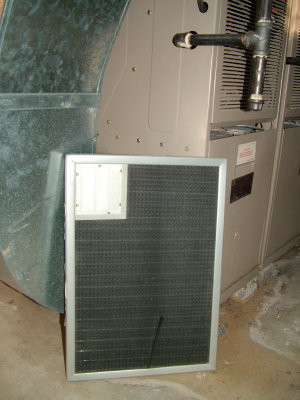
This electrostatic air filter does a superb job of capturing a high percentage of dust in the average home. PHOTO CREDIT: Tim Carter
Traditional vacuum cleaners like the one you use, exhaust the air inside the room while you are cleaning. Even if you have a great dirt and dust filter bag as part of the vacuum cleaner, some dust may sneak past other parts in the machine and get blasted back into the air. On a sunny day you can often see this dust storm as you vacuum in a room that has sun beams streaming through windows.
Dust on flat and vertical surfaces needs to be wiped off with a damp rag with water or a dust collection liquid. If you use a traditional duster tool, you just broadcast the dust into the air and it will settle back down on the surfaces hours later.
The filters you placed in your heating and cooling vents may hurt the performance of your heating and cooling equipment. The powerful fans that move air through furnaces and air conditioners are designed to do so with minimal resistance to air flow. The filters you installed no doubt are offering some resistance to air flow. Just before you installed them, your system might already have been at the upper allowable threshold for airflow resistance.
The reason adequate air movement within the furnace and air conditioner is so important is simple: In the winter when heating your home, the air must move past the heat exchanger at a given speed to pull off heat; in the summer when cooling your home, the air must be able to readily flow over the air-conditioning coil, where its heat is deposited. If the speed starts to decrease and your system is not designed to sense this change, then efficiency and performance can drop.
I would consult with a seasoned heating and cooling professional about the filters you installed. This craftsman will have special tools and meters that tell him if the static pressure within your system is too high. Static pressure is a measurement of airflow resistance.
If the heating professional tells you to remove the filters from the vents, I recommend that you consider installing a washable electrostatic air filter in the filter rack within your furnace or air conditioner. These wonderful filters attract many dust particles and make them stick to the filter. Every 30 days you take the filter outdoors or into a large sink and rinse it with a high-pressure stream of water. When I do this with my electrostatic filter, the water streaming from the filter is always black and brown.
Many people wonder where dust comes from. The sources can be numerous. If you handle lots of paper in your home, paper fibers naturally become airborne as you read books, newspapers and some magazines. Dust from countless outdoor sources will naturally be sucked into any open windows.
Some inexpensive carpets create dust as fibers from the carpet, carpet backing and even some carpet padding become airborne from simple foot traffic across the carpet. Fibers and dust are released from upholstered furniture, clothes, hobby and craft activities and food preparation.
If you want to try to pinpoint the actual source of dust, take a sample from a surface with a piece of regular cellophane tape. Use a 10x or 20x hand magnifier and look at the actual dust particles. You will be shocked at how different each of the dust particles appears. Dust from newspaper or blank paper is vastly different from flour dust or wood sanding dust. Drywall dust looks completely different from carpet fiber dust. Once you determine what the dust source is, try to stop or minimize the activity that actually creates that dust.
Column 597

Tim built custom homes and did ultra-custom remodeling for 20+ years before launching his Ask the Builder media presence. He was selected as one of the Big 50 by Remodeling magazine in 1993. This award gave birth to Ask the Builder in October 1993. Tim also operates https://DrawPlumbingPlans.com. His @askthebuilder YouTube channel was the first home improvement channel on YouTube.
I reading about IAQ I never see where the authors include anything about the importance of negative ions on destroying airborne bacteria, etc plus effectively eliminating dust.
Why is this critical item "never" included in IAQ recommendations?
I live in a new townhome, (one year old), and the dust in the master bedroom is horrific. I believe it is coming from the A/C vent as my windows are always closed due to allergies. I check the A/C filter often and it is always clean. Is it possible that the dust is bypassing the filter and coming through the vents? My bed linens are always covered with dust.
Thank you
Read the dust control column again, get a 10X magnifier and identify the source of the dust.