DIY Heating
DEAR TIM: I need to replace my existing furnace, and am convinced I can do it myself. I looked at how the furnace connects to the metal ductwork, and I don't see any real challenges. Even the solder connections for the air conditioning seem simple. What obstacles do you feel I will encounter? Is it realistic for me to complete the job with no major problems? I am a serious do-it-yourselfer (diy'r), and have tackled all of my past diy projects with success. Patrick N., Laconia, NH
DEAR PATRICK: Your confident attitude reminds me of a real estate developer who requested a zoning change in my village a few years ago. I listened to him tell our planning commission how he got every other zoning change he had ever asked for from other local government bodies. He was proud of his 1.000 batting average. Unfortunately for him, my village spoiled his perfect record. I predict you are about to strike out as well.
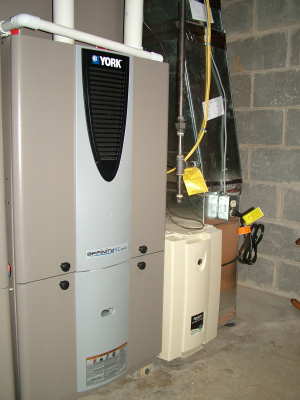
Installing a furnace requires great skill, specialized tools and experience. This ultra-high-efficiency York furnace with a gas modulating valve took Richard Anderson, the BEST HVAC craftsman in greater Cincinnati, OH, several days to install. PHOTO CREDIT: Tim Carter
Diy heating is perhaps one of the most challenging tasks I can think of when it comes to projects around a home. I can think of more physically demanding ones, like placing and finishing 20 yards of concrete in one day with just two helpers. If you want a formidable challenge, install a traditional post-over handrail with newel posts, volutes and goose necks. This master carpentry task is a photo-finish second place to heating, when it comes to precision and technical difficulty.
The skill sets you need to professionally install a new furnace are many. Furthermore, you need many specialized hand and power tools, especially when it comes to connecting the new furnace to your central air conditioner. For example, I doubt you have a set of refrigeration gauges sitting around to measure the high-and-low-pressure sides of your air-conditioner refrigerant. You will also need a two-stage vacuum pump to remove all air and moisture from the inside of the copper tubing after it has been brazed, not soldered. Don't forget to flow pure nitrogen through the copper tubing as you braze the copper connections.
I will assume you are installing a high-efficiency furnace, as they will give you a fantastic return on investment. The newer gas furnaces that sport gas modulating valves are state of the art, but my guess is that unless you have a heating and air conditioning contractor who will secretly buy the equipment, you may not be able to get your hands on the furnace you want. Heating equipment manufacturers often demand that their top-of-the-line equipment be installed by factory-trained craftsmen. This policy is a good one, as they do not want their furnaces and air conditioning equipment to become lab rats for people who feel they know more than they really do.
Once you remove your old furnace, you may be surprised to discover the shape and size of the new furnace and the interior air-conditioning coil that sits on top of many furnaces is quite different from your existing one. Connecting the ductwork above the existing furnace to the new one will require precision modifications. If you have not worked with sheet metal before, you may be in for a surprise. You need to learn all about s-hooks, drives and custom-offset ductwork.
One of your most serious challenges will be reclaiming the existing refrigerant that is in your system. Those of us who want to protect our planet's fragile atmosphere would sincerely appreciate it if you would not vent the high-pressure refrigerant into the air. Professional heating and cooling contractors have specialized equipment that allows them to reclaim the gas so it can be properly recycled.
If your existing furnace is fueled with natural gas, oil or propane, you will need to conjure up your best diy plumbing skills. You may be working with black iron pipe that needs to be custom cut and threaded. If you have all of the needed pipe-threading dies, cutters and the pipe vise, I am duly impressed. These expensive tools make sense for a plumber to own as he uses them frequently.
Diy heating is one of those tasks that homeowners need to avoid. There are many things that can go wrong, and worst of all, you may put yourself and your loved ones at risk. Furnaces and any fuel-burning heating device generates deadly carbon monoxide. Installing heating equipment improperly can be a recipe for disaster.
If you still think you want to tackle the project, absolutely take out the required building permit. Call for timely inspections to ensure all of the equipment is installed to code. You may need two different inspectors, as some municipalities may have a separate electrical inspector who looks at all of the electrical connections, fuses, switches and disconnect boxes.
Column 627

Tim built custom homes and did ultra-custom remodeling for 20+ years before launching his Ask the Builder media presence. He was selected as one of the Big 50 by Remodeling magazine in 1993. This award gave birth to Ask the Builder in October 1993. Tim also operates https://DrawPlumbingPlans.com. His @askthebuilder YouTube channel was the first home improvement channel on YouTube.
Hi Tim,
I have had the opposite experience with "Professionals". In my Girlfriend's home her heat exchanger went bad again on her FHA oil furnace. (first was replaced under warranty, she had to pay labor).
She had had "Professionals" add ductwork to go to the upper floor. What they did was to put the duct up where the return air was. They replaced the return air connection with One 8 inch connection!
Not enough return air, overheated heat exchanger, cracked twice.
The "Professionals" that replaced the first heat exchanger said nothing, The "Professionals" that cleaned the system said nothing.
OK, I was done with "Professionals". I did have a friend in HVAC, and was reluctant at first, but he told me I could do it myself quite well. He really convinced me when he said he paid his installers under $10 an hour!!!
A new dented $600 furnace, redoing the return and supply plenums, adding a bunch of return air, and her system is 4 years much better comfort and reliability than "Professions" have done.
Don't be so glib about how DIY can be done. I will be doing my Gas furnace, but will be using a "professional" to drain the R22, charge the new system and connect to gas, but I doubt I will ever trust that a "Professional" can do it better than I can.
Hi Tim,
While I agree that furnace installation is not an easy task, it's not impossible if you have good resources to go to for guidance. It's been a while (27 years) since my husband and I installed our own gas furnace in our home We managed quite well. I'm not HVAC trained and at the time we were total novices at DIY construction. I was a photographer (with skills as a crafter and from helping my dad with his projects before I moved to my own house), and my husband a musician (with NO construction skills at all). It was our 1st time as homeowners and we had purchased a HUD house that had an old gravity furnace (coal to gas conversion). After our 1st winter it was obvious we needed something better, but we had no money....luckily my dad was an old school farm boy trained as an electrical engineer. He had bought a used gas furnace at auction for us, but lived too far away to install it for us. However, with guidance from him via phone calls, and additional advice from the maintenance man where I worked, we managed to install it ourselves. We researched the proper materials to install it according to code and found a sheet metal fabricator to build the new plenum - which we then installed. The local professional plumbing supply place threaded the gas pipe for us in store. My dad talked us through the wiring and the plenum installation via phone calls. Once done, we had a local HVAC service person come in and inspect our work before we turned it on. It really wasn't that hard. Now it is true that since we didn't have central air, we didn't need to deal with hooking that in, but the rest of the job was not all that difficult. The trick, of course, was having a number of knowledgeable resources to draw on (and being young and willing to tackle anything).
We are now in need of a new system as the furnace is over 30 years old and parts are not available to fix it. My dad is gone now as is the old maintenance man where I had been working. We would like to switch to an electric furnace as my doctor has been advising me to get rid of the natural gas for years due to my health problems. We are not in a position to hire someone to do this for us (still starving artists), and are looking for information on installing it ourselves...do you have any advice for switching out an old gas furnace for a new electric one? We still have no central air, so that's not a problem - at least not an installation problem. We are nearly 30 years older than when we first tackled this job....and my husband has not cultivated his DIY skills in the interim..(we have installed an electric water heater along with installing a new 220 breaker for it and know we will need to install another 220 breaker for the furnace - our service has room for exactly one more 220). We are wondering if installing an electric plenum heater in the old plenum and using the fan/blower that we already have in the old gas furnace would be viable. We are currently heating with space heaters, but once the weather hits single digits, that will not be adequate. Any advice you can give us (models of furnaces, suppliers, etc. would be a blessing. Thanks.
If you have the time this is indeed a decent DIY project
When I converted from Oil to gas I had the advice from professionals that worked around me. At the time I was a licensed electrician and I worked maintenance for a large Airplane manufacture. I took out a permit, ran my own gas lines, electrical, etc etc. I hooked the pressure gauge up the gas line and called the inspector. When he showed up I wasn't there but my wife greeted him and started to guide him to the furnace. This guy was a bit on the large side. He stood at the side of the house, looked at the sloop on the lawn and told me wife. " I am going to retire next week, that lawn looks to steep so I just sign off this permit, I sure hope it's up to code".
So much for getting an inspection. That was Twenty years ago. Last night that furnace died and I just ordered a new one today. Going to install it myself when it gets here.. and yes I will get a permit.