Electrical Wiring
DEAR TIM: Electrical wiring is in my near future as part of a bathroom remodeling job. I have to relocate an existing box that has three switches in it. In addition, I want to install new recessed lighting in the ceiling. There is attic space above the ceiling, so that should be easy. I have replaced outlets and switches before, but I wonder if I am getting past my skill level with this job. What would you do if you were me? What are the dangerous aspects of this job? Bob R., Erie, PA
DEAR BOB: Every aspect of this electrical wiring job is highly dangerous. Don't confuse the danger of working with electrical cables, wires and boxes that have yet to be connected to the circuit panel board with the hidden dangers of energized electrical wiring that can arc and overheat, causing a fire.
People die everyday from house fires caused by defective or improperly installed electrical wiring. If you are not 100-percent confident in exactly what needs to be done and how to do it to satisfy all applicable parts of the National Electrical Code, then hire a professional to do the job.
If you now have a sufficient respect for electrical wiring, that is a great thing. But if you decide to forge ahead and tackle the job, then I beg you to become well-educated in all parts of the job, so the wiring and fixtures are installed to code. There are many written and visual teaching aids available that can help with this vital training. You might even find a local vocational school that offers evening classes in residential electrical wiring.
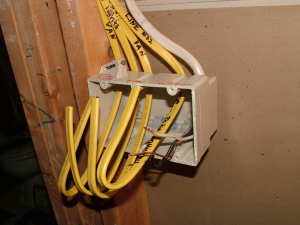
The different cables entering this electrical box can confuse a rookie electrician. There are strict guidelines that govern how electrical wiring must be installed. PHOTO CREDIT: Tim Carter
The list of things you need to know about this small job is almost endless. To give you a small taste of how intricate and complex the knowledge base is about residential wiring, let's go over a few things:
First, you can't just put in any type of light fixture for your recessed lights. The metal housings come in different models, depending upon heat conditions. There may be no insulation in the attic now, but what happens if someone blows in insulation at a later date and covers a recessed lighting fixture not rated for direct contact with insulation? I'll tell you what happens - a fire. Insulation can trap heat in a fixture, and cause the fixture to get so hot, it melts the plastic insulation on the electrical cable and individual conductors. You can buy recessed light housings that can be covered with insulation, so find those and install them.
The size and type of the cables and wires you install is extremely critical. You may be tempted to work with 14-gauge wiring material, because it is easier to handle. Maybe a store clerk said it meets code. But what happens if the circuit you are working on is controlled by a 20-ampere circuit breaker? I'll tell you what might happen - a fire.
Circuit breakers are meant to protect wires, not people. A 14-gauge wire can overheat and catch fire before a 20-ampere circuit breaker will trip, cutting off the power. All of the wiring in a particular circuit must be matched to the size of the circuit breaker controlling the circuit.
Something as harmless as a cable staple is important. Hammer one too hard, and it can pierce the insulation on the cable and the individual conductors within the cable. Arcing can happen at a later date, which then starts a fire.
Installing wire nuts and twisting conductors the right way may seem intuitive, but if done improperly, these critical connections can be the source of electrical fires months or years from now. Every single aspect of the job is important, and you must be focused the entire time you work with all of the electrical components.
If you want to gain a new perspective for the potential fire hazards of simple residential electrical wiring, I urge you to stop by a local firehouse. Talk with a seasoned roughneck firefighter, district commander or perhaps the assistant fire chief. These individuals have seen what a simple electrical wiring mistake can do. In the worst cases, they may have had to zip up one of those dreadful plastic body bags and carry it to a waiting county vehicle.
I have seen the aftermath of several electrical fires, and the damage to property, life and spirit is horrific. Be sure the work you do, or that is done by a professional, is inspected. Do not assume everything is fine, as tiny mistakes can cause large fires.
Column 629

Tim built custom homes and did ultra-custom remodeling for 20+ years before launching his Ask the Builder media presence. He was selected as one of the Big 50 by Remodeling magazine in 1993. This award gave birth to Ask the Builder in October 1993. Tim also operates https://DrawPlumbingPlans.com. His @askthebuilder YouTube channel was the first home improvement channel on YouTube.
Keep up the great work! Thank you so much for sharing a great posts.