Small House Plans

By
©1993-2012 Tim Carter

        
Summary: Small house plans require just as much thought as plans for a mansion. Small house floor plans must tell the builder all he needs to know so the house is built exactly as it appears in your dreams. A small house can feel large if you include lots of tall ceilings, large windows and skylights.

DEAR TIM: Small house plans are the topic of discussion between my husband and I. As we approach retirement, we are going to move from a larger home into a new smaller house for a number of lifestyle and financial reasons. What advice can you offer so we do not make a mistake building a house that is too small? Are there distinct do's and don'ts when it comes to scaling down from a large home to a small one? What can we do to make our small home feel like a large one? Meredith M., Bryan, TX

DEAR MEREDITH: I can certainly see the attraction of moving from a large home to a smaller one. There is less space to clean, heat, cool and redecorate. All of these things can save money when you think about living in a home for a period of years. As I grow older, I do not want my own home to become a black hole that consumes my time and money. Golf courses, ski slopes and other activities will do a fantastic job of consuming both, and yield pleasure in return.

The small house plans you and your husband will settle on are the most important documents in the entire construction process. They will communicate your dreams and desires to the builder, and to all of his subcontractors and suppliers. The plans must be complete and well thought out in every respect. To proceed with half-baked ideas and concepts you hope will work is foolhardy.

Some of the biggest planning mistakes I have seen happened when homeowners looked at blueprints and three-dimensional renderings of a new home that dazzled them. The contracts were then signed and work begun before the people even realized how the new home would relate to their living and entertaining habits.
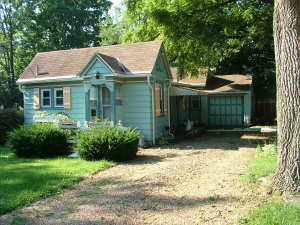
This house is perhaps too small. The narrow rooms might not handle furniture very well. There is no room for mistakes when working with small spaces. PHOTO CREDIT: Tim Carter
The best analogy I can give you is building a deck. People think that a 10-foot by 14-foot deck is large when it is first built and the carpenter is loading up his tools. But the deck shrinks dramatically in size when you try to fit a standard table and chair set as well as a few other items on the deck platform.

As for your list of do's, I would make a list of all furniture you intend to move from your existing home into your new home. Be sure the rooms in the new home are large enough to handle the furniture. Make scale cutouts of the furniture and position them in the scale conceptual drawings you can get from the builder or architect. Don't forget about the space you need to navigate around furniture.

Think long and hard about your entertainment plans for the future. If you plan to have large parties, where will everyone sit? If you invite family over for holiday occasions, think about how the house will handle this brief influx of people. Will your new kitchen be large enough to handle guests chatting while you stir the simmering sauces at the stove?

Do not assume everything will work out. Do not overlook storage. If you are going to bring lots of things with you from the old house, where will they fit in the new home? Storage solutions are many, but keep in mind that off-site storage costs can eat into your future retirement budget. Talk to your builder about using storage trusses over the garage and attic trusses over the main part of the house. These affordable structural elements create vast amounts of storage space for a small initial investment.

Don't forget about future mobility issues. As you and your husband age, stairs, bathtubs and even door knobs can become trouble spots. Plan now for a house that will be easy to use if you or your husband lose both dexterity and mobility. Consider a larger bathroom that allows you to enter a shower in a wheelchair. Hallways need to be a minimum of 42-inches wide and 48 inches is even better. Lever-type door handles are far easier to operate than a knob you must grab.

Your new small house can appear bigger by making the outdoors part of your home. Large windows, vaulted ceilings with energy-efficient skylights all help make smaller spaces seem enormous. Fewer interior walls between rooms and taller flat ceilings also make a small home seem big. You can witness this in homes that are well over 100-years old. Many of these houses had small rooms with tall ceilings that create a crisp feeling of spaciousness.

The small house plans must have plenty of interior elevations that show cabinet layouts and all fixtures. Details as seemingly insignificant as toilet-paper holders can be drawn on these elevations. This allows you to make sure every item that is attached to a wall is in the right location.

The plans should also have plenty of schedules. A schedule is simply a table that lists different rooms or fixtures, and tells you everything about those items. For example, in a room finish schedule the treatment of the walls, floors, ceilings and even types of woodwork are listed in great detail. A plumbing fixture schedule will list each plumbing fixture telling the builder the model number, the finish, critical dimensions, and any special notes.

Including all of this information on the small house plans ensures that your wishes will happen, and the project will not go over budget. Cost overruns happen when a builder has a different idea than you have about something. Detailed plans eliminate this confusion.

Author's Note:

I received this helpful email from Connie Williams who lives in Dublin, OH:

I faithfully read your column in the Dublin, OH SNP Real Estate guide.  Today your article was answering a lady who needed hints for building a smaller home for retirement.
 
Recently my husband and I built such a home to be nearby a daughter with health issues and small children.  We learned when visiting her and her husband that 3 generations in one house can change the family dynamics too much.  Besides it is such fun to have the grandkids stay over and have special times with them!
 
After 42 years of marriage, we have learned a lot about needs in such a house.
 
A very important part of a small house plan should be to have the master bedroom at one end of the house and the guest bedrooms at the other, with a bath in each area.  Many people in Florida are aware of that because they receive visitors and appreciate the comfort of privacy. In our house, we had the contractor add a door to the "guest wing".  That way visitors, grandchildren, or live in caregivers can walk to the bathroom in their PJs or shut out the sounds of the others in the kitchen, great room, etc.
 
Your column answering the lady who wanted tips on a small home was great, except for the above mentioned and a few other small issues.
 
But, having lived through more than one "fuel crisis" including now, I question your advice about the soaring ceilings.  Older people should not be doing work on ladders and hiring things done is not always feasible. Our builder was surprised that we asked for 8 ft ceilings rather than the 13 ft. the plans called for.  But a mop and I barely reach to 10ft!  Spiders and dust have far fewer height limits.
 
On  very cold winter days or very hot summer ones, we are happy to not have to pay to heat or cool that wasted space.
 
A good plan should also have a very accessible kitchen.  That is to say the opening to the kitchen should not be one doorway wide. There should be two exits into the living area, (not just to the garage) or have one entire open side.  The open side allows for family or friends to overflow into the next area when needed.  Company, even children, always ends up in the kitchen where the real action is and they tend to box the cook in just when she is busiest!
 
Ceiling fans are a great way to regulate temperature in a room without adjusting the thermostat for the entire house. The kitchen needs one as well as living and sleeping areas.
 
At least one bedroom should have a large window that is not too high so that a person who is ill or bedfast can still enjoy the beauty of the outside.
 
42" cabinets are an invitation for an elderly person to fall more often. Our children pointed out that I can not really reach shorter ones well. So I have a nice shelf space above the cabinets to display favorite objects with almost no maintenance required. (Nobody is tall enough to see dust up there).

Ranch plans help elderly people take care of their own homes and needs longer. It is important to not have a porch with steps that make using a walker or wheelchair something a person can not maneuver alone. When you get older, your friends, and relatives get older, also, and have more limitations. The same thing is true for getting into the garage from the house. Older folk should not have to go into a house through the front because nobody thought about getting people or objects in and out of the garage.
 
Every room should have a phone connection, though the world is going cordless, it is not yet. Our grandkids like to call Daddy and Mommy from their room to say "goodnight" just before snuggling in. We are glad we put a connection in there for them or any other guest who uses the room.
 
Keep up the good work with your wonderful and useful advice!


Still Need Help? Type Your Keywords Here:
(examples: drywall repair, pilot light goes out, poor lot drainage, crown molding guide, etc.)

Comment on Facebook

Your Facebook friends would love to know how this column helped you solve your problem. Type a quick comment of what you discovered here at AsktheBuilder.com. Thanks!


Comments:

Welcome! I, Tim Carter, don't answer questions here. If you post a question here in the Comments Area, perhaps another visitor will help you. You need to go to the Ask Tim page if you want a question answered. Once there, look closely at how many weeks behind we are. Please be patient as you use this free service. If you have an emergency and need to talk to me, there is an option there for you.
lasantha
09 Apr 2008, 00:00
Upstair House, No Roof(Slab),2 Bed Rooms & 4 Rooms, 2 Bath room
Carol
28 Jun 2008, 08:26
I just found this site and love it. We are retired, mid 60s and hope to build our "small" cabin in TN within a year. We want the open living area concept and only 2 bed/2 bath but w/a loft. Just this much info from you and owners is wonderful. Thank you.
Emmanuel
07 Sep 2008, 01:17
my teacher said i need to go on the comuter to get some plans about a paper house and if i don't get any plans my team will kick me out!!!
Emmanuel
07 Sep 2008, 01:24
My team will kick me out because i don't have any ideas
Emmanuel
07 Sep 2008, 01:25
i have not got your response on yahoo email
Linda Donahue
10 Oct 2008, 12:24
I am curious to know if anyone has thought about building in the Northeast (MA) and whether they have encountered issues with their town, etc. for getting a permit to build.
Linda Trunell
04 Jan 2009, 16:19
I am interested in building a small house (ranch, under 1000 sq ft) on my daughter's property rather than build a "mother-in-law" addition to the main house. I am thinking a modular might be less expensive than building an addition. What is your opinion of modular homes?
Greg
05 Dec 2010, 21:52
My wife and I have lived in our new house for 15 months, and love it. We had raised our 4 children in an almost 100 year old house, but wanted to enjoy our soon-to-be-retired status, and to travel to see our children and grandchildren who have settled on both coasts. We purchased a stand-alone condo lot in a 55 and older community, and purposefully designed a home for ourselves and our entertaining needs, with little regard for all of the kids, their spouses and grandkids. If needed, we rent motel rooms with the money we save on utilities. Our 1500 square foot super efficient house is slab on grade construction and built without any steps, and oriented to the south for good exposure to the winter sun. We have 2 bedrooms, 2 baths (the washer and dryer is in our bathroom), a small office, a large walk-in pantry, a small screen porch, a 24x24 great room, and more than adequate storage. This is the best thing we've ever done for ourselves - and I encourage everyone to take similar steps.

     View all comments
*Name:
Email:
Notify me about new comments on this page
Hide my email
*Text:
Security Image:

Visual CAPTCHA


Remember, Tim Carter doesn't answer questions here in the comments. You need to go to the Ask Tim page.
 
Have a Suggestion?
Do it right, not over!

Ask the Builder Comment Help

Thanks for stopping by! The Comments Section of my AsktheBuilder.com website is a place for you to share stories about how you've solved a similar problem at your home or carry on a conversation with other visitors. I tried, at the beginning, to be part of the conversation, but there were too many questions being asked and it was impossible for me to keep up and get my regular work finished each day.

If you want to ask me a direct question, you should go to the Ask Tim page of this website.

Helpful Comment Tips: If you need help with a problem, please try these things now before you type in a comment. You could discover your answer in just minutes.
Don't show this alert again.