Window Box
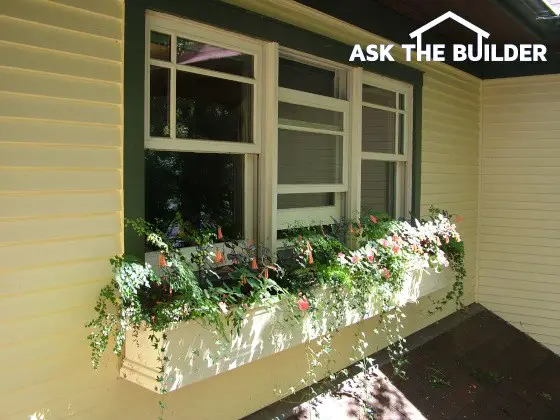
This window box loaded with soil and plants weighs over 200 pounds. It is anchored directly to the wall studs with heavy-duty stainless steel clips and bolts. CLICK or TAP HERE or the photo to order the exact window box you see above. PHOTO CREDIT: Tim Carter
DEAR TIM: I think window boxes would really dress up the exterior of my home and add beauty. My husband thinks the flower boxes will damage the house, and is discouraging me from doing this. Many houses where I grew up had window boxes, and I never saw any damage. What is your opinion about window boxes? Would you tell people to install or avoid them? What type would you recommend? If you do like them, how would you install them to prevent damage? Robin B. St. Rose, LA
DEAR ROBIN: Guess what? Your husband is partially right. Poorly designed window boxes that are installed incorrectly can damage a house. Maybe he is against the gorgeous flower boxes because he saw houses years ago where the boxes did cause problems. Although my comments may help you persuade him, I am quite sure he will see it your way if you start wearing a sweatshirt around the house like my wife wears. It simply says, "When Mama Ain't Happy, Ain't Nobody Happy".
In all seriousness, you absolutely can install window boxes that will bring you great joy and satisfaction. High-quality window boxes will not damage your home one bit if you follow a few simple steps. If you haven't already figured it out, I love window boxes as does my wife.
Window boxes can really make the exterior of your home attractive. They can add color to a home no matter what the season. My wife changes the look of our large window box four times a year. I love the window box during all seasons, but I really enjoy the fall assortment of hardy frost-resistant flowers mixed with the colorful gourds and pumpkins.
You can make window boxes out of many materials. The boxes need to be rot resistant and strong enough to hold hundreds of pounds of weight. There are lightweight soil mixtures that do not weigh as much as real soil, but even those materials, plus water and the weight of the plants can add up quickly. The window box material must be able to withstand the weight and not sag, bend or break.
If you want to make a traditional wood window box, you should use redwood or cedar. I would be sure to treat the wood on all sides and edges with multiple coats of a water repellant to help the natural rot-resistant chemicals in the lumber. I have seen plastic window boxes that might work for you as well.
But my favorite window box is one made from extruded fiberglass. These magnificent boxes are completely rot proof, exceptionally strong and they are drop-dead gorgeous. The best part about the fiberglass ones I use is they are hung on the wall with special hidden clips. My window boxes seem to float in midair, whereas other window boxes often have visible brackets that support them.
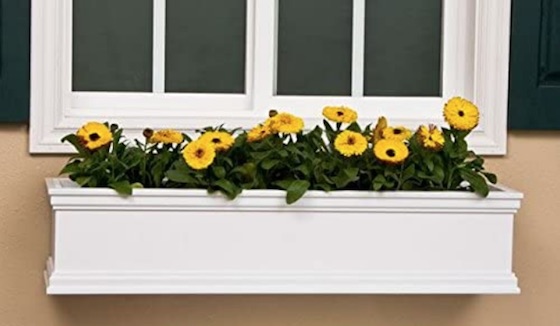
This is the exact fiberglass window box I have at my own home. They're indestructible! CLICK or TAP HERE or the photo to order yours.
One of the most important things you need to consider when attaching a window box to your home is water. You must ensure that there is an open pathway behind the window box so water does not get trapped between the box and the house. The fiberglass window boxes I use are engineered so this happens. The special stainless-steel clips that attach to the house and slide up into a channel on the top edge of the box create a wonderful airspace between my house and the box. Rainwater and any spilled water from watering the plants can readily drain from behind the window box.
Be sure that you also use rustproof fasteners like stainless-steel bolts to attach your window boxes to the house. The bolts must embed themselves into exterior wall studs. Remember, the window boxes present an overhead hazard. If they were to ever pull away from the house and fall, they could seriously injure or kill you, a loved one or a visitor. You must make sure you follow all written installation instructions, and use abundant amounts of common sense when installing them.
The fiberglass window boxes I use have another advantage. They can be painted any color you desire, and the paint will not readily peel off. If you use traditional wood to make a window box, you will very likely have severe paint-peeling issues as the water from the planting soil makes it way through the wood. Once the water gets under the paint film, the vapor pressure builds and causes the paint to fail.
If you have a brick or masonry home, I would also recommend that you apply a silane or siloxane water repellant to the masonry surface behind the window boxes. This clear chemical will repel water that will not readily evaporate from behind the window boxes. These chemicals can be applied with an old paint brush to the small area in question. Most dry totally clear, so even if you get some on masonry not covered by the window boxes, you should be fine.
Column 638

Tim built custom homes and did ultra-custom remodeling for 20+ years before launching his Ask the Builder media presence. He was selected as one of the Big 50 by Remodeling magazine in 1993. This award gave birth to Ask the Builder in October 1993. Tim also operates https://DrawPlumbingPlans.com. His @askthebuilder YouTube channel was the first home improvement channel on YouTube.
Where can I find these boxes?
Thanks for the specifics on how to protect a brick wall from water incursion behind a wall-mounted planter box! It's hard to believe how many sites either say nothing on the subject or give only vague guidance.
Where can I find these boxes and how to install.
I would love to know where you find these fiberglass window boxes! We are in the process of having our house resided and I want to get boxes that won't destroy the siding. These sound perfect!
Vicki,
What a dolt I am! I forgot to create a link to them. CLICK either of the photos above to order or use this URL: https://amzn.to/2zlnyLe
I just made a 60" Cedar planter box that I would like to hang on my vinyl siding. What would be the best way without damaging my siding?
I bought the little siding hooks but I feel I might need like 10 to be strong enough. What do you think?
Tony,
I've got many mystic powers, but clairvoyance is not one of them. I have no idea what your clips look like, the brand, the type of vinyl siding, etc. You really need one of my consult phone calls. https://shop.askthebuilder.com/products/15-Minute-Phone-Conversation-with-Tim.html
Dear Tim,
My husband and I are in the process of having Synthetic Stucco applied to our house. I would love to have two flower boxes installed under the bedroom windows after it is done. Are they any construction issues that hanging flower boxes on a stucco'd house might damage?