Electrical Safety
DEAR TIM: I am a new homeowner and know virtually nothing about electrical safety issues. Not listening to my parents is now coming back to haunt me. What kind of electrical safety program do I need to follow around my new home to stay safe? Are there specific electrical safety requirements I should and should not do? Think of me as a dry sponge ready to soak up all the knowledge you can afford to share. Melinda A., College Station, TX
DEAR MELINDA: You can soak up all the knowledge and water you can handle, but let's agree to keep electricity from finding its way into your body. High voltage electrical current found in just about every residential home is a double-edged sword. It lights our homes when it is dark, allows us to do things with ease by powering tools, appliances and motors and it can help keep us warm. But electricity can be a wicked dragon that is unforgiving if you make a mistake. People die each day from electrical-related accidents or fires.
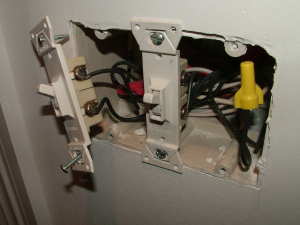
Be sure the screws that secure electrical wires to outlets and switches are tight. PHOTO CREDIT: Tim Carter
Electrical safety begins when most people are small children. But it is shocking how much the average person does not know about the electricity found in the average home. I can't serve this topic the justice it deserves in the limited amount of space I have, but I will try to cover what I feel are some of the most important points.
The experts in electricity work each day to help protect us from all sorts of dangers. Much of this knowledge is in the National Electric Code (NEC). These rules and regulations, when followed, allow electricity to be helpful instead of harmful. If you ever do any electrical work in your home, or hire someone else to do it, make sure the work is performed in accordance with the NEC. Electrical inspectors will come to your home for a reasonable fee to ensure the wiring work is installed correctly.
Electrical cables in your home that feed outlets and switches usually contain three separate wires. You should find a black, white and bare copper wire in each cable. The black wire is supposed to be the charged conductor, the white wire is considered the neutral and the bare copper wire is the ground wire. If an exposed energized black wire touches an exposed white wire or ground wire, you get a dead short that will produce a large amount of sparks and a shower of molten metal as the wires become a small arc-welding machine. The circuit breakers or fuses in a circuit panel are designed to turn off the current if this happens. But if they fail, the sparking and arcing can continue. You often see this with downed power lines.
The electrical cables in your home come in different sizes. The common sizes are 14 gauge and 12 gauge. 14 gauge cable is rated for 15 amperes and 12 gauge is rated for 20 amperes of current. The wires within each cable can only carry so much electricity safely. The circuit breakers or fuses in an electrical panel are made to match these same amount of amperes.
If you ever add additional cable or even a new circuit to your home, the cable size must match the circuit breaker or fuse size. If you install a 14 gauge cable on a 20 ampere circuit, the wire can overheat and start a fire long before the circuit breaker or fuse would ever shut off the current flowing through the circuit.
Be very careful when using extension cords. Never run them under a carpet, through an operating window or door or place them where the cable can be cut or damaged. Never use an extension cord as a permanent way to provide power to something. I feel extension cords should just be used to supply temporary power for a short period of time.
Consult with a professional electrician and see what it would take to get your home up to the current code with respect to life-saving devices like ground-fault current interrupters and arc-fault circuit interrupters. These devices can take the place of existing circuit breakers in your electrical panel.
Never remove an older two-prong electrical outlet and install a three-pronged grounded outlet unless you are equipping that outlet with a code-approved ground wire. If you fail to ground the outlet, you are creating a situation where a future homeowner thinks the outlet is grounded.
If you live in an older home, the connections between the wires and the screws on outlets and switches may be loose and dangerous. In my own home I once heard a switch in a bathroom crackling and sizzling. I took the cover plate off and actually saw small electrical arcing that would have caused a fire within hours or days. If you do not feel comfortable checking switches and outlets, hire an electrician to do it for you.
Column 644

Tim built custom homes and did ultra-custom remodeling for 20+ years before launching his Ask the Builder media presence. He was selected as one of the Big 50 by Remodeling magazine in 1993. This award gave birth to Ask the Builder in October 1993. Tim also operates https://DrawPlumbingPlans.com. His @askthebuilder YouTube channel was the first home improvement channel on YouTube.
I have a scoreboard light fixture that is designed to replace ceiling light. I have a fan/light combo installed in ceiling so just want to make this a hanging fixture. there is a combo cord (like a regular cord with two identical wires in it and a bare copper (ground). my goal is to attach a cord to this light and plug it into a socket. I just don't know hat to do with the ground wire