Spray Painting
DEAR TIM: I need to do some spray painting. Since I have never tried this before, I could use some spray paintings tips. What are the best spray painting systems? Are there specific spray painting techniques that will help me get fantastic results? What about simple cans of spray paint? Will those work for small spray painting projects? Dawn R., Bayside, NY
DEAR DAWN: Spray painting is a fun project. I do it from time to time, and am always pleased with the results. Some objects like wrought-iron lawn furniture, screens, metal fencing and any other thing that would be very hard to paint with a brush or roller are perfect candidates for spray painting.
Actually anything can be spray painted, and it is proven that once the paint starts to come out of the nozzle, it is faster than any other known method of painting. You can also get paint finishes that are as smooth as silk with spray painting techniques.
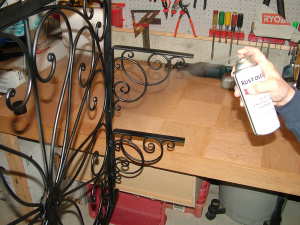
Just about anything can be spray painted, including decorative iron work. This wrought-iron is going to be a bookshelf in a new kitchen. PHOTO CREDIT: Meghan Carter
As for the best spray painting systems, it is hard to say as it can be very subjective. You have professional-grade systems that use air and airless as well as similar systems made for the casual weekend painter like you and I. The cans of spray paint you see at hardware stores or home centers can also yield fantastic results.
If you are going to invest in a spray-painting set of tools, then try to think how often it will be used and what you intend to paint. You may discover that an electric-powered airless sprayer will accomplish what you need to do. The newer models can do a fantastic job in almost all instances.
Air-powered spray painting requires you to buy a compressor, some hoses and a spray gun with any number of accessories. I have seen professionals use them and spray paint so much stuff so fast you would think they had consumed massive amounts of caffeine. These air-powered systems allow you to spray paint thousands of square feet of surface area in record-fast time.
My recommendation, since you are a beginner, is to start with a few spray cans of paint. Some may disagree with me, but this is an inexpensive way to see how spray painting is totally different than applying paint with a brush or roller. I would also spray paint an object that is of little or no value, since your first spray-painting attempts will probably have a few flaws.
As with any painting, you need to make sure the object being painted is clean, dust-free and dry. Bare wood or bare metal should always be primed. The spray-paint primer performs several tasks, including but not limited to rust prevention, special bonding of paint to the object and consistency of final texture.
Try to use the primer recommended by the finish-paint manufacturer. Pay attention to the time allowed between priming and finish paint. Some spray primers allow you to apply the finish paint almost immediately after the primer is applied. That can be a real time-saving benefit.
You will get superior results if you spray the paint with the temperature between 50 - 90F. Do not spray paint in excessive humidity above 85 percent. It is not a good idea to spray paint if it is windy or there is dust in the air. The dust can settle on the wet paint, and you will have a mess.
The trick to spray painting is thin coats of paint and keeping the spray paint nozzle moving. Do not stop your hand and allow paint to build up in one spot. This will cause runs to develop. Spray paint is often thinner than the regular paint you have used in the past, and it will sag and run if applied too heavily.
It is best to apply two thin coats of spray paint than one heavy coat. Spray paint often dries quickly, and it is often possible to apply a second coat within minutes of the first coat depending on drying conditions.
Hold the spray-paint can 10 - 14 inches away from the surface being painted. Make even side-to-side movements never stopping. Be sure you have good lighting so you can see if you are missing spots. It is best to have each layer of paint overlap the previous layer.
Once you are finished using a can of spray paint, hold it upside down and push on the nozzle. Hold the nozzle down until no paint comes out of the tip. This usually takes five or fewer seconds. This action clears paint from the nozzle so the spray paint can be used in the future.
Column 660

Tim built custom homes and did ultra-custom remodeling for 20+ years before launching his Ask the Builder media presence. He was selected as one of the Big 50 by Remodeling magazine in 1993. This award gave birth to Ask the Builder in October 1993. Tim also operates https://DrawPlumbingPlans.com. His @askthebuilder YouTube channel was the first home improvement channel on YouTube.