Building A Deck
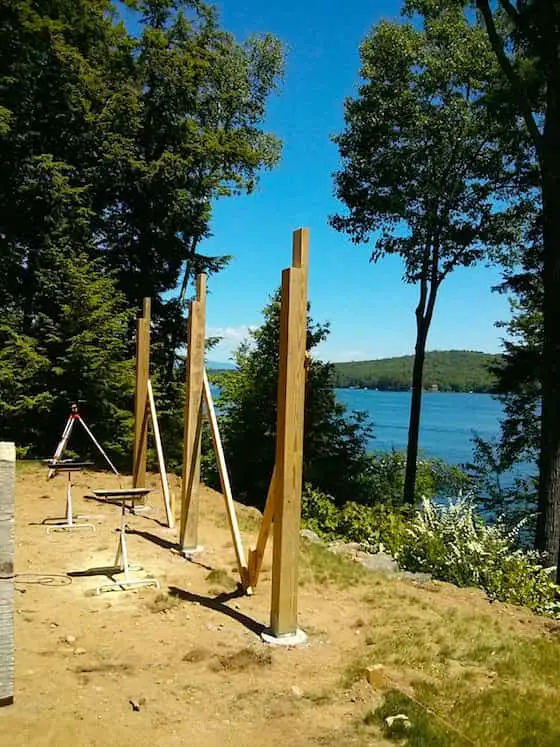
Deck post notching is easy if you use 6x6 treated posts and a builder's level. Copyright 2018 Tim Carter
"I prefer to have deck beams rest directly on a shelf or notch in a slightly oversized wooden-deck post. This notch is easy to create with a standard circular saw and a traditional hand saw."
Deck Post Notching Checklist
- 6x6 posts provide the best bearing
- Use through bolts to connect the beam to the post
- A simple circular saw and hand saw is all that's needed
- A builders level ensures notches are all level
Related Links
The BEST Deck Pier Forms in the World
Prevent DEATH with Deck Railing Post Connectors - SHARE THIS far and wide.
Deck Support Columns - Don't Have to be Wood
DEAR TIM: I'm building a deck soon, and need some deck post notching tips. What's the best way to connect a wood beam to the wooden deck posts? Deck construction is not my strong suit, and I want to make sure the deck does not collapse. Doug F., Harleysville, PA
Deck Post Notching Methods Vary
DEAR DOUG: I'm not certain there is a best way. My guess is you could put several structural engineers, a few seasoned architects, and some crusty deck-building carpenters in a room and come up with a wide variety of "best" solutions. I can tell you several of the methods I have used over the years that have worked really well for me, and I will gladly share with you a method I would avoid at all costs.
Free & Fast Bids
CLICK HERE to get FREE & FAST BIDS from local deck contractors.
When I go to friends' houses and open houses, I'm often shocked to see how do-it-yourselfers and even paid contractors attach deck beams to wooden posts.
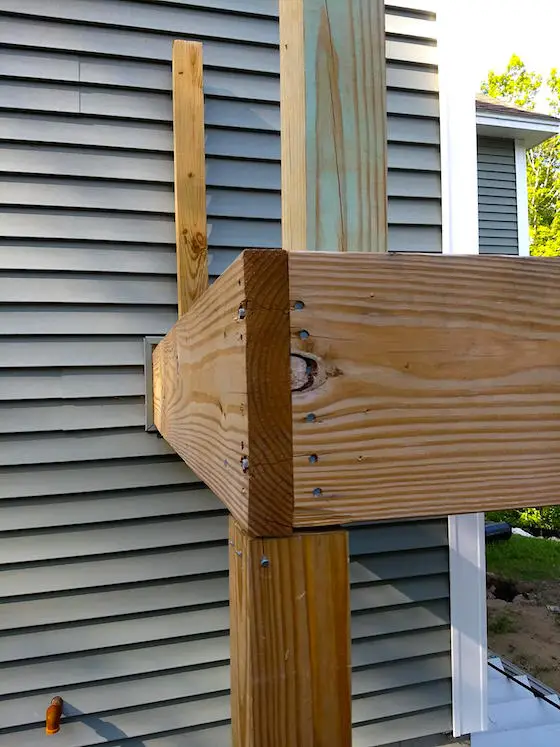
This is how NOT to install a deck post. There are no notches and there are no metal structural post-to-beam connectors. Look at the deplorable toe-nails the idiot contractor installed. #TotalFail Copyright 2018 Tim Carter
What astonishes me is the lack of forethought into the amount of weight that is supported by two simple deck posts. Anyone who has lifted a single 2x12 treated-lumber floor joist knows that the cumulative weight of a deck can easily be in the thousands of pounds. Then imagine what happens when you have a large party and people are shoulder to shoulder on the deck.
People dancing on a deck can cause it to start to sway. Deck beams can fall off posts if they're just resting on top of the post and toenailed.
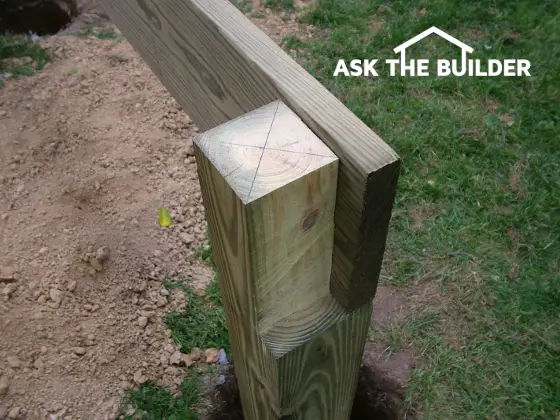
Many decks require beams be attached to supporting posts. Notching a wood post to accept a beam is but one way to make this connection. PHOTO CREDIT: Tim Carter
How Much Can a Deck Weigh?
The bottom line is that you can have multiple tons of weight constantly trying to fall to the ground under the influence of gravity. Each year, there are people who get seriously injured and even die from deck collapses. The reasons for the structural failures are many, but there is no reason for them to be related to the beam/deck post connection.
How Much Weight is On a Beam?
The beam you are working with often supports half or more of the weight of the deck, and anything that will eventually be on the deck. The floors joists, decking, furniture, and people rest on the beam and transfer the load to this beam along its entire length.

Frequently, I see people who have taken a beam or two joists and simply nailed or bolted these parts to the sides of the post. The entire weight of the deck is born by four or more simple bolts or nails. These fasteners may not be designed to handle the weight. If the lumber dries and shrinks, this connection can become significantly compromised.
CLICK HERE to get FREE & FAST BIDS from local deck contractors.
How Should a Deck Beam Connect to a Post?
I prefer to have deck beams rest directly on a shelf or notch in a slightly oversized wooden-deck post. This notch is easy to create with a standard circular saw and a traditional hand saw. Many decks beams are comprised of two 2x12 deck joists that can carry the design load.
The joists don't have to be placed immediately next to one another to support the load of the deck. They can be spaced several inches apart with an air space that helps prevent rot.
What is the Best Deck Post?
I have created this connection in the past by using a 6x6 inch wooden deck post. These posts normally measure five and five-eighths inches square. The thickness of the two floor joists is a little over three inches, so when you create two notches on opposite sides of the post, you are still left with a beefy two and one-half inches of post material. This remaining tongue of wood extends to the top of the beam.
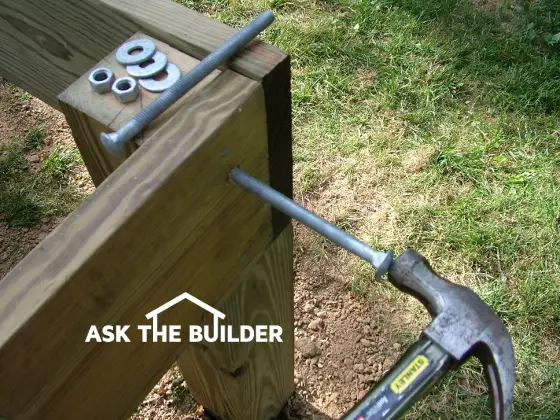
Through bolts that use washers and nuts permanently attach the beam to the notched post. PHOTO CREDIT: Tim Carter
What are the Best Bolts to Use?
The best bolts are through bolts. These pass through all the wood and have a nut and washer on the threaded end. Do NOT USE lag bolts. Lag bolts are inferior because they can be overtightened and have minimal holding power.
The two parts of the beam are through bolted to the wood post to make a strong and permanent connection. The entire weight of the deck rests on the bottom of the notches in the post, instead of hanging precariously on four or more bolts.
Can You Use Metal Post-to-Beam Hardware?
You can also buy code-approved metal brackets that allow you to connect wood deck beams to wooden posts. I have used these when they are specified by an architect or a homeowner. These brackets are easy to work with and will do a good job of making the connection.
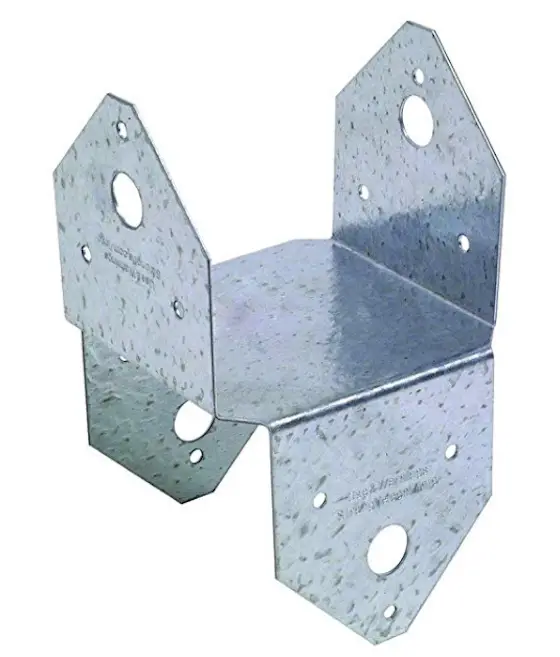
This is a standard post-to-beam metal connector. The large holes are for through bolts. CLICK THE IMAGE to have these delivered to your home.
Never guess on the beam size for a deck. If you are unsure of the size and span, have it specified by a residential structural engineer or architect. The small cost to get the right structural plan is well worth it. You also need to be highly concerned with how the deck attaches to the house and know all about important diagonal bracing both under the deck and possibly at the beam/post connection.
Many decks have collapsed when a group of people starts dancing on the deck. The decks develop a harmonic movement that causes them to sway back and forth. If not properly braced, a deck can rack and collapse with little or no warning.
CLICK HERE to get FREE & FAST BIDS from local deck contractors.
Column 684

Tim built custom homes and did ultra-custom remodeling for 20+ years before launching his Ask the Builder media presence. He was selected as one of the Big 50 by Remodeling magazine in 1993. This award gave birth to Ask the Builder in October 1993. Tim also operates https://DrawPlumbingPlans.com. His @askthebuilder YouTube channel was the first home improvement channel on YouTube.

At least where I live, the city/county provides some pretty clear guides on the proper joist length and thickness necessary to meet code. I think deck building is such a common do-it-yourself project that they strive to make the requirements as clear as possible.
Lorian Bartle
I believe 2-2x12 beams fastened together are stronger Than 2-2x12 separated. I use flashing on top to prevent water entrance between the 2x12’s. The beam should rest on top of the 6x6.
what length are the carriage bolts using a 6x6 post notched with 2ply beams? can a 6" through bolt work? or is that too short?
A 6-inch bolt may work. Why not just get a 7-inch one?
Hi Tim,
I can't seem to find the answer anywhere regarding using a joist bolted to each side of a post and using double-sided dog tooth washers on each one. (two bolts and nuts) Since each dog tooth 50mm washer is rated at 6363N, over 1400 pounds each, should'nt this work? The overall connection would handle 5600 pounds. It seems as though it's been done in Europe for decades. The shear force is being applied to a much larger area and is way more than the bearing capacity of the soil at the bottom of a 12" concrete filled sonotube.
I'd never do it that way. Have you seen how I notch a post to rest the joist/beam on the wood?
What size of drill bit are you using for the through bolt? Same size as the bolt or oversized?