Cleaning Paint Brushes
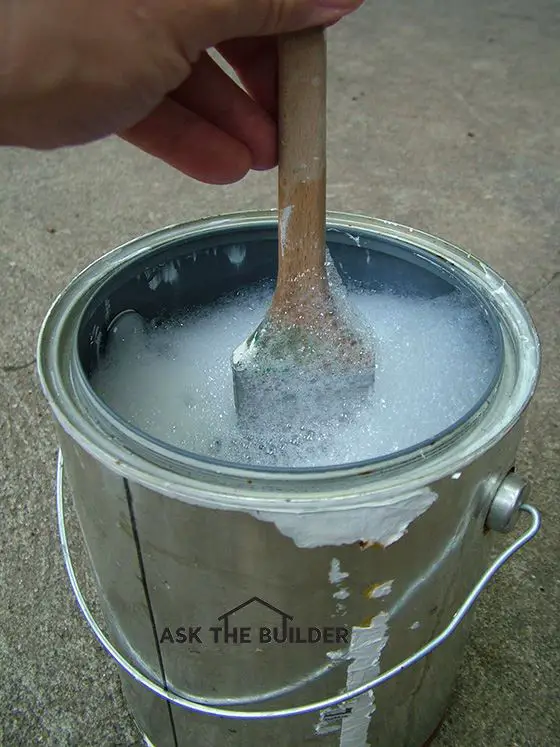
An old paint can, some warm water and soap and a quick wrist is all it takes to clean a paint brush. ©2017 Tim Carter
Cleaning Paint Brushes TIPS
- Brush-renewal products = DEATH
- Get brushes wet before use
- WATCH brush videos below
- Use Swish method to clean - See below
- CLICK HERE to Get Tim's FREE & FUNNY Newsletter!
DEAR TIM: I'm having trouble cleaning paint brushes. My high-quality paint brushes are stiff halfway up from the tips, even though I have been using latex paint and washing them with warm water immediately after each use.
I've tried using the plethora of products that claim they will restore paint brushes, but none have worked.
In fact, they seem to harm the brushes. How do you clean paint brushes so they last for years? Is it possible, or should I just buy disposable paint brushes and throw them away after each job? Jack L., Findlay, OH
DEAR JACK: It's time for some tough love.
Operator Error
The expensive brushes are being ruined because you're not cleaning them properly. It took me a few years of experimentation to figure out one way to properly clean paint brushes, no matter whether they are synthetic fiber used for latex paint or natural fiber used for oil paints.
Believe it or not, I have a few paint brushes that have been used over one hundred times. They look like new, and the bristles have no paint in them where they connect to the brush body.
CLICK HERE to get FREE & FAST BIDS from local painters so you never clean a brush again! WOO HOO!
Best Paint Brushes Video
Watch this video so you know what brush to use where and why.
Brush Renewal Products - BAH!
You couldn't pay me to use brush-revival products. I've read their labels on many occasions, and the skull and crossbones image tells me that some of these products are highly toxic.
Examine the label of these products and you'll often see the chemical names acetone, methanol, methylene chloride, toluene and xylene.
Some of these are very dangerous and can cause serious and permanent health issues. It's easier and safer to simply learn how to care for your paint brushes rather than try to bring them back from the dead.
Before You Dip
The process of cleaning a paint brush starts at the beginning of the painting day. All too often, I see people take a new brush or a dry one and dip it directly into the paint.
This, in my opinion, is a mistake. On hot, dry days the paint on the outside of the brushes up near the handle can harden within an hour or two.
Wet The Bristles
You can prevent this, or slow the hardening of the paint, by wetting the brush with water before using it. Use water when applying latex or water-based paint.
If you are painting with oil-based paint, dip the brush in paint thinner before getting paint on the brush. Be sure to lightly shake out any excess water or paint thinner before dipping the brush for the first time into the paint.
Brush At Breaks
If you take breaks during painting, you need to get the brush out of the sun, and wrap it with a damp rag if you are using latex paint. This rag stops the evaporation of water and other chemicals from the paint. It keeps the paint on the brush fresh.
Use a rag soaked in paint thinner if you are applying oil-based paint. It's advised to store the paint thinner-soaked rag and brush in a closed container for safety. If painting outdoors, I'll actually clean my brush if I stop to eat lunch. It only takes two minutes to clean a brush, so I don't lose much time from my well-deserved break.
Brush Protectors
There are some very clever inventions you can use to keep the paint on a brush from getting hard while you take a break. If you use one, be sure to keep it out of direct sunlight.
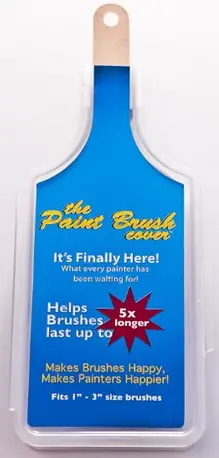
This is a plastic case you put your brush in while you take a break. It seals tight preventing air from drying the paint. CLICK THE IMAGE TO ORDER IT NOW.
Paint Brush Protector Video
Watch this video to see how these plastic covers work.
Never Upside Down!
I have seen people ruin a brand-new paint brush the first time they clean it. They turn on the sink faucet and then turn the brush upside down to get the water stream to shoot straight into the tips of the bristles.
Never do this.
It's totally unnecessary.
No Pressing!
Another bad idea is pushing down on the bristles so they bend at a 90-degree angle to squeeze out the paint. This stresses the bristles and causes premature bristle failure.
Brush Out First
Before you start to clean a brush, try to get as much paint out of it by brushing it on a scrap piece of anything. It could even be a cardboard box. Don't press so hard as to really bend the bristles. You're just trying to get off the easy-to-remove paint.
CLICK HERE to get FREE & FAST BIDS from local painters so you never clean a brush again! WOO HOO!
Rinse Next
Through trial and error, I discovered that the best way to clean brushes that have latex or water-based paint in and on them is to rinse as much paint out as I can with warm water flowing over the outside of the bristles, toward the bristle ends.
Swish It
The next step is to use an old paint can that's been cleaned of all paint. I fill this can halfway with warm soapy water. Two tablespoons of common liquid dish soap works well in a half-gallon of water.
Dip the brush into the soapy water and rapidly move it back and forth, making sure the bristles do not touch the bottom of the can.
Be careful, as vigorous movement can splash some of the warm soapy paint-saturated water onto your clothes or in your face. Twenty seconds of back-and-forth motion will remove 95 percent of the paint from the entire brush.
Clear Rinse
Refill the can halfway with just clear warm water and repeat the process. If the water turns slightly cloudy, it means you still have more paint in the brush.
Clear Swishing = Clean
Continue the fresh-water rinsing process until the water stays perfectly clear. If there is hardened paint on the handle or tops of the bristles near the handle, use a stiff nylon brush to clean off this paint.
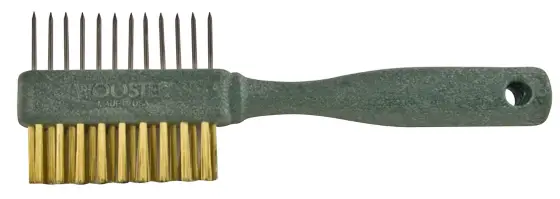
This is a specialized tool with brass stiff bristles to clean the semi-hardened paint from bristles up near the ferrule. The brass will not harm the bristles. The other side is a comb for once the brush is clean. CLICK THE IMAGE NOW TO GET THIS TOOL.
Brush DOWN the bristles with the stiff brush. Push down only do NOT try to brush up and down.
Do NOT scrub the bristles at a 90-degree angle to remove the paint.
Suspend Test
The best way to determine if there is any residual paint in the brush is to suspend it in a clear container after you think it is clean. Use a string or thin wire through the hole at the end of the brush handle to suspend just the bristles in clean water.
Let it sit in the water for about four hours. If there's any latex paint left in the brush, it will turn the water cloudy. This means you have to be more thorough when you are cleaning the brush.
No Shaking But Comb It
Once clean, comb the bristles. Then hang the brush from the wire to get it to dry.
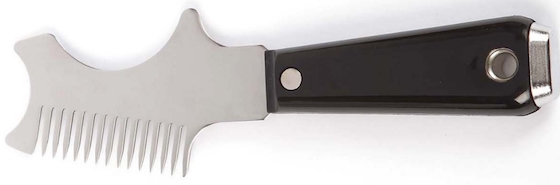
This is a handy tool to comb paint brushes after they're clean. The other side you use to scrape as much paint as possible from a paint roller before you start to clean it. CLICK THE IMAGE NOW TO BUY THIS GREAT TOOL.
Do not shake the water out of the brush and bend the bristles. Once dry, insert the brush in the handy protective cover that came with it from the paint store.
CLICK HERE to get FREE & FAST BIDS from local painters so you never clean a brush again! WOO HOO!
Column 686

Tim built custom homes and did ultra-custom remodeling for 20+ years before launching his Ask the Builder media presence. He was selected as one of the Big 50 by Remodeling magazine in 1993. This award gave birth to Ask the Builder in October 1993. Tim also operates https://DrawPlumbingPlans.com. His @askthebuilder YouTube channel was the first home improvement channel on YouTube.
My name is Scarlett Ferrigno, I am a high school student in Texas. I read one of your Q&A's and used your website as a resource for a project I am going to create as my senior project. All I would like to know is if there is a phone number I can contact you with to write down as part of my assignment. The number will not be destributed to anyone and I will use your email rather than your adress as your contact. I know I do not have any credibility with you but it would benefit a high school student if you are willing to help me out. Please?
-Scarlett
Scarlett, yes, there's a phone number at my shopping cart. Read this: your question requires lots of typing, plus I have some questions for you so I can give you the correct answer(s). I only do pithy answers here in the comment section. If you want to protect the investment you have in your house and not waste time or money *hoping* you make the right decision, you should talk to me on the phone for just 15 minutes. It'll be the best investment you've ever made in your home!
After the final rinse, put some fabric softener on the bristles, work it in and rinse again. This will keep the bristles soft.
I totally agree with the cleaning methods you descirbed above Tim and have several brushes that I've used for years... but what do you recommend to do with the water that I use to clean the brushes? I've been diluting with even more soap and water,.. Can I continue to safely pour down the drain?
Pour it into a 5-gallon bucket of sand. Set bucket outside to dry in sun. Cover the bucket so rain doesn't fill it.
The reality of any or every situation is the truth. Thus the term; The painful truth is made abundantly clear. I too have victimized my brushes through improper cleaning, and at times not cleaning them at all. You ask a question right, you get an answer that sounds like a politically correct response that always means the person has nothing. No real painter is as diligent as cleaning the tool that much. The chemical industry have made life somewhat bearable with their research and development. Used properly that can be helpful, used other than instructed, you're heading down disaster boulevard.
I don't want to throw away my purdy brushes, name all the chemicals you like, trying to restore to like new might not happen. You spill your milk, sometimes mopping it up is about what can be done. Krud cutter is one product that could make it useable again, otherwise consider it like a tuition you paid for you future advancement. I hope you and I as well will take better care next time out...
Does this method also work for cleaning up after applying stains and polyurethane?
So long if you use mineral spirits!
I just wanted to thank you Tim I am newly in remodel construction and I was ruining paint brushes left and right thinking I was cleaning them right. lol, after reading your article I have used the same brush about ten times now and it still looks and acts brand new, now I know ten times is not alot yet before I would ruin the brush after about three times. So thank you for your advice.
Hi I wanted to know if there was any way to save my paint brushes! i use oil paint and i just rinse them off with turpentine in a few different washes and i thought that was enough to clean them. well after a dozen times using them, the bristles have gone so hard and they've lost the softness that i once loved. help! they were very expensive and id hate to have to buy more!!
Suspend the brush in clean mineral spirits or paint thinner for days. Figure out how to keep the brush hanging in the jar or can of spirits so the bristles do NOT touch the bottom of the can / jar. You only want the liquid to be at the BOTTOM of the metal band that secures the bristles. After two or three days you should see paint at the bottom of the jar and the bristles should be come soft again. Then use the methods you see in my column and the VIDEO I shot about how to clean brushes. WATCH that video.
I use wooster pro brushes . and I really like the way they perform , but I used warm soapy. water on my trim brush and it was ruined . . my co. workers use the wooster pro chinex . Do ymwmu think the chinex are better for latex paints
I've not used that brand.
Did you follow the WRITTEN instructions on how to clean them?
Is there any way to remove the semi-soft and flakey latex paint that still remains in the interior of a professional brush that was used prior to reading your very good brush cleaning tips?
I'm a painting teacher I use acrylics mostly but sometimes oils and gold leaf on personal projects - one day with gold leaf I didn't have paint thinner so I used wd40 and water and IT WORKED ! FYI4aDIY
I have been a professional painter for a very long time. I am also a member of the IUPAT (International Union of Painters and Allied Trades) When using latex/water-based paints,use COOL water and a stainless steel,wire brush. Keep a constant flow of water on the ferrule allowing it to run downward and toward the ends of the bristles. Use the wire brush in a downward motion and brush the paint in the same direction as the water flow. Repeat this process until the water runs free of paint. Take the paint brush by the handle and smack the narrow side of the brush (bristles toward the ground) against the toe of your boot several times until water ceases to eject from the brush. Return the brush to its cover or use cellophane to hold the bristles in the desired form and wrap snugly with tape to retain original shape. This is how professional painters have done it for centuries and your brushes will last for years
Hi, Thanks for that, but could anyone advise on how to properly clean the paint brush handle without damaging the wood?? Thanks
Thank you for sharing those tips on how to clean the brush. I am hoping that next time you will have to share too some important things on how to clean the mess inside the house.
Now, I might be able o know on how to clean the pain brush. Sometimes I don't know how to clean the pain brush; I just threw them away.
Tim,
I've also used a little bit of Downy in water to clean my paint brushes.
Hi Tim, Great tips on cleaning your brushes. I've used the same techniques for years and yes, I'm using brushes that may not be quite as old as yours, but probably at least 15 years old. One thing I've found in addition to all your great tips is that when I leave the brush out to dry, I wrap it in a paper towel, starting on one side of the brush and rotating it to wrap the paper towel, then fold the top over in the shape of the tip of the brush. (I typically use angled brushes.) Then I put it on a wire rack, or the grates on my gas stovetop, or anything that allows air to flow on both sides of the brush. The water evaporates and the brush stays shaped perfectly with no fanning of any bristles. Many years ago, I used to just put the semi-wet brush back into the paper cover, only to find that the cover mildewed from being wet! That when I figured out the paper towel thing.
Thanks Tim, I never thought about that way. I will try it the next time I paint.
I don't see the responses??
I am interested in cleaning paint brushes that I use on concrete sealer. I have ruined a few brushes in the past. Now I use Xylene as a cleaner. It helps. However, do you have a recommendation or procedure that you would use. Any help would be appreciated. Thanking you in Advance. John.
Fantastic advice.