Grouting Tile
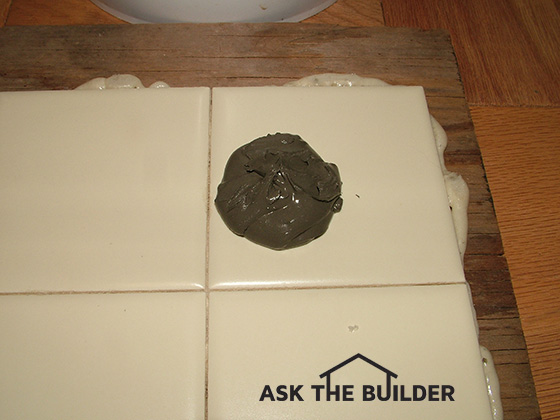
The consistency of the grout is extremely important. If it is too wet when mixed, there is a good chance the grout job might fail over time. ©2017 Tim Carter
"Never ever add more water to grout that's become stiff in the bucket. This added water will..."
Grouting Tile Checklist
- Sanded grout for floor tile
- Mix the grout like stiff applesauce
- WATCH video series below!
- Water can be your enemy
- CLICK HERE to Get Tim's FREE & FUNNY Newsletter!
DEAR TIM: I need to know how to mix grout. I'm about to tackle a floor tile grout job before my relatives come over for a holiday party. I don't know mixing grout and how to grout tile, but feel it's easy.
What type of tile grout should I use for my ceramic floor tile?
Is mixing grout difficult? How much grout should be mixed at one time?
Can you share your top grouting tips? Amy H. Oakdale, MN
DEAR AMY: There's not a doubt in my mind that you will succeed grouting your ceramic floor tile.
Is it Easy to Grout Tile?
It's easy to grout tile, but only if you can follow instructions.
You've asked many of the right questions concerning grouting tile. Although the process of grouting tile is not like laying heavy concrete blocks, I can think of easier jobs to do. If you protect your knees, back and skin on your hands, you should survive the job with very few aches and pains.
What is Wall Tile Grout?
Wall tile grout is just pure Portland cement, often with colored pigments. Wall grout does not contain any sand because it needs to fit into small spaces between the tile.
Grout that's used for ceramic tile is available in many different forms, but the two most common are wall grout and sanded floor grout. Wall grout is usually colored Portland cement.
It's a fine powder that sometimes has dried acrylic modifiers that help it to stick to ceramic tile. Wall grout should be used on ceramic tile joints that are one-eighth inch or less in width.
What is Sanded Grout?
Sanded grout is a mixture of pure Portland cement and fine grains of silica sand. It's a miniature version of concrete and is used to fill grout lines 1/8-inch or wider.
Ceramic floor tile is often installed with grout joints much larger than one-eighth inch. It's not uncommon to see grout joints as wide as three-eighths inch.
Wall grout will shrink when used to fill joints this wide, so sanded grout is used. Sanded grout is a blend of wall grout and fine particles of silica sand.
The silica sand makes the grout very durable to wear and tear and takes up room within the grout so as to prevent unsightly shrinkage cracks as the grout dries and cures.
Where are Mixing Grout Videos?
I suggest you watch the following videos, then read the rest of the column. Much of it will make sense. Links to the tools you'll need will be below.
Is Mixing Grout Easy?
Yes, I find it fairly easy to mix either wall or sanded grouts. The trick is to only mix about as much as you can fit into a half-gallon milk container, maybe less.
I've used for years a simple stiff 3-inch putty knife to mix grout in a 2 or 5-gallon bucket.
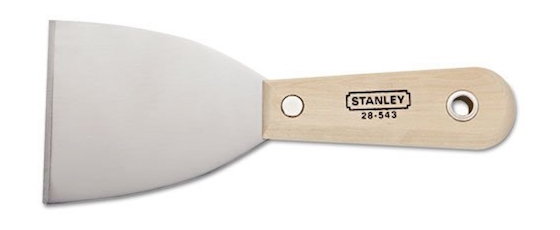
This is an all-around great tool to have. It's wonderful to mix sanded or wall grout. Keep it clean to last for decades! CLICK THE IMAGE NOW TO ORDER ONE BEFORE THEY'RE ALL GONE!
You may discover that when grouting a floor, you can mix two or three times this amount, but for the first batch, mix a small amount until you learn how to grout.
How Much Time Can The Grout Sit in a Bucket?
The grout can usually only sit in the bucket about 20 minutes. The hotter the air temperature, the grout powder and the water, the less time you have to install it once it's mixed.
You can extend the working time of mixed grout if you refrigerate the grout powder, use cold water to mix it and apply the grout if the room temperature is 50 F.
If you're doing this job solo, then you need to realize that you'll spend time removing excess grout from the floor tile and striking the joints with a grout sponge.
As you do this tedious work, the mixed grout can harden in the bucket. This is why you don't want to mix too much grout up until you discover how fast you can use it up.
Can I Add Water to Stiff Grout?
IMPORTANT TIP: Never ever add more water to grout that's become stiff in the bucket. This added water will weaken the grout that was in the process of transitioning from a plastic mix to an artificial rock!
What is the Correct Grout Consistency?
The correct grout consistency is when it resembles warm cake icing. It needs to be spreadable but not so thin it would pour from a bucket.
Mixing grout to the right consistency is very important. You want the grout to be workable so it can be spread with a rubber float, but it should not be so wet that it resembles moist, runny cake icing.
I feel the best consistency for either sanded floor or wall grout is when the grout is stiff enough that it can be formed almost into a ball and hold its shape. Think mashed potatoes for wall grout and nice firm applesauce for sanded floor grout.
What is a Rubber Grout Float?
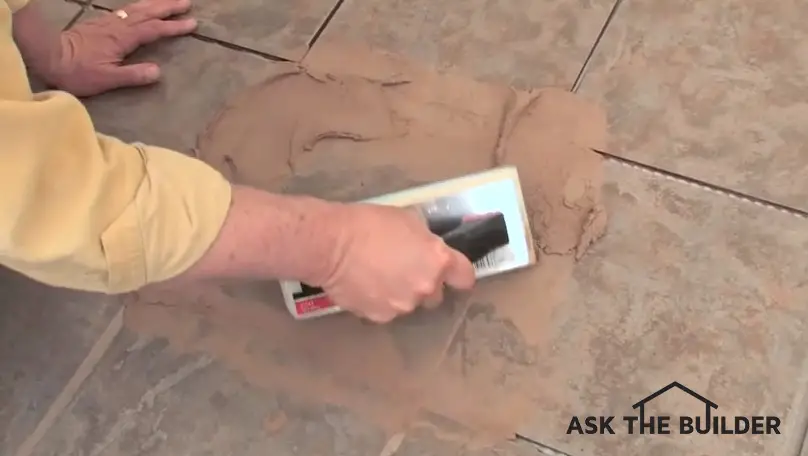
A rubber grout float is a special tool you use to spread the grout and pack it into the spaces between the tiles.
Now that the grout is mixed, it's time to put it in the gaps between the tiles. You achieve this with a special rubber float that spreads the grout across the tile.
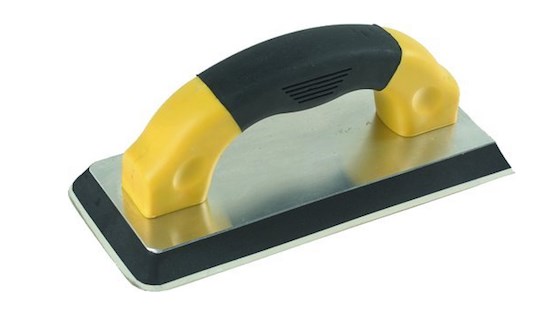
This is just like the rubber grout float I've used for decades. Care for it and it will treat you well. CLICK THE IMAGE NOW TO ORDER ONE.
Always pull the rubber grout float across the grout lines at a 45-degree angle. This prevents the edge of the float from dropping down into a grout joint and scooping out grout from the joint. Dip the float in clear water before using it on the tile.
Remove as much excess grout from the tile surfaces as possible with the rubber grout float.
What is a Grout Sponge?
A grout sponge is one that has all rounded edges and corners. Never use a sponge that has sharp 90-degree edges and corners. These will remove grout from the lines.
You need to strike the grout joints after they've gotten a little hard. If you try to finish the grout too early and it's soft, you'll remove it from the joints.
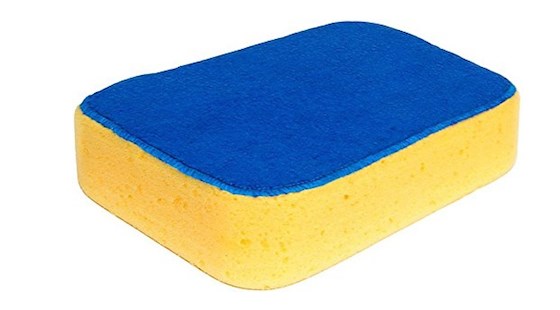
Here's a fantastic newer sponge that will do a great job of cleaning dried grout haze. CLICK THE IMAGE NOW TO BUY ONE.
Grout joints that are fully filled, look better, clean easier and they protect the fragile edges of the ceramic tile.
Should I Practice Grouting?
Yes, you should practice grouting on a test panel in your garage before trying it on a wall or floor.
Since you are a beginner, the most important tip I can give is for you to practice grouting on a piece of tile-backer board in your garage. Install some scraps of the floor tile or a cheap tile that is similar to the one on your floor.
Attach this tile to the piece of backer board that is just laying on the garage floor. The next day, mix some grout and apply it.
Wait a few minutes and remove the excess grout and grout film with a grout sponge. Get a feel for the process before experimenting on your real floor.
How Much Water Should be in the Grout Sponge?
There should be very little water in the grout sponge. Squeeze as much water out as possible.
When removing the grout film from the tile, use a grout sponge that has rounded corners, and be sure to squeeze out all excess water from the sponge before the sponge contacts the grout. Change the rinse water frequently.
What Causes Grout to Fail?
The biggest cause of grout failure is water. Either too much is used to mix the grout or too much is used when removing the grout film from the surface of the tile.
Excess water dilutes the amount of Portland cement in the grout. When this happens, the grout can turn to powder or simply crumble in a short amount of time.
How Far Should You Apply the Grout?
You only want to grout as much tile as you can reach across. Kneeling on top of freshly grouted tile joints is not a great idea as you try to finish the floor. Think about where to start grouting the tile and how you will exit the room once you are finished.
How Much Grout Should I Buy?
Buy plenty of grout before you start the job. Be sure it's fresh, and absolutely make sure the grout is from the same batch or dye lot.
To ensure perfect results, it is often a great idea to blend different bags of the dried grout together to make sure the finished color of the grout is uniform.
Theresa had a grout problem with her new ceramic tile floor. The installer didn't clean the tiles properly after grouting. CLICK HERE to read her story and the helpful tips.
Column 701

Tim built custom homes and did ultra-custom remodeling for 20+ years before launching his Ask the Builder media presence. He was selected as one of the Big 50 by Remodeling magazine in 1993. This award gave birth to Ask the Builder in October 1993. Tim also operates https://DrawPlumbingPlans.com. His @askthebuilder YouTube channel was the first home improvement channel on YouTube.

I'm grouting the tile work I've done in my bathroom tomorrow (tub surround and floor) how long does the grout need to cure before I can silicone where needed or install trim and fixtures?
I'd let it cure for seven days.
Grout ended up powdery is there any way to fix it without digging out and starting over