Steam Room
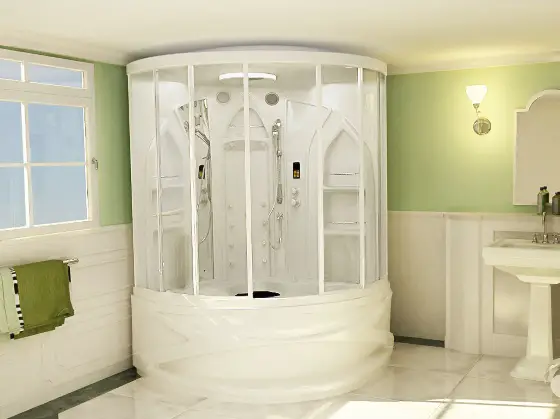
DEAR TIM: I have wanted a steam room in my house for a long time. Are there certain things you must do to ensure a home steam room will work well? Can you tell me exactly how to build a steam room so that I do not have any water or water-vapor issues? Will I need a special steam-room door, or will an ordinary shower door suffice? Nate B., Lexington, KY
DEAR NATE: Your questions sure brought back a flood of memories from my childhood. When I was a kid, my friends and I would go swimming and play basketball at a traditional indoor health facility called the Friars Club. There was a steam room in this building that was a wonderful place to sit after swimming in the cool water of the pool. Although I have built a home steam room for more than one client, I have never indulged myself. My aching bones and muscles have complained about this oversight on more than one occasion!
As you get ready to build a steam room, don't let the benefits of a steam room distract you. Construction details must be followed to make sure this room doesn't become a haven for mold, mildew and wood rot. Steam and wood do not play well together. If possible, all wood framing for your new steam room should be treated lumber, including the subfloor.
Steam is simply water in the vapor form. This water vapor will readily return to the liquid state by condensing on cooler surfaces. Because the steam is so hot, the vapor will readily condense on surfaces that are warm to the touch. You have possibly seen this happen in your own home if you have exited a hot shower to see a fogged mirror. Don't think for a moment that the fog just picked the mirror, it was on the walls, ceiling and even the wood cabinets in your bathroom.
To construct a great steam room, you need to keep the water vapor within the steam room where it can condense and run down to the floor drain. Any steam that does exit the steam room must be vacuumed out of the room and vented through the roof of your home. If at all possible, try to make sure the steam room is not located where one or more of its walls will be an exterior wall of your home. If any of the steam water vapor escapes into the exterior wall, you will have serious water issues sooner than later.
I suggest you consider ceramic tile for the entire room including the floor. You can use a membrane shower-pan liner that connects to the floor drain to capture all of the liquid water. This is the first thing that needs to be installed after the walls are framed.
The second most-important element is a high-performance vapor barrier. You will need to get one that meets the ASTM E 1745 standard. This rigid standard will protect the wood in your home if you install one giant piece on the ceiling and walls without any seams. This vapor barrier must extend over the membrane shower liner that was lapped up onto the walls about 6 inches. The vapor barrier on the ceiling and walls will capture any and all of the water returning it to the floor drain.
Before you start any of this, I urge you to research in great detail the steam-generation machine. The manufacturer of these heaters have very specific installation instructions that ensure the units will generate the amount of steam needed for the room. The steam room must be sized correctly for the steam unit you purchase.
The ceiling height in the steam room should not exceed 8 feet. It is a good idea to slope the ceiling so that condensation drops do not fall on you as you sit and enjoy the soothing steam. A slope of 2 inches per foot should suffice. Cover all surfaces in the steam room with ceramic tile or other similar product that is virtually waterproof. The tile must be applied to cement board or other substrate that is approved for use in a steam room. Use thinset mortar to apply the tile to the cement board.
Do not underestimate the tenacity of steam to seek out and condense on anything. You see steam rooms in health clubs and gyms, but keep in mind that these commercial and institutional building are almost always built with masonry or treated, galvanized steel. This material can deal with liquid water better than the wood 2x4s used in most residential homes.
If you do not want to take the chance and make a costly mistake, you can purchase pre-fabricated steam rooms that simply connect to a floor drain. These steam showers take all of the guesswork out of the process when you follow the easy instructions that come with the units.
It is important to install a sealed door to the steam room. Once closed, the steam can begin to form within the steam room. If air from your house or bathroom is allowed to enter freely into the steam room, it will be hard for the steam to form as it tends to dissipate into the drier air of your home.
The location of the steam-generation unit is critical as is the length and sizing of the pipe from the unit to the steam room. Even the location of the steam head within the steam room is important. Read all of the installation instructions of the steam generation unit before you start the project. Make sure you can meet all of the conditions so that the project will be a success.
Column 717

Tim built custom homes and did ultra-custom remodeling for 20+ years before launching his Ask the Builder media presence. He was selected as one of the Big 50 by Remodeling magazine in 1993. This award gave birth to Ask the Builder in October 1993. Tim also operates https://DrawPlumbingPlans.com. His @askthebuilder YouTube channel was the first home improvement channel on YouTube.
I made a cedar seat for our steam sauna. I used left over cedar from our deck. I stripped, sanded and power washed the wood several times before putting it together. Now when i use the shower it beeds a light brown fluid. Do I need to seal it with something?
Stephan, your question(s) require lots of typing and I have some questions for you. You should consider investing in a 15-Minute Consult with me. Look at my cart for that. Lot's to discuss. I just do short pithy answers here.
Can we use Pine wood on 2 walls of steam room ?
IS 2 LAYERS OF ICE AND WATER SHIELD (HALF LAPPED) ON 3/8" PT PLY A VIABLE OPTION UNDER CEMENT BOARD AND CERAMIC TILE A GOOD OPTION?