Kitchen Exhaust Fan
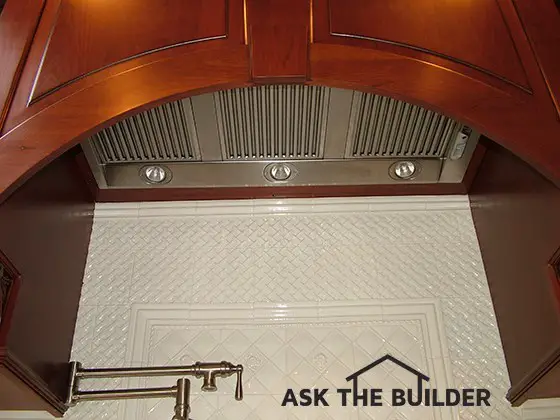
PHOTO CAPTION: This high-powered kitchen exhaust fan is tucked up under a decorative hood. It is sized properly for the large kitchen. ©2017 Tim Carter
"Generally speaking, I prefer the overhead kitchen exhaust fans rather than the down-draft ones simply because hot air rises."
Kitchen Exhaust Fan TIPS
- Updraft is best
- Replacement air is important
- WATCH roof cap video below
- Use all metal ductwork
- CLICK HERE to Get Tim's FREE & FUNNY Newsletter!
DEAR TIM: My new kitchen plans call for a new kitchen exhaust fan. To be more precise, a kitchen hood exhaust fan has been suggested.
Is one kitchen stove exhaust fan more effective than another? Years ago the down-draft exhaust fans were popular.
What exhaust fan is in your kitchen if you don't mind me asking? How do I make sure the kitchen exhaust fan I select will adequately ventilate my kitchen? Where does the replacement air enter the house? Kathleen K., Exeter, NH
DEAR KATHLEEN: You're asking all of the right questions about your new kitchen exhaust fan.
What Are the Biggest Kitchen Exhaust Fan Mistakes?
The biggest kitchen exhaust fan mistakes are:
- fan not large enough
- vent pipes too small or unsealed
- no makeup air
It's important to realize I see builders and remodelers fall down here. Either the fan installed is not powerful enough for the size of the kitchen, the installer fails to vent it properly, or overlooks the need for makeup air.
CLICK HERE to get FREE & FAST BIDS from local contractors who install fans.
Do the Fans Get Rid of Grease Vapor?
Yes, the exhaust fans do exhaust grease vapor.
It must be remembered you really need a good kitchen exhaust-fan system if you cook greasy foods and boil foods. The cooking process often creates both visible particles as well as an invisible aerosol mist of grease and smoke.
Grease can and does coat the surfaces of your kitchen if they're not vacuumed and exhausted to the exterior of your home. Sooner or later even with a great exhaust fan, you can still develop a fine coating of grease on light fixtures, cabinets, walls, and ceilings. This is the voice of experience talking.
What is the Best Performing Exhaust Fan?
Generally speaking, I prefer the overhead kitchen exhaust fans rather than the down-draft ones simply because hot air rises. Why not use that physical axiom to your advantage and collect the cooking vapors with a hood?
How Do You Size the Fan?
The fan manufacturers have sizing charts that allow you to purchase the correct fan to match the size of your kitchen.
My kitchen exhaust fan is matched to the size of my kitchen. The fan is a powerful three-speed model that has brilliant halogen bulbs that are built-in to the fan.
There are three removable grease-collector screens that we take out regularly and put into our dishwasher. When the fan is on the highest fan speed, it sucks 1,100 cubic feet of air per minute (CFM) from above our cooktop and pushes it outside.
Should I Use Solid Metal Duct to Vent the Fan?
Solid metal duct should be used to vent the fan all the way out and through a roof or a sidewall of your home. Tape all duct seams with aluminum metal duct tape, not plastic tape.
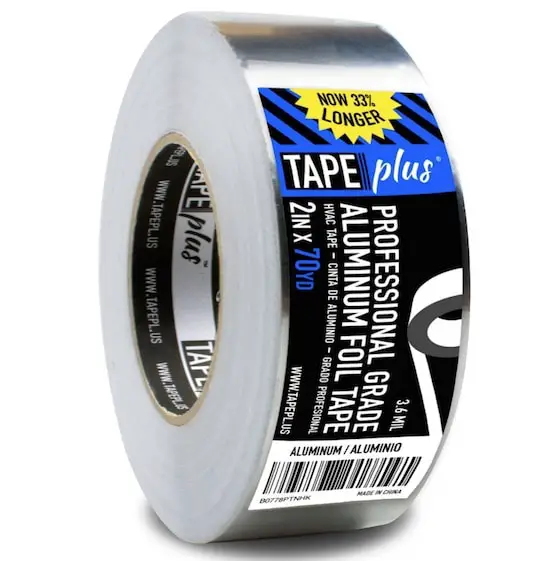
This is metal tape. Yes, it's aluminum that has a high-grade adhesive on the back. This is what pros use to tape ductwork. CLICK THE PHOTO now to have this delivered to your home.
Another key point is the fan is connected to metal ductwork that extends from the fan all the way to the roof of my home.
IMPORTANT TIP: Each joint in the ductwork was carefully taped with special metal-foil duct tape by my ventilation contractor.
It's very important that no air seeps from the duct to other parts of the house. If that were to happen, hidden spaces in your home could become grease-covered posing a significant fire hazard.
How Do You Vent Through the Roof?
The exhaust from my fan exits the roof through a special roof cap that is made to handle that much air flow. It was easy to install so that rain does not enter the house.
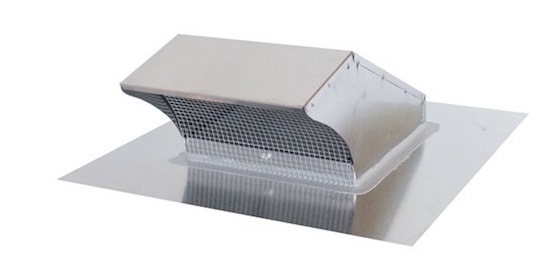
>This is a large-capacity roof cap or vent hood. An 8-inch duct connects to it. You need to match the size to your fan. CLICK THIS IMAGE TO BUY THIS ROOF CAP.
Roof Cap Installation Video
Watch the following video to see how to install one of these roof caps.
What is the Formula for Exhaust Fan Sizing?
Many experts simply measure the square footage of the kitchen floor and multiply that by two to arrive at the cubic-feet-per-minute of output for the fan.
For example, since my kitchen is 350 square feet, I would need a fan that must exhaust at least 700 CFM of airflow. My fan can do that on its middle speed, and the highest speed produces the massive 1,100 CFM of air movement.
CLICK HERE to get FREE & FAST BIDS from local contractors who install fans.
How Much Replacement Air is Required?
You need to supply the fan with as much replacement air as it is exhausting out of your home.
You're really observant to recognize that large kitchen exhaust fans like these have a voracious appetite for air. You need to replace every cubic foot of air the fan pushes to the outside.
IMPORTANT TIP: You absolutely must control where the replacement are comes from. You need to put in a special fresh-air intake hood that's large enough to suck in the needed air.
How Do I Avoid Dangerous Backdrafts?
In today's modern homes that are well sealed for energy reasons, sucking that much air out of a house can cause serious backdrafting issues if a makeup air inlet is not installed. Backdrafting can cause deadly carbon monoxide to be drawn back down a chimney or metal vent pipe and/or smoke or smoke odors from fireplaces.
What is the Path of Least Resistance For Replacement Air?
The path of least resistance for replacement air is that path where air enters your home with the least amount of effort.
Newer homes are so airtight that when the air is sucked from a house by a powerful fan, it replaces that air with air from outdoors through the path of least resistance.
That path could be a furnace or water-heater vent, a chimney, or another vent that is open to the atmosphere. Installing a makeup-air vent solves this problem in almost all cases as outside air can easily flow through this device into the home.
Should I Read the Installation Instructions?
Before you buy a kitchen exhaust fan, it's always a good idea to get the written installation instructions from the manufacturer. These documents will often contain sizing guidelines as well as detailed step-by-step methods the manufacturer wants you to follow to keep the warranty in force.
Reading these ensures that the fan you are considering is the right size and that you can satisfy the minimum installation requirements.
What Size Should the Duct Be?
The exhaust duct size should be what's called out in the written installation instructions. Do not go smaller and larger is not a good idea either. Do exactly what the installation instructions say to do.
Resist the temptation to use smaller ducting for the fan. Some people think that the size of the exhaust piping is not that important. Believe me, you must use the exact pipe as called for, and be sure that you do not exceed the maximum length of pipe allowed.
How Many Bends Can I Put in the Ducting?
The written instructions will almost always tell you to avoid 90-degree bends, and how many and what type of bends can be put in the exhaust piping. The instructions will also tell you the maximum length the exhaust duct can be.
These hard bends in the pipe create significant restrictions that make it hard for the fan to exhaust the air from your kitchen.
CLICK HERE to get FREE & FAST BIDS from local contractors who install fans.
Column 725

Tim built custom homes and did ultra-custom remodeling for 20+ years before launching his Ask the Builder media presence. He was selected as one of the Big 50 by Remodeling magazine in 1993. This award gave birth to Ask the Builder in October 1993. Tim also operates https://DrawPlumbingPlans.com. His @askthebuilder YouTube channel was the first home improvement channel on YouTube.

I have a question. I just purchased a condo and the stove has a micro wave above it which has the exhaust fan. No duct work for venting it to the outside. I wonder if I can vent the exhaust to the building overpressure vent. There is an air exchange vent that seems to be in three locations the two bathrooms and the corner of the kitchen. It is a passive exchange. My question is actually two, is there an exhaust fan system that doesn't require outside venting and two if the condo has this air exchange system can I vent the stove exhaust fan through it?
Thanks
Tim, your question requires lots of typing, plus I have some questions for you so I can give you the correct answer(s). I only do pithy answers here in the comment section. If you want to protect the investment you have in your house and not waste time or money *hoping* you make the right decision, you should talk to me on the phone for just 15 minutes. It'll be the best investment you've ever made in your home!
i'm reading your article on installing the kitchenhood. my question relates to the following statement you mentioned in the article...
"The fan is connected to metal ductwork that extends from the fan all the way to the roof of my home. Each joint in the ductwork was carefully taped with special metal-foil duct tape by my ventilation contractor. It is very important that no air seeps from the duct to other parts of the house. If that were to happen, hidden spaces in your home could become grease-covered posing a significant fire hazard."
I'm currently replacing the 4" pipe to a 10" diameter duct .i'll be installing 10 feet of new duct between the 2 floor joists above the kitchen ceiling.
My questions are as follows: specifically , how is the duct system supported? When the joints are taped, are they also attached with screws? thanks, Patrick
Patrick, you should consider investing in a 15-Minute Consult with me. Look at my cart for that. Lot's to discuss. I just do short pithy answers here.
You talk about a makeup air inlet to supply air the exhaust system pushes out. Where is the most effective location to install a makeup air inlet? In the winter I don't want cold outside air coming into the living space and likewise in the hot summer. Doe it need to be in the kitchen or is it enough to have it somewhere in the house (cellar for example)
Walter, this is what my 500-Second Consult is all about. Click the Shop icon at the top of the page!
Tim, my builder told me that if I install a range hood exhaust fan that has over 400CFM performance, I'll need to install a makeup air system at around $2000 cost. I have a square-sized open kitchen, which the cooking area is 200 sqft, and the breakfast area is 150 sqft. I don't want to spent the $2000 on makeup air system and at the same time I want to have a range hood with enough power to vent the cooking odors via the ductwork to the outside. Do you think a 400CFM hood can do the work? And I really can't find a 400CFM under-cabinet range hood with stainless steel grease-collector like yours. It's a dilemma for me. Need your insight please! Thank you!
It would never cost that much to put in makeup air! Did you read my column about the topic?
Joe, according to 2009 IRC section M1503.4: “Exhaust hood systems capable of exhausting in excess of 400 cfm shall be provided with makeup air at a rate approximately equal to the exhaust air rate. Such makeup air systems shall be equipped with a means of closure and shall be automatically controlled to start and operate simultaneously with the exhaust system.”
When there is high wind with rain my kitchen exhaust fan over the stove under the cabinets has water coming in from the outside, which drips down onto the stove .What can be done to prevent the rain from coming in through the exhaust fan???Thank You in advance for your response.
Fix the flashing for the exhaust fan. Watch my video about Bathroom Exhaust Fan Flashings.
Hi!
We are doing a kitchen remodel, and we have a little problem. The solutions we have been given are not getting us there, mostly because everyone involved in the sale of the equipment doesn't know enough, and the builder, has not had experience with this before.
So here's the situation, in our complete kitchen remodel, we currently have a downdraft exhaust fan for our range, and we're going to be replacing it with an updraft exhaust, but the duct work for our exhaust is still in the ground. So we need to see if there is a suitable way to make an updraft exhaust fan work with downdraft ductwork. our builder said that we need to get a powerful fan to do this, but how powerful is necessary?
the current ductwork travels about 21 feet before exiting the house. when we redo this, we'll probable add about 5-6 more feet from the fan being placed above the range, connecting it to the current ductwork.
What do we do?
Thank you!
Gio
So simple..... so very simple. You look at the WRITTEN instructions that come with the updraft exhaust fan and open to the pages about venting. FOLLOW the instructions to the letter. In other words, ABANDON the plan to convert it to a DOWNDRAFT. If you want a downdraft, get a new one. The best analogy I can offer to you in this situation is this: Would you consider strapping on your back a Hefty garbage bag and jumping out of an airplane? Of course not. A garbage bag is NOT a parachute. Tear out the ceiling and do whatever is necessary to put in the correct ductwork to get the updraft to work.
Hi,
I want to replace my small exhaust fan (the type you use it in the bathroom) with a proper exhaust that can suck out greasy Chinese stir frys. the trouble is this exhaust is fixed under a double story house and I was told in order for the "foul air to suck outside" it needs to flu out. So I would need to make a almost 90 degrees bend which is not recommended by you or anyone. How do I over come this problem. I can make a L shape flu out to the patio but not ideal as the kitchen is just next to my alfresco.Still in order for the "foul" air to flu out it must be bended to avoid the double story house.Your advise please. Thank you.
You do what you have to do to get the ductwork to work. They all require a 90 at some point if you go out a wall. Just minimize the number of bends in the pipe.
I have installed a new range hood rated at 900 CFM. Duct opening is in a cabinet above the stove with an opening on what use to be an outside wall. A garage was added to the home years ago.Do I need to continue a run of duct work out of the garage?
Hi,
Last fall, we had our house remodeled which included a complete kitchen remodel and an exhaust system installed - an island hood. The range hood never worked properly from the get-go. The contractor did a hack job on our house and we have been slowly tackling repairing the parts of the house he touched.
The exhaust system he installed was determined too long for my 400 cfm hood Frigidaire island canopy hood and has one 90 degree angle. It runs from my kitchen on the first floor through the second floor and then turns 90 degrees to the crawl space and out the side of the building.
We don't have any more money to reinstall the entire system correctly but I heard there may be a solution we could afford - install a booster at the outlet or maybe near the 90 degree angle.
Do you think that would work? We are so frustrated, poor and tired of dealing with surprise needed repairs due to our contractor.
Thanks for your help!
Best,
Justine
hi, Tim
"....The exhaust from my fan exits the roof through a special roof cap that is made to handle that much air flow..."
Could you please suggest the manufacturer, and give a link to that roof cap which will handle 400cfm from range hood.
Thanks
What kind of questions should I ask when searching for a HVAC contractor to install the duct work? We have not decided on whether the duct pipe should go through our roof or a sidewall. Also, should I be concern if a contractor does not ask for the size of our product that will be installed such as a range hood or microwave that airs out to determine the pipe size and hood to use? I have reached out to a handful of contractors and only 1 contractor asked for the specifics of my product before they can determine the cost because it depends on the duct pipe and shape that will be needed.
Peter,
I believe I've answered all your questions in the article above. If not, you might want to do one of my phone consults so you don't lose thousands of dollars and possibly burn your house down.
http://shop.askthebuilder.com/products/15-Minute-Phone-Conversation-with-Tim.html
I need your help please.
I have a broan Model E661 kitchen exhaust fan, The previous contractor vented it into my attic attached to a plastic hose, and laid the exit near my soffits.
I asked my present contractor to put the duct though the roof.
His reply:
Just received a text from my contractor. He said if he sends everything up through the roof, it will just run back down into the fan. The only thing going through the vent is air and steam. The grease from the stove will not go up the fan. It will stay in the filter so the only thing to worry about going out is the air and steam not grease.
Is it true? I don't know whether it is, or he just doesn't want to do it,
Please reply. And thank you so very much!!!
Maria,
Maria,
The response back from your builder or remodeler is ill-informed and UNACCEPTABLE.
The fan exhaust must go through the roof or a side wall cap outlet if your roof has a gable end.
The current termination is a HUGE FIRE HAZARD. If you don't believe me, ask the on-duty captain at any firehouse near you.
The current setup coats the entire attic in GREASE. If you have a fire in the fan the fire extends to the attic like a BLOWTORCH.
The fan MUST BE DUCTED with solid metal pipe from the fan to the roof and SPECIAL aluminum tape used at the pipe joints, not fabric duct tape that's crap.
Hi Tim: I have a 1950's home. We don't know the extent of the work that has been done on the kitchen. It is very mismatched and not much thought went into it. My issue right now is the Dome Turbo ceiling exhaust fan. It is about two feet from the wall where the stove is located. Two questions: can I remove the fan unit and wash it (it has 60 years of grease on it). And when I am ready, can I replace it with a hood vent?
Yes, you can remove the fan unit. You can also mix up some of my certified organic Stain Solver and easily CLEAN the fan in place.
https://www.StainSolver.com
Yes, you can replace it too. It's just money and time.
Thank you so much for your speedy and helpful reply.
from 1950's house.
I would like to replace the ceiling exhaust fan in our condo kitchen with a quieter, more powerful model. Do I need a special model that is rated for kitchens, or can I use a bathroom fan? I can't seem to find one online that is specifically for kitchens.
What do you recommend for apartments? My downstairs neighbor does lots of high heat frying and leaves their exhaust fan on for sometimes close to an hour. I'm having to leave my apartment because the oil smell is so strong and irritates my lungs. Since they are downstairs, it doesn't vent to the outside. I assume it's going somewhere between my floor and their ceiling before it enters my apt. Is there anything that can be done? Thanks!!!
Hi Tim, good information thank you. Two quick questions
1. I live in Florida - do you know of any make up air systems which pre-cool the air?
2.Can you help with AC return design (my current system only has supply air in the bedrooms).
Thanks, Mike
I live in a 27 floor building built in NYC in the 60s. My kitchen is windowless but had a vent with a common chute and a roof fan as an exhaust. The roof fan is weak and need an additional exhaust fan to put into the vent. Can you advise me?