Deck Railing
DEAR TIM: The deck railing at my home needs to be replaced, because it rotted prematurely. How long should deck railings last? I love my wood-deck railing, but wonder if I should replace it with a vinyl-deck railing or even an aluminum deck railing. I have been on other decks that are old, and the deck railings are in excellent shape. What is the secret to long deck railing life? Kate M., Bean Station, TN
DEAR KATE: What a shame your deck railing gave up the ghost before its time. I have installed new deck railings on homes just like yours where excellent lumber failed. In almost all cases, the wood rot was caused by one or two problems. Poor deck railing design is one reason, and poor workmanship is the other. Combine them both on the same job, and you will have a mess in short order. A well-built wood deck railing can last decades.
Years ago, a neighbor of mine hired me to replace a porch deck railing that surrounded a flat roof that they could access. The railing had been painted numerous times, and was constructed with redwood. Redwood is a fantastic wood for outdoor projects as it contains natural preservatives. But even redwood can rot.
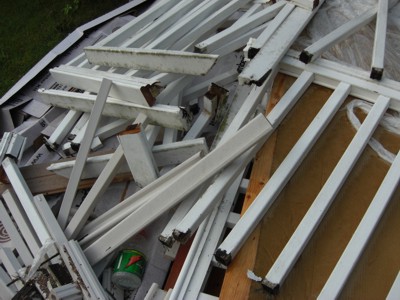
This deck railing failed long before its time because the wood was not painted before it was assembled. PHOTO CREDIT: Tim Carter
As I demolished the old deck railing, I readily saw why the railing could never hold paint well, and why it rotted. The railing had been assembled by the carpenters years before, and then the painters came behind to apply the white paint. There were countless cut ends of the wood and hidden areas where one piece of wood touched up against another that were bare wood. It was impossible for the painters to coat these areas once the railing was assembled. My guess is that you suffered the same fate.
To prevent the same thing from happening again, I took the time to precut as many of the pieces of the new railing as possible. This was not as hard as you might think. The pieces that needed to be cut at the last moment were minimal. It was easy to predetermine the length of all of the posts, pickets and horizontal railing components.
I instructed my neighbors to have their painter come and pre-paint all of the deck lumber including the longer pieces that I still needed to cut. Each piece of redwood was primed and second coated with paint on all surfaces and cut edges. The end grain of each piece really soaked up the paint, and the painter coated many of these places three times. Once the deck railing was built, the painter had to come and do the final coat of paint.

By applying the paint over every square inch of wood surface, it stopped water from soaking into the wood deck-railing parts. Water that enters wood through the end grain or is allowed to hide where pieces of wood overlap can start the rotting process quickly. This deck railing is now nearly twenty-years old and I can't see one place where the paint is peeling. Peeling paint on deck railings is usually a sign that water is entering the wood.
When I rebuilt the railing for my neighbor, any pre-painted pieces of wood we had to cut, we painted the cut edges twice before we assembled the wood. This took extra time, but it is one secret tip to long life for painted wood that is exposed to the elements.
There are many deck railing systems that are not made from wood, and require little, if any, ongoing maintenance other than cleaning. You may be surprised to discover that some of them are not more expensive than the cost to rebuild and repaint the wood deck railing you desire. Your dilemma will be if you can live with the look.
No matter what deck-railing system you choose to use, be aware that there are strict building code requirements as to the height of the rail, the strength of the system and the spacing of the components. Safety is very important as people die and are seriously injured each year when they fall from decks because of failed railings.
To really extend the life of your deck railing, pay attention to the fasteners and metal connectors. When possible, use stainless steel. This is vitally important if you construct a deck railing that is exposed to salt-water spray. Be sure to use approved fasteners. If you do decide to use redwood, be aware that the California Redwood Association has literature that tells you all of the approved nails, screws, bolts and connectors to use.
Think twice about using lag bolts to attach deck posts to the deck as you assemble your deck railing. I just purchased a home where the carpenters used lag bolts. The railing wobbles back and forth, and is a safety hazard.
The better fastener to use are through bolts that have a nut and large washer on the back side. These fasteners, when installed correctly, will not fail as easily as a lag bolt. One issue with lag bolts is over tightening. If you have a rookie carpenter, he may feel that tighter is better while installing the lag bolts. If you turn a lag bolt in wood too much, you can strip the wood resulting in greatly diminished holding power. I am convinced this is exactly what happened on the wood deck in my new residence.
Column 743

Tim built custom homes and did ultra-custom remodeling for 20+ years before launching his Ask the Builder media presence. He was selected as one of the Big 50 by Remodeling magazine in 1993. This award gave birth to Ask the Builder in October 1993. Tim also operates https://DrawPlumbingPlans.com. His @askthebuilder YouTube channel was the first home improvement channel on YouTube.