Blacktop Crack
DEAR TIM: I have a blacktop crack that needs to be repaired. I've tried different blacktop-crack-seal products, but some have been messy. Is there an easy-to-apply blacktop crack sealer that produces great results? What is a good way to seal blacktop cracks to prevent water penetration? Maggie S., Athens, OH
DEAR MAGGIE: Blacktop crack repair can be a little messy for any number of reasons. I remember clearly years ago using a putty knife and a large bucket of sticky asphalt to patch cracks in driveways. No matter how hard I tried to stay clean, I had that black goo on my hands and lower arms.
There are any number of newer products that are somewhat easier to work with. One blacktop crack filler is a pourable product that works well in warmer temperatures. You can also use a blacktop crack filler that is applied with a standard caulk gun. I prefer this product as I seem to have the best control when tooling the crack sealant into the crack. Since the cracks themselves are unsightly, there's no need to make things look worse with crack sealant that's spread unevenly on the pavement.
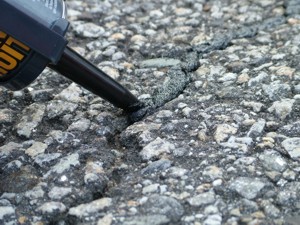
This blacktop crack can be repaired with a simple caulk gun and a tube of asphalt crack sealant. PHOTO CREDIT: Tim Carter
The best way, in my opinion, to apply the blacktop crack sealants is to stop and read all of the instructions on the product label. You need to be sure you have all of the right tools and products to ensure successful completion of the job. All too often people forget a very important step or two when sealing blacktop cracks.
When you read the label and instructions on some of the products, you will probably discover they mention the use of a backer rod. A backer rod is usually a foam product that is pushed down into a deep crack to save you money and help improve the appearance of the repair. The foam backer rods look like miniature garden hoses and come in different diameters and lengths.
Many of the blacktop-crack-repair products shrink in volume as they dry and cure. If you apply the minimum amount of material as is called for in the instructions, the shrinkage will be minimal. But all too often someone in a hurry will simply fill the deep crack with the crack filler. When the product dries, there is a noticeable depression in the crack. What's more, the person wasted valuable material deep in the crack where it's not needed.
Usually the depth of the crack filler should be equal to or slightly greater than the width of the crack being sealed. The instructions on the label of a crack sealer I just used said that the maximum thickness of the crack sealants shouldn't exceed one-half inch. It also said that the maximum width of a crack shouldn't exceed one-quarter inch.
It's important for you to make sure the crack is cleaned of all loose debris and that the blacktop is dry. Once again, read the instructions on the product you intend to use as some may allow you to apply the sealant to damp blacktop. This is often the case if the sealant is water-based.
Temperature can also be an issue. Most blacktop crack sealants can't be applied in cold weather. The label will once again tell you the minimum temperature for good results. But be careful as you need to understand that the minimum temperature usually extends to the entire drying and curing time. This means that if the label says not to use the product below 40 F, then if the daytime high is 40 F and the temperature is expected to drop into the 20's F hours after you apply it, there can be product failure.
Blacktop crack repair is important for any number of reasons. Water that enters the crack can penetrate the gravel base and work its way into the soil below the blacktop. If this happens, mud can be pumped up into the gravel. The mud can lubricate the gravel causing it to shift as cars and trucks drive across the blacktop.
If you live in a cold climate, the water is more sinister. In really wet weather, the water can fill up and stand within the crack. If the temperature drops below 32 F, the water can freeze. When water freezes it expands nine percent in volume. This expansion can cause the crack to get bigger or cause more severe damage to the blacktop. The best way to extend the life of blacktop is to keep cracks filled.
Column 748

Tim built custom homes and did ultra-custom remodeling for 20+ years before launching his Ask the Builder media presence. He was selected as one of the Big 50 by Remodeling magazine in 1993. This award gave birth to Ask the Builder in October 1993. Tim also operates https://DrawPlumbingPlans.com. His @askthebuilder YouTube channel was the first home improvement channel on YouTube.